
Toronto Pearson · Arrivals
Toronto Pearson International Arrivals: A Step-by-Step Guide
Pearson international arrivals follow a fixed sequence that catches out a lot of first-time travellers, mostly because checked baggage is collected after the border interaction rather than before it. This guide walks the whole route in order, from the aircraft door to the arrivals curb. It also sets out where every onward transport option actually picks up at Terminal 1 and Terminal 3, using the airport authority's own door assignments.
The short version of a Pearson arrival
In one paragraph
Pearson international arrivals follow a fixed order: deplane, walk to the customs hall, confirm your identity and submit your declaration at a primary inspection kiosk or eGate, speak with a border services officer, collect any checked baggage, then clear a final exit check into the public hall. Toronto Pearson advises people meeting an international flight to arrive one to three hours after the scheduled landing time.
Two details account for most of the confusion. The first is the position of baggage claim, which sits between the border interaction and the exit rather than before either. The second is that the exit doors are one-way. Once you walk through into the public arrivals hall, you cannot return to the carousel for a bag you left behind.
Everything else is signage. The words on those signs are explained below, in the order you will meet them.
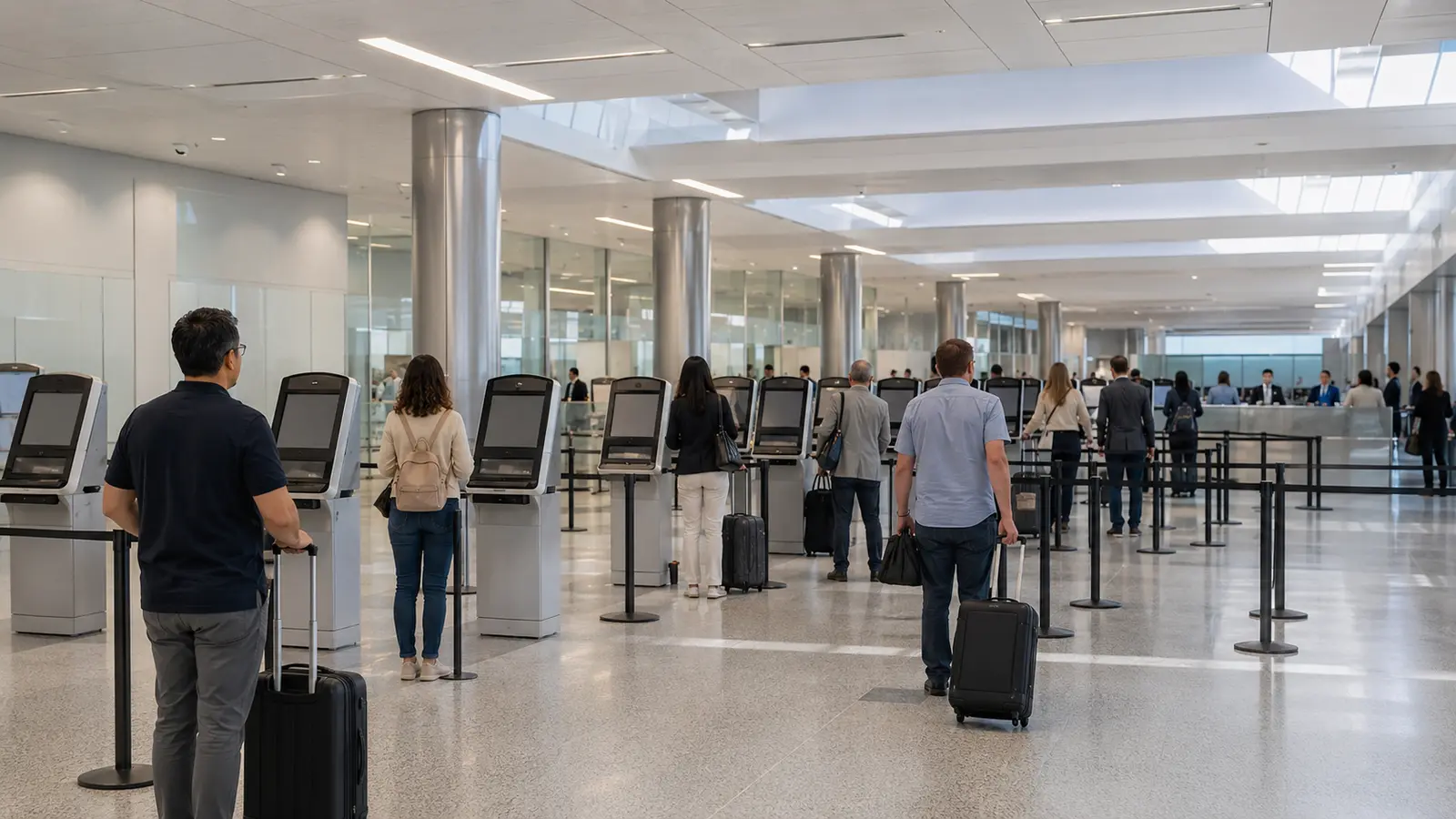
The five stages, in order
Every international arrival at Toronto Pearson passes through the same five stages, whether the flight lands at Terminal 1 or Terminal 3. Both buildings have their own full customs facilities, so neither routes you to the other. If you want a sense of how long each stage of a Pearson arrival tends to take, that is covered separately; this guide concentrates on what happens and where to go.
| Stage | What happens | Follow the sign for |
|---|---|---|
| 1. Deplane | Leave the aircraft and walk through a corridor kept separate from departing passengers | Arrivals / Canada Customs |
| 2. Declaration | Confirm identity and submit your customs declaration at a kiosk, an eGate, or with an officer | Immigration / Border Services |
| 3. Baggage | Collect checked bags from the carousel listed for your flight number | Baggage Claim |
| 4. Exit check | Present your declaration to an officer and take either the standard exit or the declare lane | Goods to Declare / Exit |
| 5. Arrivals hall | Enter the public area and head to the door assigned to your onward transport | Ground Transportation |
Scroll the table sideways on a phone to see all columns.
Before you travelBefore you land: what to have ready
Documents and entry authorisation
A border services officer decides admissibility at the moment of entry, so the paperwork needs to be in order before you board rather than after you land. What you need depends on your citizenship and status.
- Canadian citizens and permanent residents travel on a Canadian passport or a permanent resident card.
- Visa-exempt foreign nationals flying to Canada generally need an electronic travel authorization (eTA), which costs CAN$7 and remains valid for up to five years or until the passport expires, whichever comes first.
- Visa-required travellers need a temporary resident visa unless they fall within one of the expanded eTA categories.
- United States citizens are exempt from the eTA requirement but must carry acceptable identification. Lawful permanent residents of the US have also been exempt from the eTA requirement since 26 April 2022, travelling instead on a valid passport plus proof of permanent resident status.
Requirements are tied to citizenship rather than departure city, and they change, so confirm your own situation on the government page above rather than relying on what applied on a previous trip.
Submitting your declaration in advance
The Canada Border Services Agency offers an optional Advance Declaration feature that lets you complete your customs and immigration declaration up to 72 hours before arriving. Travellers who use it can follow dedicated express lanes, marked with green signs at Pearson, that lead to a kiosk or eGate more quickly. Details are on the CBSA's ArriveCAN page.
Worth knowing
An advance declaration is not finalised until it is certified at the kiosk on arrival, and you can still amend it there. It shortens the kiosk interaction rather than replacing it.
Confirm the terminal, not just the flight
Terminal 1 and Terminal 3 are separate buildings with separate arrivals curbs, and the walk or drive between them is not trivial. Terminal assignments occasionally change, so check with the operating airline on the day of travel, particularly on a codeshare booking where the ticket was sold by one carrier and the flight is operated by another. If you are weighing up which building you will actually land in, confirm your terminal before you fly.
ArrivalsStep one: deplaning and the walk to the customs hall
International arrivals at Pearson are routed along sterile corridors that keep them apart from departing passengers until they reach the border area. There is no opportunity to stop for food, currency exchange or a washroom detour that leaves the corridor, so treat this stretch as a single walk.
Terminal 1's international piers are long, and the walk from a far gate to the customs hall can genuinely take ten to fifteen minutes at an unhurried pace. Terminal 3 is more compact. Moving walkways are available on the longer stretches in both buildings. If anyone in your party will find the distance difficult, request wheelchair or mobility assistance from your airline before departure rather than at the gate.
Have passports, permits and any supporting documentation in hand before you leave the aircraft. Retrieving them from an overhead bin is easy; retrieving them from a checked bag is not, because you will not see that bag for another half hour.
Step two: immigration and your declaration
At Pearson, immigration and customs are handled together by the Canada Border Services Agency. Immigration determines whether you may enter Canada; customs deals with the goods you are bringing in. Most travellers experience the two as a single interaction, which is why the whole thing is loosely called "customs" in conversation.
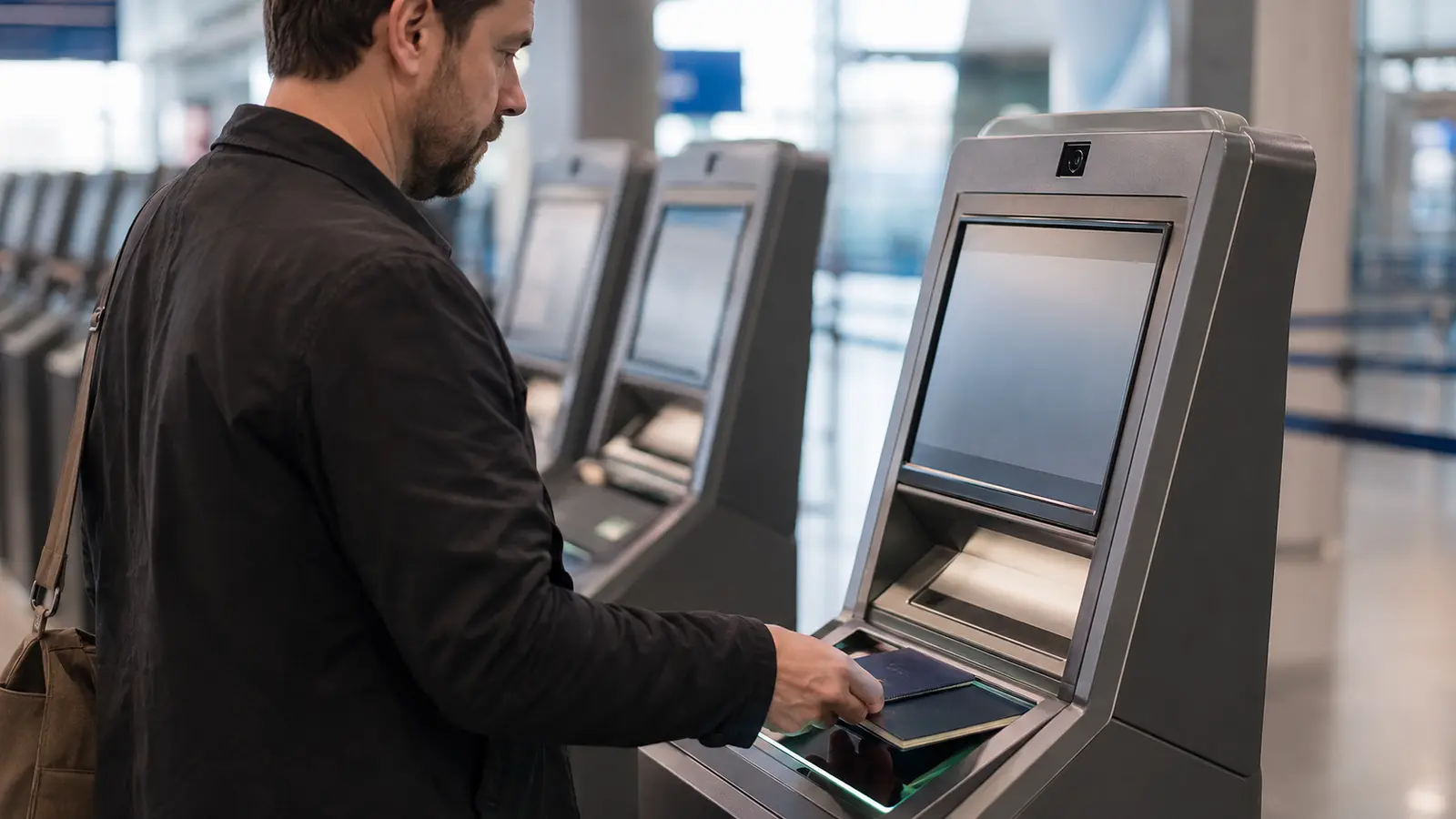
Arriving on an international flight, you can use a primary inspection kiosk or an eGate to confirm your identity and submit your declaration. Up to five travellers living in the same country may use one kiosk together, which is why families do not need to queue separately.
How the primary inspection kiosk works
- Scan your travel document, such as a passport or Canadian permanent resident card.
- Take your photo at the kiosk when prompted.
- Answer a short series of questions to complete your declaration.
- Take the receipt the kiosk prints and carry it to a border services officer.
The kiosks offer languages beyond English and French. Airport representatives are stationed in the hall specifically to help travellers who are unfamiliar with the machines, and asking for help is faster than guessing.
Who is directed to an officer instead
Not everyone uses a kiosk. Toronto Pearson lists three groups who are sent to a border services officer for in-person processing:
- Travellers with a non-machine-readable travel document
- Travellers carrying a travel document other than a passport or a Canadian permanent resident card
- Unaccompanied children under 16 years of age
Being directed to an officer is a routing decision about your document, not a signal that anything is wrong.
NEXUS members and diplomats
NEXUS members may use the dedicated NEXUS kiosk or present a passport at a regular primary inspection kiosk. Diplomats and their families continue to use the special services counter for in-person processing. Full current details are on the airport's customs and immigration page.
Step three: baggage claim
Checked baggage is collected after the border interaction, not before. Find your carousel by checking the display screens for your flight number rather than relying on a number announced onboard, because belt assignments are made on the ground and can change after an aircraft has landed.
Baggage carts are available free of charge throughout the arrivals area at Pearson, which is worth knowing before you attempt to carry four suitcases across a long hall. Take one on the way in rather than doubling back for it.
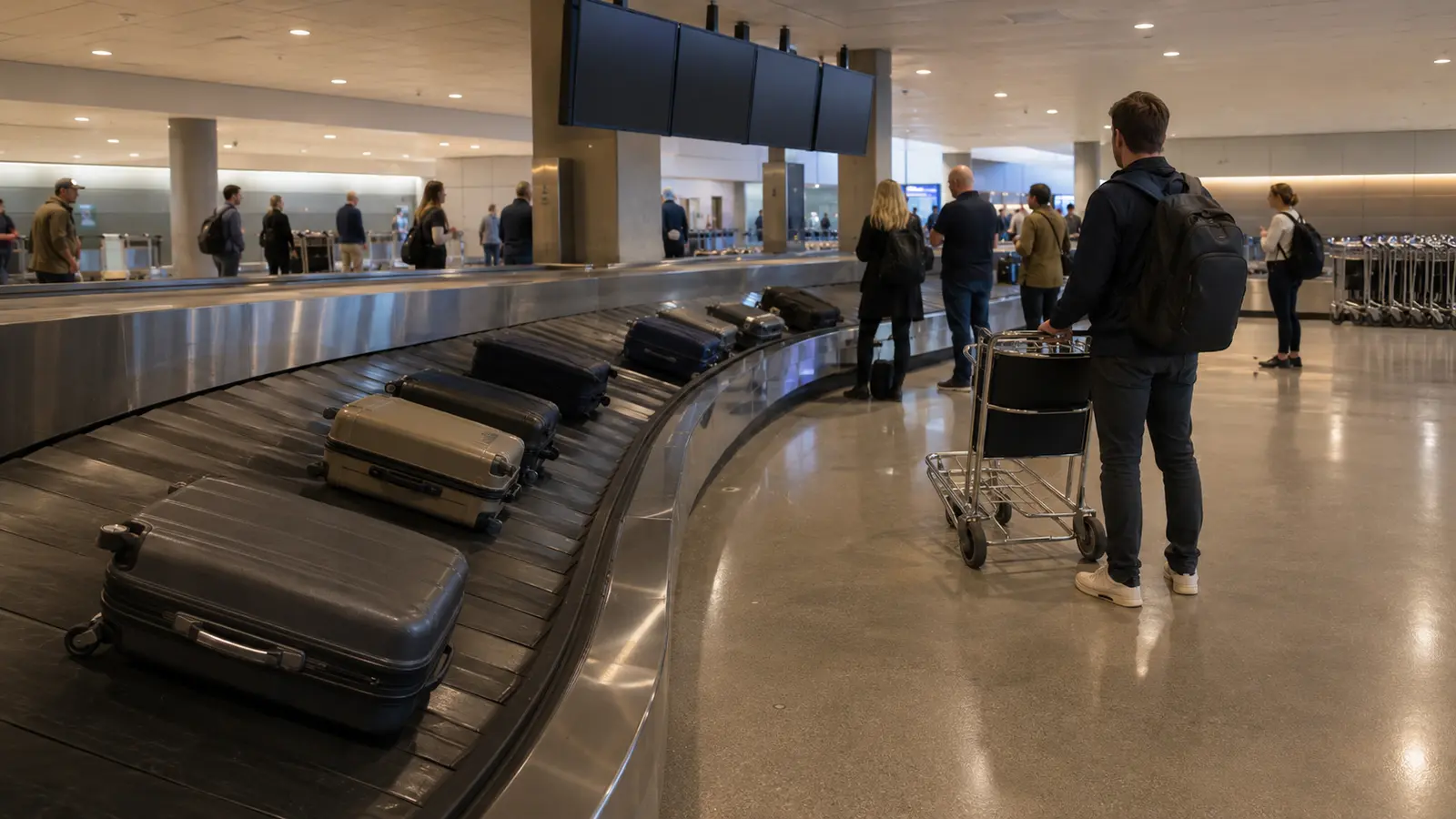
If a bag does not appear, the airline handles it, not the airport and not the border agency. Report it at your airline's baggage desk before you leave the reclaim area, because the claim process is considerably harder to start once you have cleared the exit.
Step four: the exit check and the “Goods to Declare” lane
Toronto Pearson, working with the CBSA, has introduced a "Goods to Declare" lane in both terminals as a pilot. It changes how you leave the baggage hall, and it is signed clearly enough that the main risk is walking past it without reading it.
- Every traveller still presents a declaration to a CBSA officer on the way out.
- If you have goods to declare, follow the marked "Goods to Declare" signage, which leads directly to officers for assessment and processing.
- If you have nothing to declare, continue through the standard exit as directed.
- Anyone who has goods to declare but enters the standard exit is redirected for further processing.
Declare it
Food, plant and animal products must be declared. Declaring something usually costs a question or two. Failing to declare it can cost a great deal more, including monetary penalties. If you are unsure whether an item counts, say so at the counter and let the officer decide.
Some travellers are referred to secondary inspection at this point. A referral is not an accusation. It happens for goods above personal exemption limits, agricultural items, documentation questions and routine random selection.
Step five: into the arrivals hall
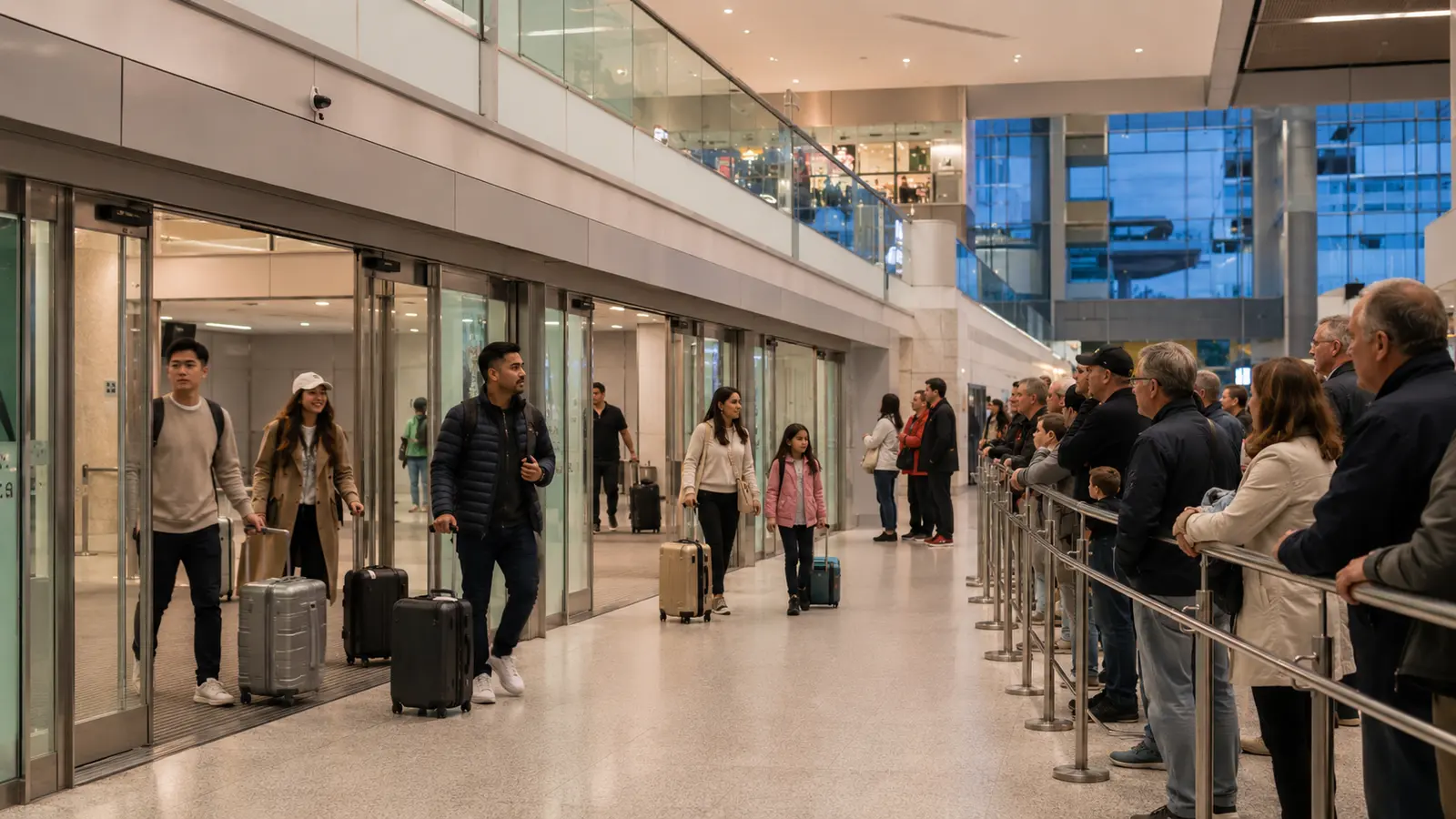
Past the exit check you enter the public arrivals hall, where people meeting flights wait behind a barrier. This is the point of no return: the doors are one-way, so confirm you have every bag, every passport and every phone before stepping through.
The public hall is where you will find currency exchange, ATMs, car rental desks and the signs for ground transportation. It is also the first place with reliable public Wi-Fi and somewhere to sit, which matters if you need to message whoever is collecting you.
If Toronto is a connection, not a destination
Passengers connecting onward to another Canadian city, or internationally, still clear Canadian border formalities in Toronto if Pearson is their first point of arrival in Canada. In practice that usually means clearing CBSA, collecting checked bags, re-depositing them at a connections desk, and passing through security screening again before reaching the onward gate.
A connection to a United States destination adds another layer. After clearing Canadian formalities, you proceed to US preclearance at Pearson, which is a separate screening and interview process with its own queue. Preclearance runs in the departing direction only. It has no bearing on how long it takes you to leave the airport if Toronto is your destination.
Airlines publish minimum connection times for each combination, and those are minimums rather than comfortable targets. Where the itinerary is still being built, adding an hour beyond the published minimum for an international-to-international connection is a reasonable precaution. Live arrival information is on the live Toronto Pearson flight status page.
PlanningArriving with children, mobility aids or a group
Families travelling together generally process as a single unit at one kiosk, which is faster than each adult queuing separately. Bring identification for every child regardless of age. Where custody is shared, carrying copies of the relevant legal documents avoids a long conversation at an inconvenient moment.
Unaccompanied children under 16 cannot use the kiosks and will be processed in person.
For travellers using mobility aids, both terminals have accessible vehicles available on request at the limousine stands, and the Terminal Link train between the terminals is fully accessible and capable of carrying a non-folding mobility aid. If you are pre-arranging a vehicle, confirm directly with the operator that it can carry a non-collapsible aid, because not every vehicle class can.
Groups of six or more should assume the baggage stage will be the slow part, and should agree a single meeting point inside the public hall before dispersing to washrooms or currency exchange.
TransportationWhere every onward option picks up at Pearson
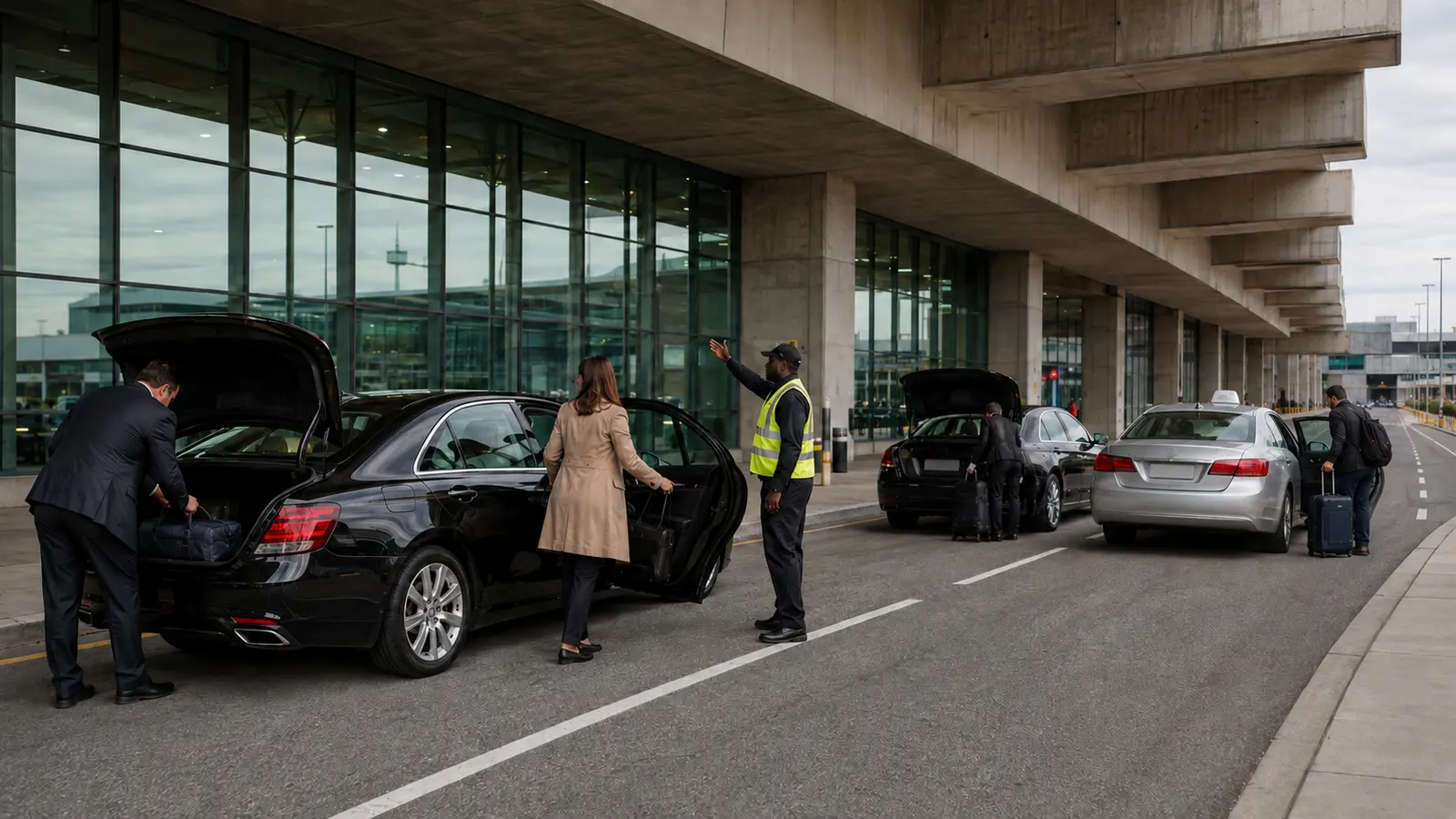
This is where more arrivals go wrong than at any border counter. Pearson assigns a specific door to each category of ground transportation, and the assignments differ between the two terminals. Licensed taxis and limousines do not pick up passengers inside the terminals or in the parking garages, so a driver telling you to meet them at the carousel is not operating under the airport's rules.
| Option | Terminal 1 | Terminal 3 |
|---|---|---|
| Pre-arranged taxi or limousine desk | Inside the terminal at Door A, Arrivals Level | Inside the terminal at Door A, Arrivals Level |
| Taxi stand | Door D, Arrivals Level | Door E, Arrivals Level |
| Limousine stand | Door C, Arrivals Level | Door E, Arrivals Level |
| Uber, Lyft and Hopp | Ground Level, Zones 3 to 5 (Doors P to S) — check the app for your bay | Arrivals Level, Zones 2 to 6 (Doors B and D) — check the app for your zone |
| Uber Black and Lyft Lux | Door A | Door A |
| UP Express train | Station in Terminal 1 — follow “Train to City” | Take the Terminal Link train to Terminal 1 first |
| Charter bus | Arrivals Level curb — give the company name and charter number to the traffic officer | Arrivals Level curb — give the company name and charter number to the traffic officer |
Scroll the table sideways on a phone to see both terminals.
Choosing honestly between them
None of these options is universally better. The right one depends on how many people you are, how much luggage you have, where you are going and what time it is.
| Option | Best for | Trade-offs |
|---|---|---|
| UP Express | Solo travellers and couples heading to downtown Toronto with light luggage | Fixed route to Union Station; boards at Terminal 1 only; an onward transfer is usually needed at the far end |
| TTC, MiWay, Brampton Transit | Budget-conscious travellers heading to points across the western GTA | Slowest option; transfers while managing luggage; thinner service late at night |
| GO Transit | Travellers heading to Mississauga, Hamilton, Oakville and beyond | Schedule-dependent and often requires a connection |
| Licensed taxi or airport limousine | Leaving immediately without having arranged anything in advance | Queue length varies with arrival banks; vehicle type is not chosen in advance; airport limousines charge roughly ten percent more than a taxi |
| Rideshare | Travellers comfortable with app-based pickup and variable pricing | Designated zones require a walk, and at Terminal 1 a change of level; pricing rises during peak arrivals |
| Rental car | Travellers with onward driving plans outside the city | Counter time after an already long arrival; parking costs at the destination |
| Pre-arranged private chauffeur | Families, groups, heavy luggage, corporate arrivals, late-night landings and first-time visitors | Requires booking ahead; costs more than shared or public options |
Scroll the table sideways on a phone to see all columns.
Licensed taxis and limousines at Pearson charge flat rates rather than surge pricing, accept major credit cards and carry a GTAA number plate on the bumper with a decal on the window. Checking for that plate is the simplest way to confirm a vehicle is authorised. Current tariffs and the fare estimate tool are on the airport's taxis and limos page.
Where a pre-arranged chauffeur meets you at Pearson
A pre-arranged pickup works differently from flagging a vehicle at the curb, and the difference is worth understanding before you land. Toronto Pearson designates a pre-arranged services desk inside the terminal at Door A on the Arrivals Level, in both Terminal 1 and Terminal 3. You go to that desk, let the dispatcher know who you are waiting for, and the vehicle is called forward.
That two-part structure — meet inside, load outside — is what surprises people who expect a car to be idling at the kerb. Waiting is not permitted on the arrivals roadway at Pearson, and idling vehicles are monitored around the clock, so no legitimate operator will be parked and waiting for you.

Current locations and any changes are published on the airport's pre-arranged services page, which is worth checking close to your travel date.
If someone is driving to collect you
Toronto Pearson tells people meeting international arrivals to plan on being at the terminal one to three hours after the scheduled landing time. Free short-term options exist for the wait: a cell phone waiting area that permits up to 45 minutes with the driver staying with the vehicle, and an Express Pass allowing up to 20 minutes free in the terminal garages. Roadside parking on the approach roads carries a fine.
Arranging a private Pearson arrival transfer with Obsidian Ride
The uncertainty running through this guide — a landing time that shifts, a baggage hall that can take twenty minutes or eighty, a door letter you have never heard of — is precisely what a pre-arranged transfer is meant to absorb. Obsidian Ride monitors arriving flights and adjusts pickup timing to the actual landing rather than the scheduled one, and chauffeurs meet arriving passengers with a name board rather than leaving you to find a vehicle on a curb.
A private transfer earns its cost when the arrival is complicated in one of these ways:
- Families and groups whose luggage will not fit a standard sedan
- Late-night and early-morning landings, when transit options thin out
- Corporate arrivals moving straight to a meeting or a fixed schedule
- First-time visitors who would rather not decode door letters after eleven hours in the air
- Multi-stop itineraries, such as an airport pickup followed by a hotel and an office
- Transfers well beyond the immediate GTA
Matching the vehicle to the real passenger and luggage count is a booking-stage decision, not a curbside one; the passenger and luggage capacity for each vehicle class is set out in full. Details specific to the airport are on the Toronto Pearson airport transfers page, inbound executives and travel managers can review corporate travel arrangements in Toronto, and travellers heading to destinations beyond the immediate GTA can check coverage before booking.
AvoidMistakes first-time arrivals make at Pearson
- Packing documents in a checked bag. You will not see that bag until after the border interaction.
- Walking through the exit doors with a bag still on the belt. The doors are one-way.
- Assuming baggage comes first. At Pearson the declaration comes first, then bags, then a final exit check.
- Skipping the “Goods to Declare” lane when you do have something to declare. You will be redirected, which takes longer than declaring would have.
- Arranging to meet someone “at the terminal” without naming a door. Terminal 1 alone has an alphabet of them.
- Telling a driver to wait at the curb. Waiting is not permitted on the arrivals roadway.
- Heading for the UP Express from Terminal 3 without allowing for the Terminal Link ride. The station is in Terminal 1.
- Booking a meeting for two hours after landing. Give an international arrival more room than that.
Questions travellers ask about Pearson international arrivals
What is the order of steps for Pearson international arrivals?
Five stages, in this order: deplane and walk to the customs hall; confirm your identity and submit your customs declaration at a primary inspection kiosk, an eGate or with an officer; collect checked baggage from the carousel listed for your flight; clear a final exit check, taking the “Goods to Declare” lane if it applies; then enter the public arrivals hall and head for the door assigned to your onward transport.
Do you collect luggage before or after customs at Toronto Pearson?
After. At Toronto Pearson you complete your declaration and deal with a border services officer first, then collect checked bags, then pass a final exit check before entering the public hall. This catches out travellers used to a different sequence elsewhere. Because baggage delivery sits between the two border steps, it is usually the stage that determines how long the whole arrival takes.
Do I need an eTA or a visa to arrive at Toronto Pearson?
It depends on your citizenship, not your departure city. Most visa-exempt foreign nationals flying to Canada need an electronic travel authorization, which costs CAN$7 and lasts up to five years or until the passport expires. Visa-required travellers need a temporary resident visa. US citizens are exempt, as are US lawful permanent residents. Confirm your own situation on the Government of Canada website before booking.
Who cannot use a primary inspection kiosk at Pearson?
Toronto Pearson directs three groups to a border services officer for in-person processing: travellers with a non-machine-readable travel document, travellers carrying a document other than a passport or a Canadian permanent resident card, and unaccompanied children under 16. Diplomats and their families use the special services counter. Being routed to an officer reflects your document type, not any concern about your arrival.
What is the “Goods to Declare” lane at Pearson?
It is a signed lane introduced across both terminals by Toronto Pearson and the CBSA as a pilot, used when leaving the baggage hall. Everyone still presents a declaration to an officer. Travellers with goods to declare follow the marked signage directly to officers for assessment; those with nothing to declare continue through the standard exit. Anyone who has goods to declare but takes the standard exit is redirected.
Where do pre-arranged limos and chauffeurs meet passengers at Pearson?
At the pre-arranged services desk inside the terminal at Door A on the Arrivals Level, in both Terminal 1 and Terminal 3. You tell the dispatcher who you are waiting for and the vehicle is called forward to the curb. Licensed taxis and limousines cannot pick up inside the terminals or parking garages. Taxi and limousine stands are separate: Door D and Door C at Terminal 1, Door E for both at Terminal 3.
Do passengers arriving from the United States clear customs at Pearson?
Yes. The CBSA screens all travellers landing in Canada at Pearson, and passengers arriving on a US flight confirm their identity and declare goods in the same way as any other international arrival. US preclearance at Pearson works in the opposite direction, allowing passengers departing for the United States to clear American formalities in Toronto before boarding. It has no bearing on arrivals.
How long after landing should someone meet an international arrival at Pearson?
Toronto Pearson advises people collecting an international arrival to plan on being at the terminal one to three hours after the scheduled landing time, since customs and baggage together take that long. Waiting on the arrivals roadway is not permitted. The free cell phone waiting area allows up to 45 minutes with the driver staying with the vehicle, and an Express Pass allows 20 free minutes in the terminal garages.
Do I clear customs at Pearson if I am only connecting to another flight?
Yes, if Toronto is your first point of arrival in Canada. You clear CBSA in Toronto, collect checked bags, re-deposit them at a connections desk and pass through security screening again before your onward gate. A connection to a US destination adds preclearance, which is a separate queue. Airlines publish minimum connection times, and those are minimums rather than comfortable targets.
Arrange a flight-tracked pickup at Pearson
Give us your flight number and terminal, and the pickup is timed to the actual landing rather than the schedule — with the meeting point confirmed before you fly.