
How Early Should You Arrive at Toronto Pearson Airport?

For most departures from Toronto Pearson Airport, plan to reach the terminal two hours before a domestic flight and three hours before a U.S. or international flight.
That is the safest simple rule, particularly during busy travel periods. Pearson also describes 90 minutes as a general rule of thumb for domestic travel and three to four hours for international departures. Your airline’s instructions take priority because check-in and baggage deadlines differ by carrier and destination.
The important detail is that your arrival time means being inside the correct terminal and ready to check in. It doesn’t mean turning onto Airport Road, entering a parking garage, or waiting to unload several suitcases.
Quick Answer: When Should You Arrive at Pearson Airport?
| Type of flight | Recommended terminal arrival | Consider more time when |
|---|---|---|
| Domestic Canada flight | 2 hours before departure | Checking bags, travelling at a busy time, travelling with children or requiring assistance |
| Flight to the United States | 3 hours before departure | U.S. documentation requires review, preclearance is busy, or you have checked baggage |
| Other international flight | 3 hours before departure | Your airline recommends longer, documents need verification, or it is a major holiday period |
These are planning recommendations rather than guarantees. Check your airline’s deadline, flight status, terminal, and Pearson’s current processing conditions before leaving.
Pearson advises passengers travelling during busy periods to arrive at least two hours before flights within Canada and at least three hours before U.S. and other international flights. Its general departure guidance also notes that international passengers may need three to four hours. Pearson’s current peak-time guidance and your airline’s instructions should therefore be checked together.
How Early Should You Arrive for a Domestic Flight From Pearson?
For a flight within Canada, reaching Pearson two hours before departure is a sensible target.
A passenger who has already checked in online, is travelling with carry-on baggage only and knows the terminal may get through the airport more quickly. That doesn’t make a late arrival risk-free. A security queue, gate change, document issue or slow bag-drop line can use the remaining time quickly.
Pearson sometimes describes 90 minutes as the general domestic minimum. Treat that as a best-case baseline rather than the ideal target for every journey. Two hours gives you a more useful buffer when:
- You need to check baggage
- You are unfamiliar with Terminal 1 or Terminal 3
- You are travelling with children or a group
- You need airline or mobility assistance
- Your departure falls during a busy period
- Winter weather may affect the drive
- Your airline has an earlier check-in requirement
Remember that the scheduled departure time is not the time to arrive at the gate. Boarding begins earlier, and the airline may close the gate before the aircraft’s departure time.
How Early Should You Arrive for a U.S. Flight From Pearson?
Plan to reach Pearson three hours before a flight to the United States.
A U.S.-bound departure is not processed exactly like an ordinary Canadian domestic flight. After check-in and baggage drop, passengers generally complete CATSA security screening and then clear U.S. Customs and Border Protection before boarding.
This is called preclearance. It means the U.S. immigration and customs inspection happens at Pearson rather than after you land in the United States. Pearson’s U.S. customs guide states that U.S. preclearance is available in both passenger terminals.

Why U.S. flights require more time
Your airport journey can include:
- Airline check-in or document verification
- Checked-baggage drop
- CATSA security screening
- U.S. customs and immigration
- Walking to the departure gate
- Boarding before the listed departure time
Pearson currently states that CATSA screening for U.S. passengers begins at 3:00 a.m. in Terminals 1 and 3, while U.S. CBP processing operates from 3:30 a.m. until 9:00 p.m. Verify these hours before travel because airport operations can change.
Eligible travellers can also investigate U.S. Customs and Border Protection’s Mobile Passport Control service. The program may help with the preclearance process, but it should not be used as a reason to arrive late. CBP lists Toronto Pearson as a supported Mobile Passport Control location.
How Early Should You Arrive for an International Flight?
Arrive at least three hours before an international departure from Pearson. Consider three and a half to four hours when your airline recommends it or your trip involves additional complexity.
Airlines may need to inspect passports, visas, transit documents, return tickets or destination-specific paperwork. Checked baggage also has to be accepted before the airline’s cutoff—not merely before the flight leaves.
Allow more than three hours if:
- Your airline specifically requests it
- You have several checked bags or oversized items
- Your travel documents require manual review
- You are travelling as a large family or group
- You need assistance at check-in or security
- Your flight departs during a major holiday
- Severe weather or traffic disruption is expected
- You are unfamiliar with Pearson
You ordinarily clear Canadian security before departure. Entry inspection for your destination normally takes place after arrival, except for destinations such as the United States where preclearance is completed at Pearson.
When Should You Add Extra Time?
The flight category is only the beginning of the calculation. Your baggage, documents, party size, departure period and journey to the airport can all affect the correct arrival time.
You are checking baggage
Online check-in does not eliminate the airline’s bag-drop deadline.
Baggage acceptance can close well before departure, and rules vary between airlines and routes. Check the operating airline’s requirements—not only the company that sold the ticket if the itinerary is a codeshare.
Add time if you are carrying:
- Multiple large suitcases
- Skis, golf clubs or sporting equipment
- Strollers or car seats
- Musical instruments
- Mobility equipment
- Items that require special handling
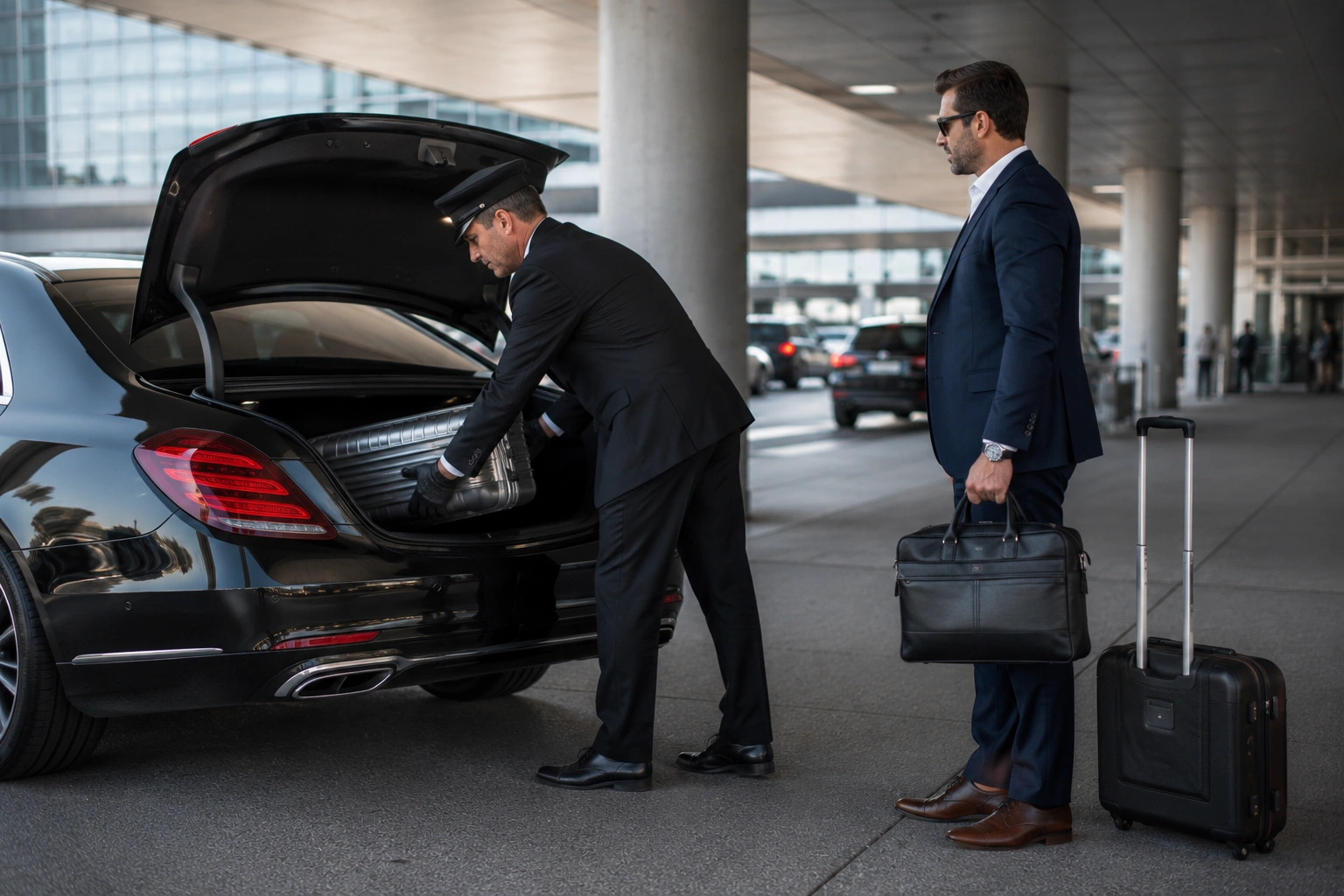
If you are arranging a private airport vehicle, provide the correct passenger and luggage count. A vehicle that fits the passengers may not necessarily fit every suitcase.
You are travelling with children or a group
A family’s two-hour airport routine rarely moves at the same pace as that of one frequent flyer with a laptop bag.
Allow time for washroom stops, strollers, snacks, document checks and keeping the group together. If several passengers are being collected from different addresses, build those stops into the transportation plan rather than subtracting them from the airport buffer.
You need assistance
Passengers requiring wheelchair service, mobility assistance, support with medical equipment or extra time at security should contact their airline in advance. Arrive early enough for the requested service to be arranged without compressing the rest of the departure process.
You are travelling during a peak period
Airport processing changes according to terminal, time, staffing, passenger volume and operational conditions. Pearson publishes current security and customs information through its airport wait-time dashboard.
A short displayed security estimate does not represent your entire airport journey. It may not include:
- Travel to the airport
- Curbside unloading or parking
- Airline check-in
- Bag drop
- U.S. preclearance
- Walking to the gate
- Boarding deadlines
Use the dashboard as one input—not as permission to remove the full arrival buffer.
Your documents need to be checked
Before leaving for Pearson, confirm that you have the documents required by your airline, destination and any country through which you will transit.
A mobile boarding pass does not necessarily mean every document check is complete. International passengers may still need to visit the airline counter.
What About Early-Morning Flights?
An early departure can feel simpler because Toronto’s roads may be quieter, but the airport itself can still be busy.
Pearson identifies early morning as a particularly active period for U.S. departures: its published peak information lists approximately 6:00 a.m. for Terminal 1 U.S. departures and 4:00 a.m. for Terminal 3 U.S. departures. Conditions can change, so check the current airport status rather than relying only on these typical patterns.
For an early flight:
- Complete online check-in as soon as your airline permits
- Confirm whether you are using Terminal 1 or Terminal 3
- Check when your airline’s counter and baggage service open
- Review U.S. preclearance hours if flying south
- Pack and verify documents the night before
- Arrange transportation in advance
- Check the weather and road conditions before leaving
- Avoid assuming that a 5:00 a.m. departure means an empty terminal
A pre-arranged pickup is particularly useful for an early departure because the airport arrival target can be calculated in advance rather than decided while you are getting ready.
How to Calculate When to Leave for Pearson
Start with the time you need to be at the terminal, not the flight’s scheduled departure.
Use this formula:
Scheduled departure time − airport arrival buffer − drive time − road and loading buffer = pickup time
Step 1: Choose the airport arrival buffer
Use:
- Two hours for a domestic flight
- Three hours for a U.S. flight
- At least three hours for another international flight
Increase that buffer when your airline recommends it or your circumstances require more time.
Step 2: Estimate the drive at the correct time of day
A current route estimate is more useful than a generic average.
Driving conditions from Downtown Toronto, North York, Markham, Vaughan, Oakville or another GTA community can change substantially according to the time, weather, construction and incidents on roads such as Highway 401, Highway 427, the Gardiner Expressway and the QEW.
Check the route the evening before and again shortly before pickup.
Step 3: Add a road buffer
Add extra time for:
- Rush-hour congestion
- Snow, freezing rain or poor visibility
- Construction and lane closures
- Multiple pickup addresses
- Loading children and luggage
- Hotel elevator or checkout delays
- A passenger who needs extra boarding time
Example calculation
Suppose you have an 8:00 a.m. international flight.
- Target terminal arrival: 5:00 a.m.
- Current estimated drive: 35 minutes
- Additional road and loading buffer: 15 minutes
- Calculated pickup time: 4:10 a.m.
If weather deteriorates or the airline requests a four-hour airport arrival, recalculate rather than keeping the original pickup time.
A chauffeur or transportation company can help plan this calculation, but the traveller remains responsible for confirming the airline’s check-in and documentation requirements.
How to Reduce Avoidable Delays at Pearson
Arriving early helps, but preparation matters too.
Check in online
Online check-in may reduce the work required at the terminal. You will still need sufficient time for baggage, security, customs where applicable, and boarding.
Confirm the operating airline and terminal
Pearson has Terminal 1 and Terminal 3. Confirm the operating airline shown on your itinerary because a codeshare ticket may display more than one airline name.
Pearson maintains an official airline and terminal directory, but your current boarding pass and airline notifications should be checked as well.
Prepare your carry-on for screening
CATSA generally limits liquids, aerosols and gels in carry-on baggage to containers of 100 mL or less, all fitting inside one clear, resealable bag with a capacity of no more than one litre. Exemptions may apply to necessities such as medication.
Review the current CATSA carry-on rules instead of relying on an old packing list.
Keep important items accessible
Place these where you can reach them without opening several bags:
- Passport or accepted identification
- Boarding pass
- Visa or destination documents
- Medication
- Phone and charging cable
- Necessary travel confirmations
Check the flight and airport before leaving
Look for schedule changes, terminal information, traffic conditions and Pearson processing updates. A delay shown on the flight board is not always permission to arrive later; airlines may restore time or retain their original check-in deadlines.
What Should You Do If You Are Running Late?
Do not spend the remaining time debating whether you can still make the flight.
- Complete online check-in immediately if it remains available.
- Confirm the terminal and entrance.
- Contact the airline for guidance.
- Keep identification and travel documents ready.
- Tell your driver that the timing is urgent, without asking them to drive unsafely.
- Go directly to the required counter, bag drop or security checkpoint.
If an airline’s check-in, baggage or boarding deadline has passed, arriving at the airport may not restore eligibility to board. Only the airline can advise whether rebooking or another arrangement is required.
Arrange Your Pearson Transportation Around the Right Arrival Time
Your airport ride should be scheduled from the terminal arrival target—not simply from the flight time.
Obsidian Ride provides pre-arranged chauffeur transportation to Toronto Pearson Airport from homes, hotels and offices across Toronto and the GTA. When reserving, provide:
- Departure date
- Airline and flight number
- Terminal, if confirmed
- Pickup address
- Passenger count
- Number and approximate size of bags
- Child-seat or accessibility requirements
- Any additional pickup stops
These details help calculate a practical pickup time and select an appropriate vehicle. The final timing should always reflect the airline’s current guidance, expected road conditions and your own travel requirements.
Frequently Asked Questions About Arriving at Pearson Airport
Is two hours early enough for a domestic flight from Pearson?
Two hours is a sensible target for most domestic departures. Although Pearson also refers to 90 minutes as a general rule of thumb, additional time is advisable if you are checking bags, travelling during a busy period or need assistance.
Is three hours early enough for an international flight?
Three hours is the standard planning target. Your airline may recommend three and a half or four hours for particular destinations, busy dates or document requirements, so check its instructions before travel.
How early should I arrive at Pearson for a U.S. flight?
Arrive approximately three hours before departure. U.S.-bound passengers normally complete CATSA security and U.S. customs preclearance at Pearson before boarding.
Should I arrive earlier if I have checked baggage?
Yes. You must complete bag drop before the airline’s cutoff, which may be well before departure. Special or oversized baggage can require additional processing time.
Is Pearson busy for early-morning flights?
It can be. Early morning is a busy period for many U.S. departures, even when roads around Toronto are relatively quiet. Do not reduce your airport buffer solely because the flight leaves early.
Does online check-in mean I can arrive later?
Not necessarily. Online check-in may save time, but you must still complete bag drop when applicable, security, U.S. preclearance where required, and boarding before the airline’s deadlines.
How should I calculate my pickup time for Pearson?
Subtract the recommended airport buffer from the flight time, then subtract the expected drive and an additional road-and-loading buffer. Recheck traffic and weather shortly before pickup.
Should I leave later if my flight is delayed?
Not unless your airline specifically confirms that check-in, baggage and boarding deadlines have also changed. A displayed delay does not automatically move every passenger-processing deadline.
Prefer to Have Your Pearson Pickup Time Planned in Advance?
Tell Obsidian Ride your flight details, pickup address, passenger count and luggage requirements. We can help work backward from your recommended terminal arrival time and arrange private transportation to Pearson from Toronto or the GTA. Always confirm the airline’s current check-in requirements before departure.