
Toronto Pearson · YYZ · Connections
Connecting Flights at Pearson Airport: The Complete Guide.
Four things change on a Pearson connection depending on your itinerary: whether you clear Canadian customs, whether you handle your own bags, whether you pass security again, and whether you change terminals. This guide works through each in the order you will meet them, and sets out how much time every connection type realistically needs.
Connecting flights at Pearson Airport are governed by one question that most travellers never think to ask: what border category is my inbound flight, and what border category is my outbound? Two passengers can land at the same gate, at the same minute, and face completely different procedures on the way to their next aircraft. One walks straight to a gate. The other clears immigration, collects a suitcase, rides a train to another building and passes through screening again.
Toronto Pearson International Airport (YYZ) is Canada’s largest connecting hub, and it handles domestic, US transborder and international traffic across two terminals that are not joined behind security. That last detail drives most of the complexity below.
The short answer: what determines your connection.
Quick answer
When connecting through Toronto Pearson Airport, you clear Canadian customs and immigration only if you arrive on an international or US flight and your onward flight is domestic. If your next flight is US-bound, you complete US preclearance in Toronto. Everything else — baggage, security, terminal changes — follows from those two rules.
Terminal 1 and Terminal 3 are not connected behind security. Any terminal change means leaving the secure area, riding the free Terminal Link train and being screened again.
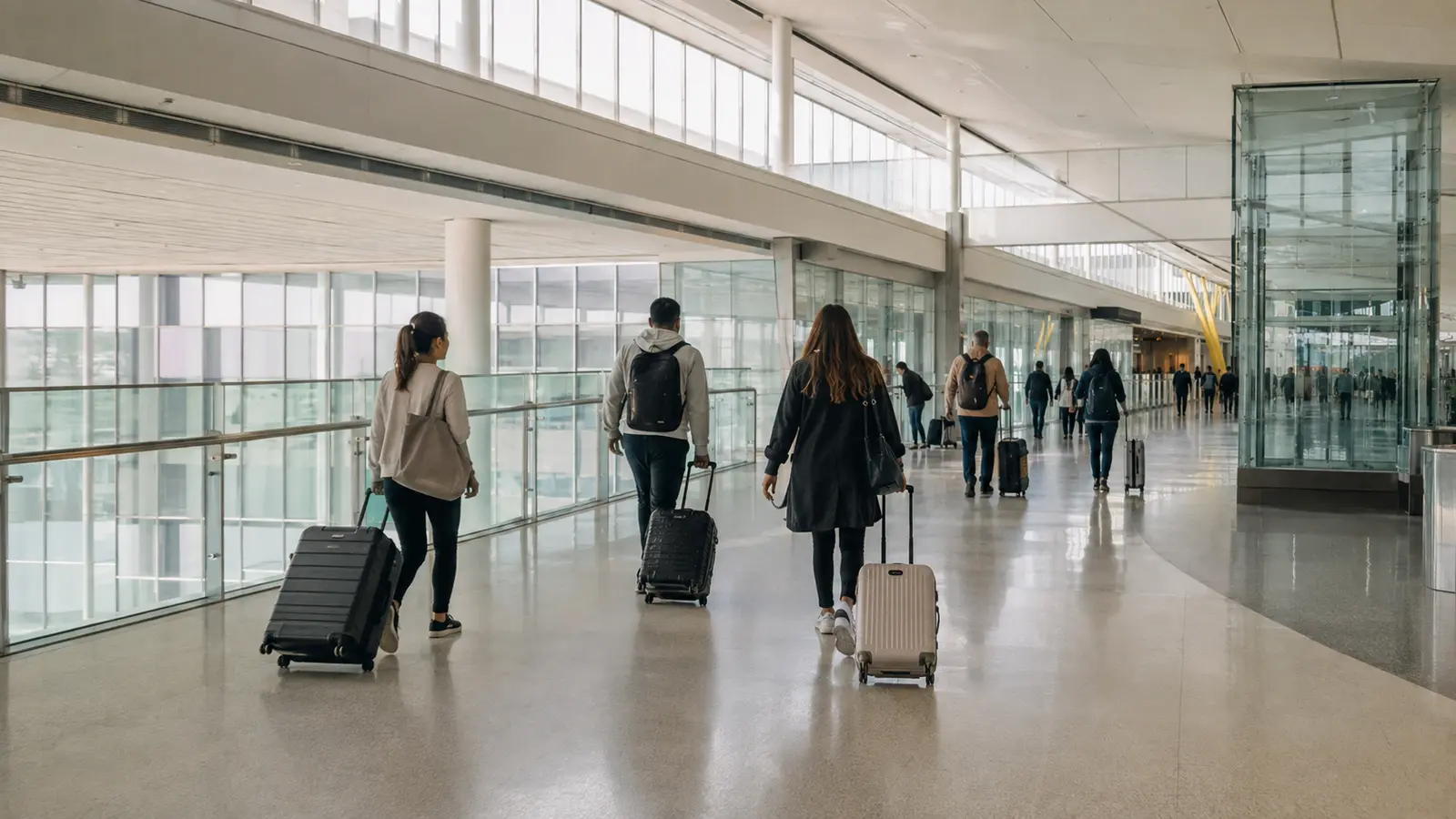
At a glance
The four connection types at Toronto Pearson.
Find your itinerary in the first column. The remaining columns tell you what to expect. Bag handling carries an asterisk throughout because it depends on how your airline tagged the suitcase, which is covered in detail further down.
| Your connection | Canadian customs | Collect bags | Security again |
|---|---|---|---|
| Domestic → Domestic | No | No | Only if changing terminals |
| International → Domestic | Yes | Yes* | Yes |
| International → International | No | Usually not* | Usually yes |
| Anything → United States | Only if inbound is international and you are also routed landside | Depends on tagging* | Yes, plus US preclearance |
Confirm your own itinerary. Toronto Pearson publishes a step-by-step connection guide that takes your inbound and outbound flight numbers and returns the exact sequence for your booking, including terminal changes. It is the only tool that accounts for airline-specific handling, and it takes under a minute.
Borders
Do you clear Canadian customs on a Pearson connection?
The Greater Toronto Airports Authority sets out two triggers. You clear Canadian customs and immigration when your flight into Pearson is international — a category that includes flights from the United States — and your flight out of Pearson is domestic. Separately, you clear US Customs whenever your flight out of Pearson is bound for the United States.
Read that carefully, because it contains a detail many travel guides get wrong. An international-to-international connection — Frankfurt to Toronto to Mexico City, for instance — does not sit inside either trigger. Travellers on those itineraries frequently remain in the transit area without a formal customs declaration.
That said, handling varies by airline and by the specific routing, and some international-to-international itineraries are processed through a document check. Rather than assume, run your two flight numbers through Pearson’s connection tool. If it shows a customs step, plan for it.
What CBSA processing involves
The Canada Border Services Agency screens travellers landing in Canada at Pearson. If you are routed through, you confirm your identity and declare any goods you are bringing in. Most travellers arriving on an international flight use a primary inspection kiosk: scan your travel document, have your photo taken, answer the declaration questions, then take the printed receipt to a border services officer.
Up to five travellers living in the same country can use one kiosk together. Some travellers are directed to an officer instead, including anyone with a non-machine-readable travel document, anyone travelling on a document other than a passport or Canadian permanent resident card, and unaccompanied children under 16.
Advance Declaration saves real time
The Advance Declaration feature inside the ArriveCAN app lets you submit your customs and immigration declaration up to 72 hours before you arrive in Canada. Users are directed to dedicated Express Lanes on arrival, which skip the main queue. On a tight international-to-domestic connection this is the single highest-value thing you can do before boarding your first flight. Our guide to how long CBSA processing typically takes covers what to expect at different hours.
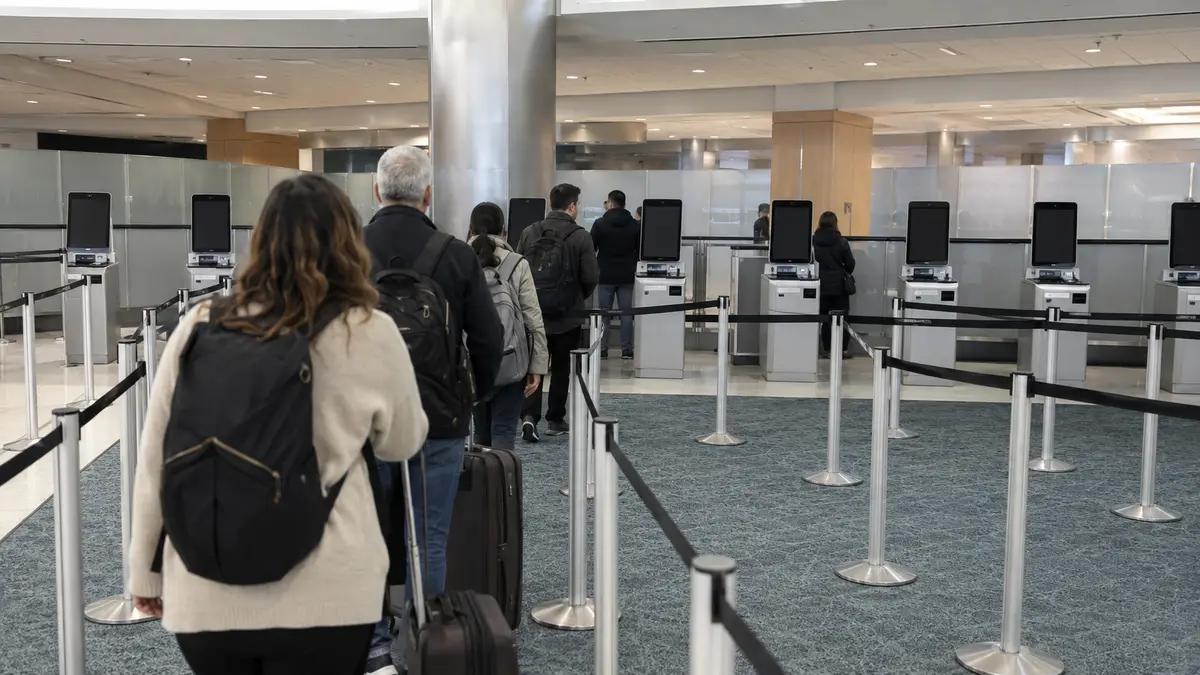
Baggage
What happens to your checked bags during a connection.
This is the step travellers most often get wrong, and Pearson handles it in a way that is not obvious. There are three possible outcomes, not two.
- Your bag is tagged to your final destination and you never see it. The most common outcome on a single-ticket itinerary within one terminal.
- Your bag is tagged through, but you still collect it and place it on a connection drop-off belt. This catches people out. A through-tag does not always mean hands-off at Pearson. You retrieve the bag from the carousel and put it straight back onto a dedicated belt rather than queueing at a check-in counter.
- Your bag is not tagged onward, and you must check it in again for your next flight at the airline counter. This is standard on separate tickets.
Settle this at your very first check-in, before you have flown anywhere. Ask the agent directly whether you need to collect your bags at any connection point or whether they will meet you at your final destination. That one question removes the ambiguity for the whole journey.
To retrieve checked luggage at Pearson, go to the carousel assigned to your flight number. Free luggage carts are available throughout the terminals. If your bag is delayed, lost or damaged, your airline — not the airport — is responsible for handling it.
Allowances can differ between your two flights. The airline operating your onward leg may enforce different size, weight or piece limits than the one that brought you to Toronto. On a mixed-airline itinerary, check both before you travel rather than discovering a fee at the connection counter.
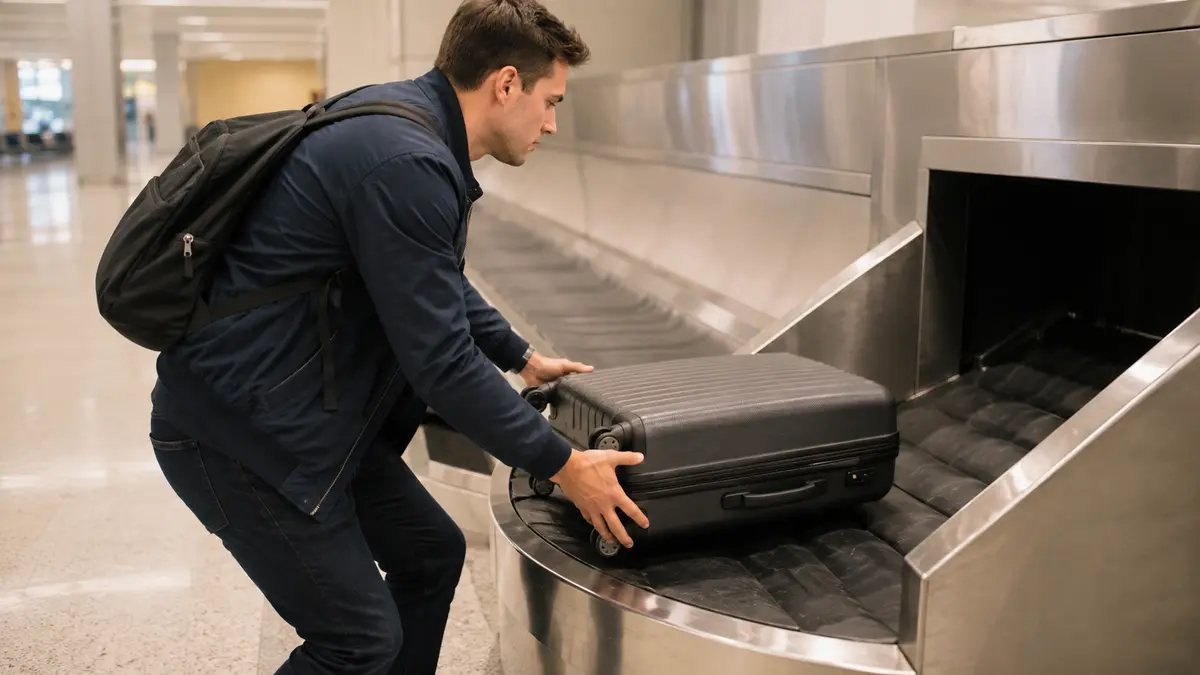
Screening
Security screening on a Pearson connection.
Not every connecting passenger passes through security at Pearson. If you stay airside within one terminal and no border step sends you landside, you may walk directly to your next gate. Any step that takes you out of the secure area — customs, baggage collection, a terminal change — means screening again on the way back in.
Screening follows rules set by the Canadian Air Transport Security Authority. The trap for connecting passengers is that your onward flight may carry different restrictions than the airport you departed from. Liquids bought airside at your origin, in particular, are a common casualty. Check the current CATSA restricted items list rather than assuming your origin airport’s rules travel with you.
Pearson advises passengers to prepare for enhanced screening of electronic devices. Screening is applied randomly, but every device should be charged and able to power on, and you should expect to remove devices from cases. Dedicated lines exist for Trusted Traveller programme members such as NEXUS, and for families and passengers with special needs.
Terminal change
Changing terminals: Terminal 1 to Terminal 3.
Pearson has two passenger terminals, and they are joined only outside security. There is no airside walkway and no pedestrian route between them. The connection is the Terminal Link, a free automated train running between Terminal 1, Viscount Station and Terminal 3.
The train operates 24 hours a day, and travel time between stations is two to eight minutes. Frequency is published as a maximum waiting time that changes through the day, which is worth knowing if you are counting minutes.
| Hours | Maximum wait |
|---|---|
| 12:30 a.m. – 3:30 a.m. | 8 minutes |
| 3:30 a.m. – 8:00 a.m. | 4 minutes |
| 8:00 a.m. – 11:30 a.m. | 8 minutes |
| 11:30 a.m. – 12:30 a.m. | 4 minutes |
Note the mid-morning band. Between 8:00 and 11:30 a.m. — squarely inside the busiest transatlantic arrival wave — the maximum wait doubles. If your connection lands in that window and crosses terminals, build the difference in.
Finding the platforms
- From Terminal 1: follow the train symbol to Parking Garage Level 5, then take the escalator or lift to the platform.
- From Terminal 3: follow the train symbol to the Sheraton Gateway Hotel pedestrian bridge, then take the escalator or lift down to the platform.
- Viscount Station: the third stop, serving Value Park Garage, Value Park Lot and the ALT Hotel.
The train is accessible and can carry a non-folding mobility aid. During occasional scheduled maintenance the airport substitutes shuttle buses overnight and posts details on the Terminal Link page. For a fuller breakdown of how the two buildings differ, see Terminal 1 and Terminal 3 compared in detail.
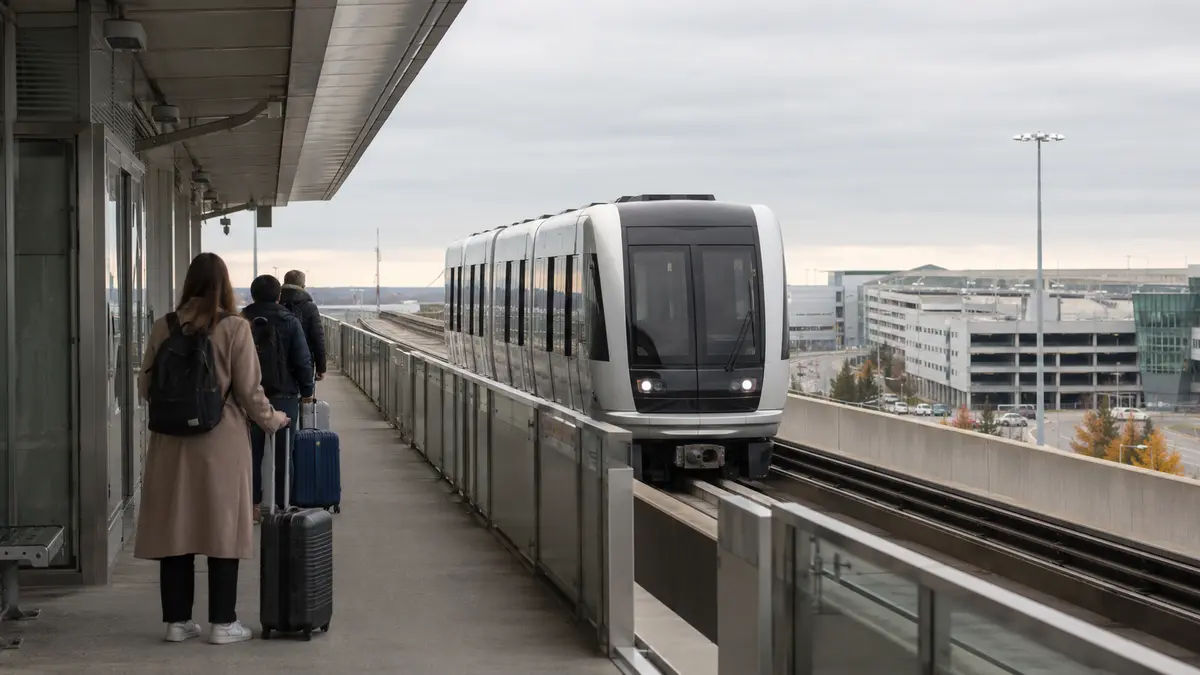
United States
US preclearance and what it means for you.
If your onward flight from Pearson goes to the United States, you complete American immigration, customs and agriculture inspection in Toronto, before boarding. Toronto Pearson has hosted US preclearance since 1952 and is the busiest such facility anywhere.
The benefit lands at the far end. Because you were inspected by US Customs and Border Protection in Canada, you arrive in the United States as a domestic passenger and walk off the aircraft to the exit or your next gate. There is no arrival queue.
The cost is paid in Toronto. Preclearance is a full border inspection inserted into your connection, and its queue is a genuine variable that depends on the arrival wave. Connections onto US-bound flights consistently need the most time of any category, which is reflected in the airline minimums below. NEXUS cardholders and passengers with airline priority access may use a dedicated line.
Before you travel
The documents you need just to transit Canada.
This section is the reason some travellers are refused boarding on the first leg of a journey that never intended to enter Canada at all.
Immigration, Refugees and Citizenship Canada is unambiguous: passengers transiting Canada by air need an Electronic Travel Authorization or a visa, regardless of how long they are in the country. A two-hour connection that never leaves the terminal is still transit, and still requires the document.
Two narrow exceptions exist. Travellers whose aircraft merely refuels in Canada en route to or from the United States do not need one, and neither do participants in the China Transit Program or the Transit Without Visa Program, both of which carry strict eligibility conditions. Confirm your own position on the official IRCC transit guidance before booking, not after.
Apply early. An eTA is usually approved quickly but can take longer if further information is requested, and a transit visa follows a full application process measured in weeks. Book with enough lead time that a document delay does not cost you the ticket. Apply only through the official Government of Canada channel.
A separate point that catches dual nationals: Canadian citizens, including dual citizens, cannot hold an eTA and generally need a valid Canadian passport to fly to or transit through Canada. Permanent residents are likewise ineligible for an eTA and travel on their PR card.
Planning
How much time you need between connecting flights.
Airlines publish a minimum connection time for every hub, and a booking engine will not sell you a connection shorter than it. Air Canada’s published minimums at Toronto are a useful benchmark because it operates the largest connecting bank at Pearson. These figures apply to Air Canada, Air Canada Rouge and Air Canada Express operated by Jazz; other carriers set their own.
| Connection type | Minimum at Toronto |
|---|---|
| Within Canada | 50 minutes |
| Canada → United States | 1 hour 10 minutes |
| Canada → International | 1 hour |
| United States → Canada | 1 hour 10 minutes |
| United States → International | 1 hour |
| International → Canada | 1 hour 15 minutes |
| International → United States | 1 hour 25 minutes |
| International → International | 1 hour |
Several exceptions apply. Connections onward to Vancouver, Ottawa or Montreal generally add time, and an international connection to New York LaGuardia carries a longer minimum still. The full published table lists them.
How to read a minimum
A minimum connection time is a floor, not a recommendation. It assumes an on-time arrival, an ordinary walk and no queue out of the ordinary. It says nothing about whether the connection is comfortable.
Three factors argue for more than the minimum: a terminal change, an inbound flight with a weak punctuality record, and travel during a peak arrival wave. Add all three together and a published minimum becomes optimistic. When you are choosing between itineraries, the extra forty minutes is usually cheaper than the alternative.
One reassurance worth stating plainly: if you booked a single ticket and the airline sold you the connection, it accepted the timing risk. Miss it because your inbound ran late and the airline rebooks you. If you assembled two separate tickets, that protection does not exist. Connection timing is also different from arriving for an originating flight, which we cover in how early to arrive at Pearson.
Contingency
When the connection breaks.
Delays happen, and the recovery is far easier if you act before you land rather than after.
- Check your onward flight in the air. Most aircraft with connectivity let you see whether your next departure has also slipped. A delayed onward flight often means no problem at all.
- Open the airline app the moment you land. Carriers frequently rebook passengers automatically and push the new booking before you reach the aisle. Acting on that early beats a queue.
- Go to a connections desk, not the check-in hall. Airside connection service counters exist for exactly this and are usually far shorter than landside queues.
- Confirm what happens to your bag. If it was tagged through, it stays in the system and follows your new routing. Ask, and note the tag number.
- Ask about accommodation. If the rebooking puts you on a flight the next day, ask what the airline provides. Entitlements vary with the cause of the delay.
If you end up landside overnight, remember your border status. If you were routed through Canadian customs you have been admitted and can leave the airport. If you were transiting airside on a transit visa, you cannot — that document authorises the transit area only. Ask an airline agent before making hotel plans.
Extended layovers
Long and overnight layovers at Pearson.
A connection long enough to leave the airport is a different problem from a connection you are running to make. Two questions decide what is possible.
Are you permitted to leave?
Leaving the airport means entering Canada, which means being admissible and clearing CBSA. If you hold a visitor visa or a valid eTA and are admitted, you may leave. If you are transiting on a transit visa, you may not — it covers the airport transit area only. If your connection keeps you airside and your documents do not permit entry, the terminal is where you stay.
Does the timing actually work?
Work backwards from your next departure, and be honest about the arithmetic. You need to be back at the terminal, through check-in if your bag was not through-tagged, through security, and through preclearance if your onward flight is US-bound. On an overnight connection you also need to account for the airline’s bag-drop cut-off, which closes well before departure.
For an overnight, a hotel connected to the airport removes most of the variables. The Sheraton Gateway and the ALT Hotel sit on the Terminal Link line, and the Sheraton Gateway connects to Terminal 3 by covered walkway. For downtown properties, the calculation shifts to ground transport, and the return leg in the early morning is the part worth arranging in advance.

Comparing your ground options
If you do leave, Pearson offers the full range. Each suits a different traveller, and none is the right answer for everyone.
| Option | Best for | Worth knowing |
|---|---|---|
| UP Express | Solo travellers heading downtown, travelling light | Station is attached to Terminal 1 only; from T3 you ride the Terminal Link first |
| TTC, GO, MiWay | Budget-conscious travellers with minimal luggage | Not every route serves both terminals; check your specific route |
| Taxi or airport limousine | Walk-up convenience without pre-planning | Queues lengthen sharply when several wide-body flights land together |
| Rideshare | Short trips outside peak hours | Pickup zones have moved before; follow in-app directions and current signage |
| Airport hotel shuttle | Overnight connections at nearby properties | Frequency drops overnight; confirm the last and first runs directly with the hotel |
| Pre-arranged private transfer | Groups, families, heavy luggage, late arrivals, early departures | Meeting point is fixed in advance; pickup is at Door A in either terminal |
Assistance
Accessibility, families and mobility aids.
Arrange assistance through your airline in advance rather than on the day. Airlines are responsible for accompanying passengers who need help from the aircraft to their connecting flight, and a connection involving customs, baggage collection and a terminal change has several points where that matters.
Pearson operates dedicated screening lines for families and passengers with special needs, and the Terminal Link train is accessible and can carry a non-folding or non-collapsible mobility aid. Airlines may also allow strollers, wheelchairs and other mobility aids to be checked and returned at the aircraft door, which is worth confirming for each leg separately since the two airlines may handle it differently.
Families connecting with young children should treat the published minimum as a starting point. Feeding, changing and the simple pace of moving a group through an unfamiliar building all take real time that the minimum does not contemplate.
Avoid these
Common mistakes on Pearson connections.
- Assuming a through-tagged bag means hands-off. At Pearson you may still collect it and place it on a connection drop-off belt. Ask at first check-in.
- Booking separate tickets to save money. A missed connection on separate tickets is your problem and your cost. On one ticket it is the airline’s.
- Skipping the eTA because you are not entering Canada. Air transit requires an eTA or visa regardless of duration.
- Treating a terminal change as a short walk. It means exiting security, riding a train and being screened again. Budget accordingly.
- Forgetting that preclearance is a full border inspection. US-bound connections need the most time of any category.
- Trusting the terminal printed on a months-old confirmation. Assignments change, and on codeshares the terminal follows the operating airline, not the one that sold the ticket.
- Carrying liquids bought airside at your origin. Your onward flight’s restrictions apply, not your departure airport’s.
Ground transport
Arranging transport around an extended connection.
Most connections need no ground transport at all. Where it becomes relevant is the overnight layover, the connection long enough to justify a hotel, and the disruption that turns a transit into an unplanned night in Toronto.
Obsidian Ride provides pre-arranged private transfers at Toronto Pearson for travellers in those situations. Pre-arranged vehicles collect at the designated areas the airport specifies — Door A in Terminal 1 and Door A in Terminal 3 — so the meeting point is settled before you land rather than negotiated at the curb after a long flight.
- Give your flight number and terminal. Arrivals are monitored, so a delayed inbound adjusts the pickup rather than losing it.
- Say whether you are clearing customs. An international arrival routed through CBSA reaches the door considerably later than a domestic one.
- Book the return leg at the same time. On an overnight connection the early-morning run back is the leg with the least margin for error.
- Match the vehicle to your luggage. A connection where you have collected checked bags needs more space than a carry-on transfer. Browse the fleet before booking.
Overnight connections are usually best served by airport hotel transfers, while travellers with a full day between flights sometimes prefer hourly service so the vehicle stays with them. Obsidian Ride operates across Toronto and the GTA, with pre-arranged Pearson airport transfers available at any hour.
Questions
Connecting flights at Pearson Airport: frequently asked questions.
Do you have to go through customs when connecting through Toronto Pearson?
You clear Canadian customs and immigration if your flight into Pearson is international, which includes flights from the United States, and your flight out of Pearson is domestic. If your onward flight is to the United States, you clear US Customs through preclearance instead. Handling can vary by airline and routing, so confirm your specific itinerary using Toronto Pearson's official connection guide.
Do I need to collect my baggage on a connection at Pearson?
It depends on how your bag was tagged. If it is not tagged to your onward destination, you must collect it and check it in again. If it is tagged through, you may still need to retrieve it and place it on a connection drop-off belt at Pearson. Ask at your first check-in whether you need to collect your bags at any connection point.
How much time do I need between connecting flights at Pearson Airport?
Air Canada's published minimums at Toronto are 50 minutes within Canada, 1 hour for international to international, 1 hour 15 minutes international to Canada, and 1 hour 25 minutes international to the United States. Other airlines set their own. Treat any minimum as a floor and add time for a terminal change or a peak arrival wave.
Do I need a visa or eTA to connect through Toronto Pearson?
Passengers transiting Canada by air need an Electronic Travel Authorization or a visa regardless of how long they are in the country, even without leaving the terminal. Exceptions apply to travellers whose aircraft only refuels in Canada en route to or from the United States, and to participants in the China Transit Program and Transit Without Visa Program. Confirm your position with IRCC before booking.
Can you walk between Terminal 1 and Terminal 3 at Pearson?
No. There is no pedestrian route and no airside connection between the two terminals. Use the free Terminal Link train, which runs 24 hours a day between Terminal 1, Viscount Station and Terminal 3. Travel time between stations is two to eight minutes, with published maximum waits of four to eight minutes depending on the hour.
Do I have to go through security again when connecting at Pearson?
Not always. If you remain airside within one terminal and no border step routes you landside, you may go directly to your gate. Any step that takes you out of the secure area means screening again. Remember that your onward flight may carry different restrictions than your departure airport, particularly for liquids purchased airside.
What is US preclearance and how does it affect my Pearson connection?
US preclearance means you complete American immigration, customs and agriculture inspection at Toronto Pearson before boarding, then arrive in the United States as a domestic passenger with no arrival queue. The trade-off is that a full border inspection is inserted into your connection in Toronto, so US-bound connections need more time than any other category.
Can I leave the airport during a long layover at Toronto Pearson?
Only if you are admissible to Canada and clear CBSA. Travellers with a valid eTA or visitor visa who are admitted may leave. A transit visa authorises the airport transit area only and does not permit entry. Work backwards from your next departure and allow for check-in cut-offs, security and preclearance on the return.
What happens if I miss my connecting flight at Pearson?
On a single ticket, the airline is responsible for rebooking you and will often do so automatically before you land. Check the airline app on arrival and use an airside connections desk rather than the landside check-in hall. On separate tickets bought independently, no such protection exists and you may need to purchase a new fare.
Where do pre-arranged cars pick up at Pearson for an overnight layover?
Toronto Pearson designates Door A in Terminal 1 and Door A in Terminal 3 for pre-arranged taxis and limousines. Let the dispatcher at the designated area know you are waiting for your ride. Providing your flight number and terminal when booking allows the arrival to be monitored so a delayed inbound adjusts the pickup rather than losing it.
Planning an overnight connection through Pearson?
Add your flight number and terminal, and your pickup is arranged around your actual arrival rather than the schedule. Flight monitoring, luggage assistance and a rate confirmed before you travel.