
Toronto in Winter: What to Expect, and How to Enjoy It.
A Toronto winter is colder than most visitors expect and considerably more manageable than they fear. This guide covers what the weather is actually like, how to dress for ice rather than air temperature, how to cross downtown without going outside, and what closes for the season.
Most people who write off a Toronto winter have imagined the wrong thing. They picture standing outside in the cold for hours. In practice, a winter visit is a series of short walks between warm places, and the city is unusually well built for exactly that.
What genuinely changes is the shape of the day: less waterfront, more indoors, earlier darkness and a real premium on the right footwear. For general orientation and transit, see our Toronto travel guide.
Toronto in winter works well if you plan around the cold rather than ignore it. Use the PATH, more than 30 kilometres of mostly underground walkway, to cross downtown without going outside. Outdoor skating is free from late November to March. Bring boots with grip. The islands and most waterfront activity are out until spring.
What a Toronto winter is actually like.
Winter conditions generally set in through November and last into March, with the coldest stretch in January and February. Daytime temperatures in midwinter typically sit around freezing, overnight lows several degrees below, and cold snaps push considerably lower for a few days at a time. Wind off Lake Ontario makes it feel colder than the thermometer suggests.
Snow is a regular feature rather than an event. Light snow cover through much of January and February is normal, with a handful of heavier falls each winter and occasional thaws that turn snow to slush and then to ice. Daylight is short: expect it to be dark by late afternoon in December.
On the numbers. Published averages for Toronto's winter vary noticeably between sources, so this guide describes ranges rather than quoting a single figure. If you want precise data for a specific month, Environment and Climate Change Canada's Canadian Climate Normals is the authoritative archive.
One consequence for planning: where you stay matters more in winter than in summer, because you will walk less and value proximity more. Our guide to which neighbourhood suits your trip sets out the options, and a base near a subway station or the PATH is worth paying for in January.
What to pack.
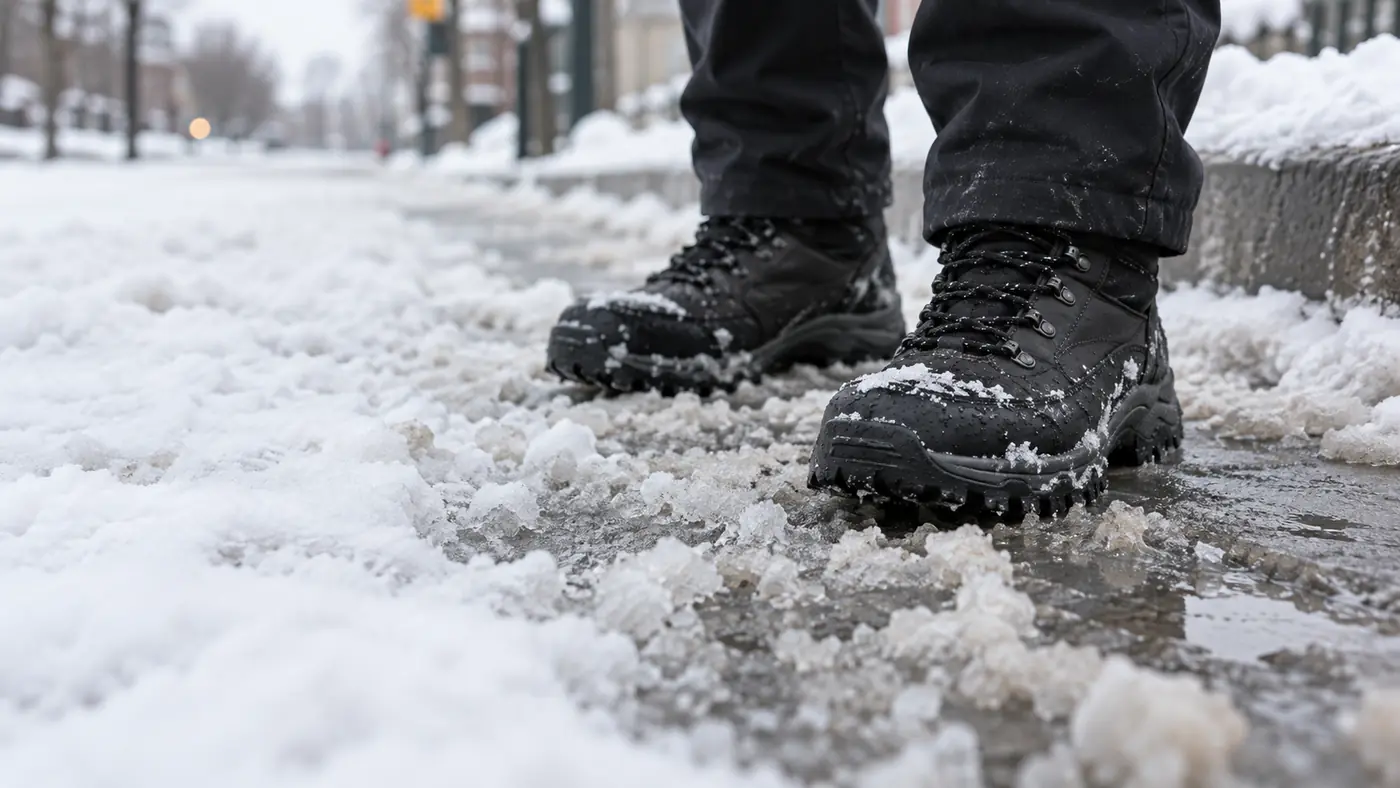
Visitors from warmer places tend to buy a good coat and stop there. The coat matters. What matters more is what is on your feet.
| Item | Why it matters |
|---|---|
| Waterproof boots with grip | Pavements are icy, slushy or salted for much of the season. Smooth soles are genuinely unsafe on packed ice |
| Insulated coat | Wind off the lake is the main difficulty; a windproof outer layer beats a bulky one |
| Hat and gloves | Most heat is lost at the extremities, and phones are hard to use with cold hands |
| Layers | Indoors is heated and often warm; you will be taking the coat off constantly |
| Warm socks | Wet feet end a day faster than anything else |
| Scarf or neck warmer | The difference between tolerable and unpleasant on a windy corner |
| Lip balm and moisturiser | Cold air and heated interiors are drying |
| Phone battery pack | Cold drains batteries noticeably faster |
You do not need specialist expedition clothing. You need dry feet, a windproof layer and the willingness to go indoors every so often.
The SecretThe PATH: the city’s winter advantage.
This is the single most useful thing a winter visitor can learn. The PATH is a mostly underground pedestrian walkway network beneath downtown Toronto, spanning more than 30 kilometres of restaurants, shops and services, and carrying more than 200,000 commuters on a business day.

In practice it means you can move between Union Station, several subway stations, a number of hotels, office towers and major shopping centres without going outside. On a cold or wet day it turns a miserable fifteen-minute walk into a comfortable one, with somewhere to buy coffee along the way.
Three things to know before relying on it:
- It is not one building. The network threads through many separate properties, so hours differ by section and some connections are quieter or closed at evenings and weekends. Have a surface route in mind as a backup.
- Signage takes a moment to learn. The City's online map is more reliable than general mapping apps, which tend to route you along the street above.
- It is a commuter route first. Busy at weekday rush hours, near-empty on a Sunday morning.
Skating, and the outdoor side of winter.
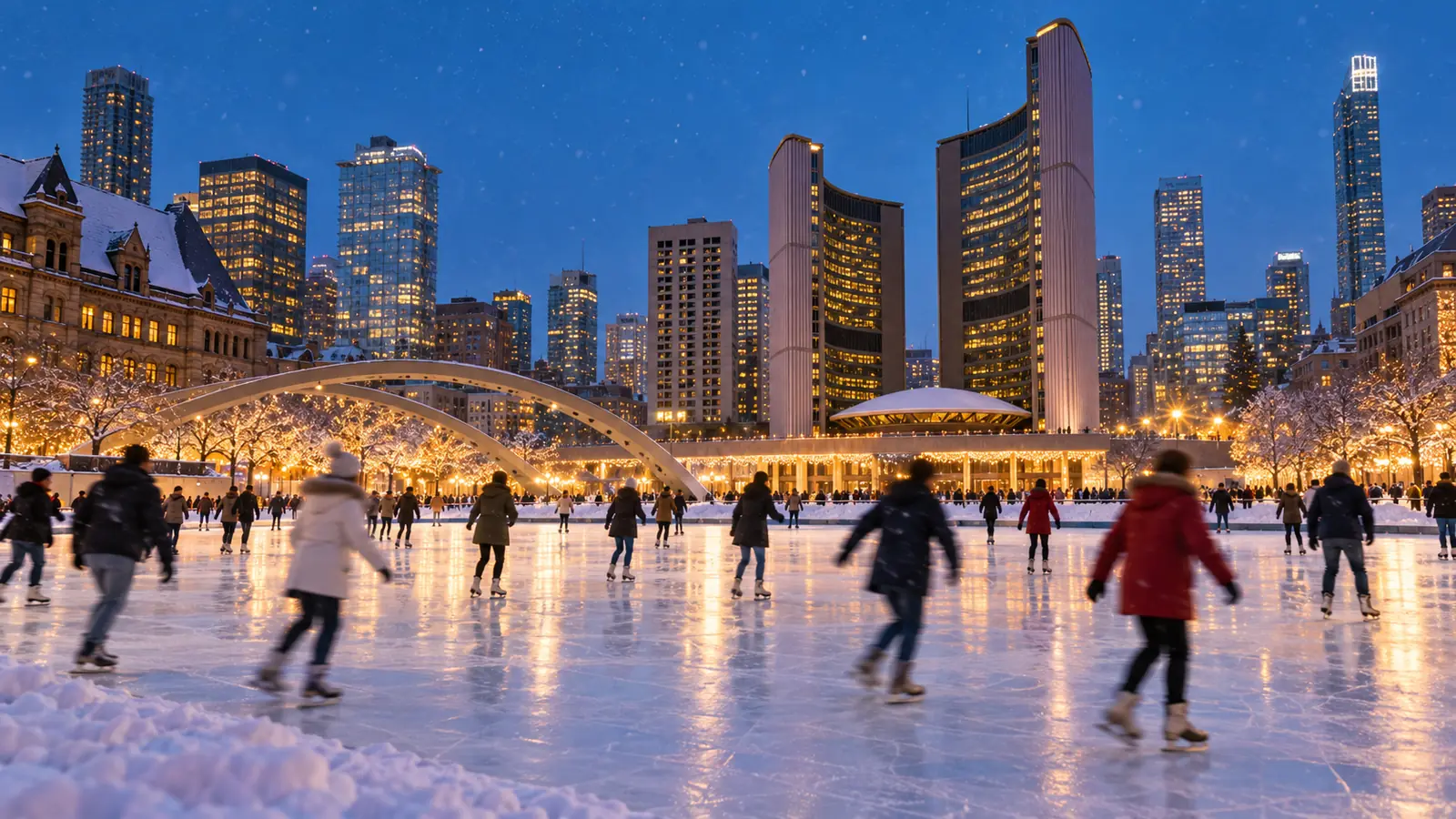
Outdoor skating is the winter activity most worth planning for, and it costs nothing. According to the City of Toronto, outdoor artificial rinks typically open in late November and close for the season in March, and all drop-in skating is free.
A few practical details from the same source:
- Skate rentals are available at Nathan Phillips Square during the winter season.
- A free Skate Lending Library operates at selected locations, with no reservations needed.
- Rinks close after heavy snowfall for clearing, and schedules adjust for weather, so check the City's rink map before setting out.
- Helmets are required for most programmes.
Beyond skating, winter suits the city's parks and ravines on a clear cold day, and the quieter neighbourhoods look their best under snow. What it does not suit is anything involving the lake edge for an extended period, where the wind is at its worst.
Indoors: what fills a cold afternoon.
Toronto's indoor offering is genuinely strong, and winter is when it is least crowded.

- Museums and galleries. The Royal Ontario Museum and the Art Gallery of Ontario each reward a half day, and both are close to subway stations. Check current hours before going; both close on Mondays.
- St. Lawrence Market. Entirely indoors, and a good way to spend a cold morning.
- Theatre, music and sport. The theatre season runs through winter, and hockey and basketball fill the Entertainment District most weeks.
- Shopping and dining in the PATH. An afternoon underground is a legitimate plan, not a consolation prize.
- Casa Loma. Largely indoors, and decorated for the holidays in December.
Winter events.
Winter carries a dense run of events from mid-November into the new year, and a second, quieter wave in January and February.
The Distillery Winter Village, Toronto's best-known Christmas market, runs in the Distillery District from 12 November 2026 to 3 January 2027, opening with a tree lighting at 6 p.m. on 12 November. November also brings the Royal Agricultural Winter Fair, the Santa Claus Parade and the Cavalcade of Lights, and January and February typically bring the City's Winterlicious dining programme and light installations in the Distillery District.
Dates and the full year's programme are in the winter events calendar.
SeasonalWhat’s open and what closes.
The most common winter disappointment is arriving with a summer itinerary. This is what changes.
| Attraction | Winter status |
|---|---|
| Toronto Islands | Ferries run year-round, but Centre Island and Hanlan's Point routes operate only mid-April to mid-October. Outside that, service is to Ward's Island |
| CN Tower | Open year-round; visibility varies with weather |
| Museums and galleries | Open year-round, and quieter than in summer |
| St. Lawrence Market | Open year-round; closed Mondays |
| Distillery District | Open year-round; at its busiest during the Winter Village |
| Outdoor rinks | Typically late November to March; may close after heavy snow |
| Patios and waterfront activity | Largely closed or much reduced |
| Harbourfront walking paths | Accessible but exposed and often windy |
Getting around in the snow.
Toronto copes with ordinary winter weather well. The difficulty is uneven: some things barely notice snow and others slow considerably.
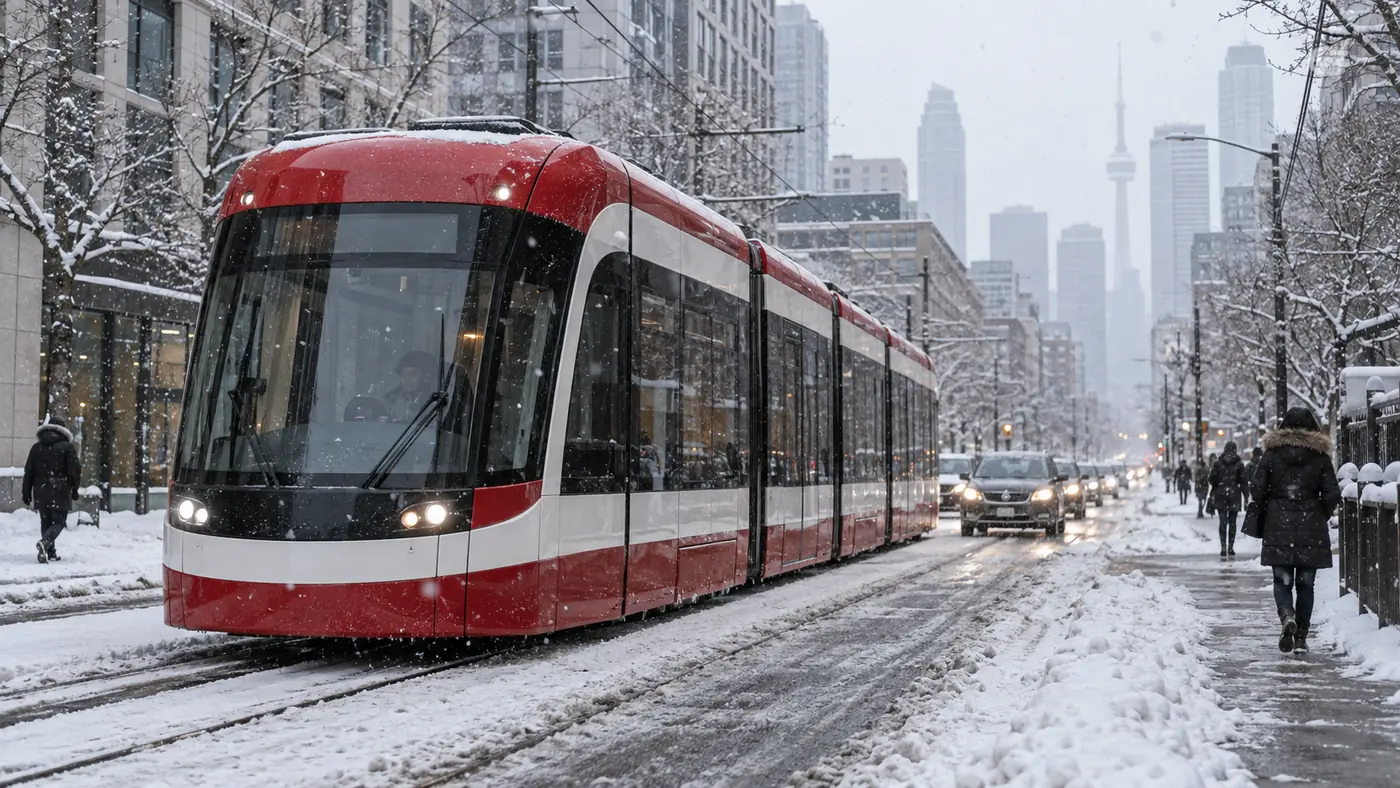
- The subway is the most reliable option in bad weather, since most of the central network runs underground.
- Streetcars and buses slow in heavy snow and traffic, so allow extra time for anything with a fixed start.
- Pavements vary. Main downtown streets are cleared quickly; side streets and corners less so, and refreezing overnight is common.
- Driving is the least attractive option. Parking is limited and expensive, and a car you are not used to driving in snow is not where you want to learn.
Paying for transit is unchanged in winter: tap a contactless card or a card in a phone wallet, and a two-hour transfer applies automatically. The TTC's fares page has current details.
Arriving in winter.
Winter is the season when a scheduled arrival time and an actual one diverge most. Snow and freezing rain cause delays; aircraft need de-icing, which adds time even when the flight itself is on schedule; and a knock-on delay earlier in the day can push an evening arrival by hours.
Three consequences worth planning for:
- Check your flight before leaving for the airport, in both directions.
- Allow more time for a winter departure than you would in summer, both for the journey to Pearson and for the airport itself.
- Know your rights if things go wrong. Weather delays are treated differently from delays within an airline's control, and our guide to what you're owed if a flight is delayed explains the distinction.
Ground transport from Pearson works normally in winter, though everything takes a little longer. Pearson airport transfers booked in advance track the actual arrival rather than the schedule, which matters more in January than at any other time of year.
Six winter mistakes.
- Packing a good coat and poor shoes. Ice, not air temperature, is what spoils a day.
- Planning the islands. Centre Island and Hanlan's Point routes do not run in winter.
- Ignoring the PATH. It is the reason downtown is comfortable in January.
- Overpacking the day. Winter days are short and progress is slower; three stops beats five.
- Assuming rinks are always open. They close after heavy snowfall for clearing.
- Leaving no margin for a winter flight. De-icing and snow delays are routine, not exceptional.
Winter arrivals and transfers.
For most of a winter trip, the subway and the PATH will serve you better than any vehicle. There are two moments where that is not true, and both involve luggage and a fixed time.

The arrival. Landing in snow, at night, with bags, into an unfamiliar city is the least appealing moment of a winter trip. A pre-arranged transfer with flight monitoring adjusts to the actual landing, and Obsidian Ride includes complimentary wait time on airport pickups.
Moving between hotels, or a day with several stops. Luggage and slush do not combine well, and neither do young children and a windy corner. Transfers between hotels and booking a chauffeur by the hour both exist for exactly this. Obsidian Ride operates 24/7 dispatch across Toronto and the GTA.
Land in the snow. Leave in the warm.
Add your flight number to the reservation and the pickup follows your actual arrival, however the weather behaves.
Toronto in winter: frequently asked questions.
Is Toronto worth visiting in winter?
Yes, with the right expectations. Winter brings Christmas markets, free outdoor skating, quieter museums and lower hotel demand outside the holidays, and the downtown core is connected by more than 30 kilometres of mostly underground walkways. What it does not suit is a trip built around outdoor sightseeing, waterfront walks or the Toronto Islands.
How cold does Toronto get in winter?
January is the coldest month, with daytime temperatures typically around freezing and overnight lows several degrees below, punctuated by cold snaps that go considerably lower. Wind off Lake Ontario makes it feel colder. Published averages vary between sources, so check Environment and Climate Change Canada's climate data for the figures you need.
What should I pack for Toronto in winter?
A warm insulated coat, hat, gloves and layers, and above all waterproof boots with proper grip. Pavements are often icy or slushy, and smooth-soled shoes are the single most common visitor mistake. Add a scarf, warm socks and something to protect a phone from the cold, which drains batteries quickly.
What is the PATH and is it useful in winter?
The PATH is a mostly underground pedestrian walkway network in downtown Toronto spanning more than 30 kilometres of restaurants, shops and services, used by over 200,000 commuters on a business day. In winter it lets you cross much of the core without going outside, connecting Union Station, subway stations, hotels and shopping centres.
Can you ice skate outdoors in Toronto?
Yes, and it is free. The City operates outdoor artificial rinks that typically open in late November and close in March, with drop-in skating free of charge at all of them. Skate rentals are available at Nathan Phillips Square during the season, and the City runs a free Skate Lending Library at selected locations.
Can you visit the Toronto Islands in winter?
Only partly. City ferries run year-round, but routes to Centre Island and Hanlan's Point operate from mid-April to mid-October. Outside that window, service runs to Ward's Island. It is a quiet, atmospheric trip in winter, but most of what draws visitors to the islands in summer is closed.
What is there to do in Toronto when it's too cold to be outside?
A great deal. The Royal Ontario Museum and the Art Gallery of Ontario both reward a half day, St. Lawrence Market is indoors, and theatre, live music and sport run all winter. The PATH connects shopping and dining across the core, and a single visit can fill an afternoon without stepping outdoors.
Does snow disrupt travel in Toronto?
Sometimes. The city handles ordinary snowfall well, and the subway is largely unaffected, but heavy snow slows streetcars and buses, makes pavements difficult and causes flight delays and de-icing queues at Pearson. Build extra time into anything with a fixed departure, and check your flight before leaving for the airport.
When does winter start and end in Toronto?
Cold weather generally sets in through November and lasts into March, with the coldest stretch in January and February. Outdoor rinks typically run from late November to March, and the Christmas markets open in mid-November. Early March can still be wintry, though days lengthen noticeably.
Should I book a car or use transit in Toronto in winter?
Transit, for most of a city trip. The subway runs reliably in snow and parking downtown is limited and expensive. A pre-arranged vehicle is most useful at the two moments that involve luggage and fixed times: arriving at the airport, and leaving for a flight in poor weather.