
Toronto Travel Guide for First-Time Visitors: The Practical Version.
A first trip to Toronto is much easier once you understand how the city fits together. This guide covers the two airports, which neighbourhood suits which kind of trip, how the transit system works after this year's changes, what to see first, and how to shape the first three days.
Most Toronto guides start with a list of sights. That is the least useful place to start on a first visit, because the sights are easy to find and the logistics are not. Where you stay decides how much of each day you spend travelling, and how you arrive decides how the first evening goes.
So this guide works the other way round. Orientation first, then arrival, then where to base yourself, then how to move around, and only then what to see.
For most first visits, this Toronto travel guide comes down to three decisions: stay downtown between the waterfront and Bloor Street, use the subway and streetcars by tapping a contactless card, and give yourself three full days. Arriving at Pearson, the UP Express reaches Union Station in about 28 minutes. You will not need a car.
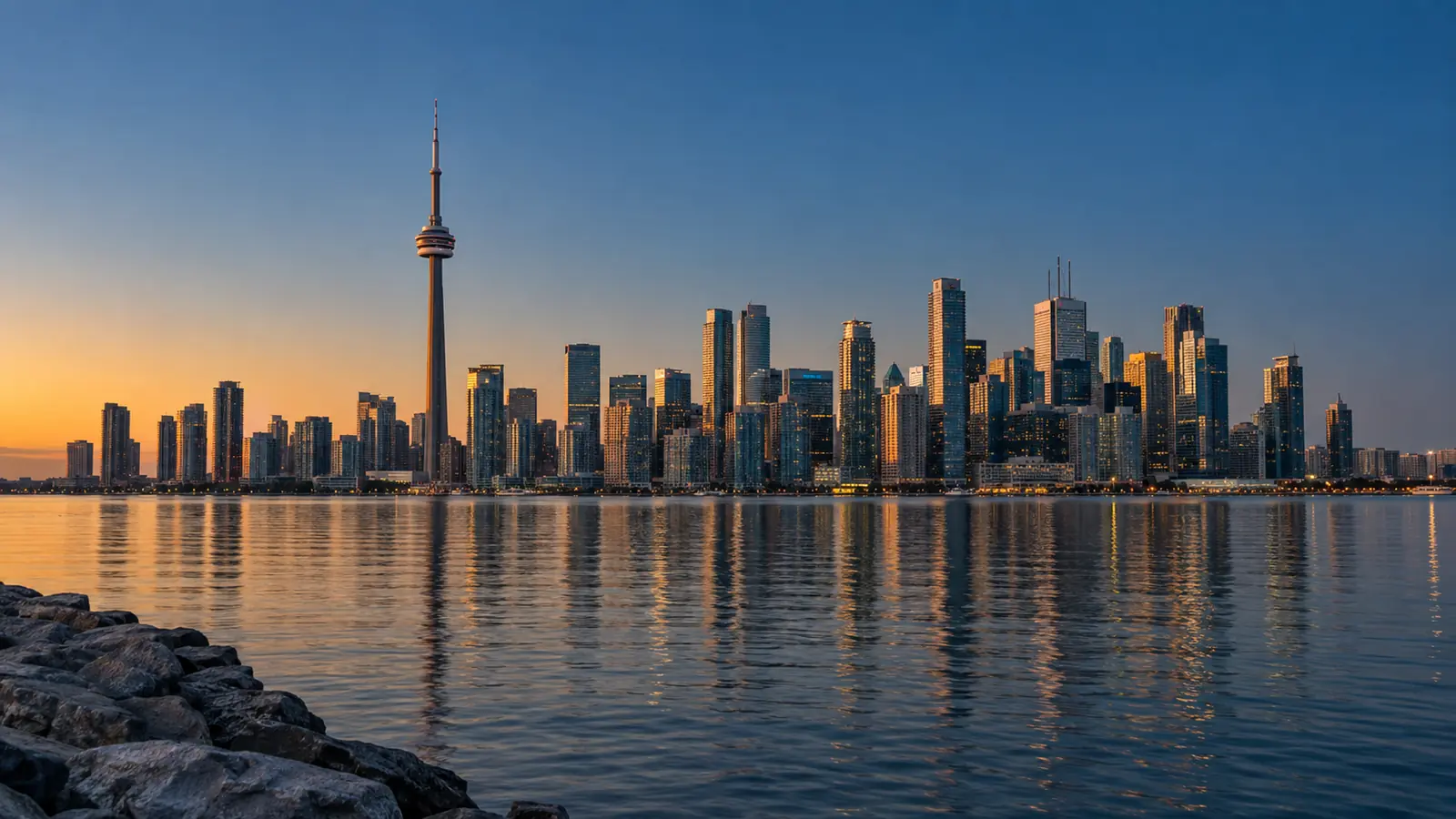
Toronto at a glance.
A few orienting facts. Everything below this section expands on one of these rows.
| Topic | What to know |
|---|---|
| Main airport | Toronto Pearson (YYZ), northwest of downtown, two terminals |
| Downtown airport | Billy Bishop (YTZ), on the Toronto Islands, short-haul flights only |
| Central hub | Union Station, for UP Express, GO Transit, VIA Rail and the subway |
| Transit | TTC subway, light rail, streetcars and buses; tap a contactless card to pay |
| Where most visitors stay | Downtown, between the waterfront and Bloor Street |
| Car needed? | No, for a city stay |
| Time needed | Three full days for the essentials; four or five with day trips |
| Most popular day trip | Niagara Falls |
Before you arrive.
Three things to settle before you fly.
Entry documents. Check whether you need a visa or an electronic travel authorization for your nationality well before booking non-refundable travel. That is the one piece of preparation with no workaround at the airport.
Your customs declaration. If you are landing at Pearson or Billy Bishop, you can complete your declaration up to 72 hours ahead through ArriveCAN, which shortens the kiosk step on arrival. Our guide to filing your customs declaration in advance explains what it saves and what it doesn't.
A contactless card that works abroad. The TTC accepts contactless credit and debit cards and mobile wallets, and indicates that international cards can be used. Some cards are not accepted on transit systems, so it is worth confirming with your bank before relying on one.
ArrivingTwo airports, and which one you’re using.
Most international visitors arrive at Toronto Pearson, the country's largest airport, on the Toronto–Mississauga boundary northwest of downtown. It has two passenger terminals, and it is where every long-haul flight lands.
Some visitors from elsewhere in Canada and the northeastern United States arrive instead at Billy Bishop Toronto City Airport, a small airport on the Toronto Islands a short crossing from the downtown waterfront. It handles short-haul turboprop flights only, and if your trip begins downtown it can be remarkably convenient. For Billy Bishop arrivals, the terminal is reached from the mainland by a pedestrian tunnel or a short ferry.
Which airport suits you depends on where you're flying from and where you're staying, and we cover that decision in detail in how Pearson and Billy Bishop compare.
Getting from the airport to your hotel.
From Pearson, the choice is between rail, transit, a taxi or limousine from the stand, ride-share, or a pre-arranged transfer. Each suits a different traveller.
| Option | How it works | Best for |
|---|---|---|
| UP Express | Train from Terminal 1 to Union Station in about 28 minutes, every 15 minutes | Light travellers staying near Union Station |
| TTC bus and subway | Bus to a subway station, then the subway downtown | Budget travel with minimal luggage |
| Taxi or airport limousine | Licensed vehicles at arrivals-level stands, charging posted flat rates to Toronto destinations | Walk-up convenience without app pricing |
| Ride-share | Designated pickup zones separate from the taxi stands | One or two bags, off-peak arrivals |
| Pre-arranged transfer | Door to door, booked in advance, flight monitored | Families, heavy luggage, late arrivals, first-time visitors |
Two practical notes. The UP Express station is in Terminal 1 only, so a Terminal 3 arrival rides the free Terminal Link train across first; our guide to the difference between Pearson's two terminals covers that. And licensed taxis and airport limousines queue at arrivals-level stands, not inside the terminal.
Where to StayWhere to stay.
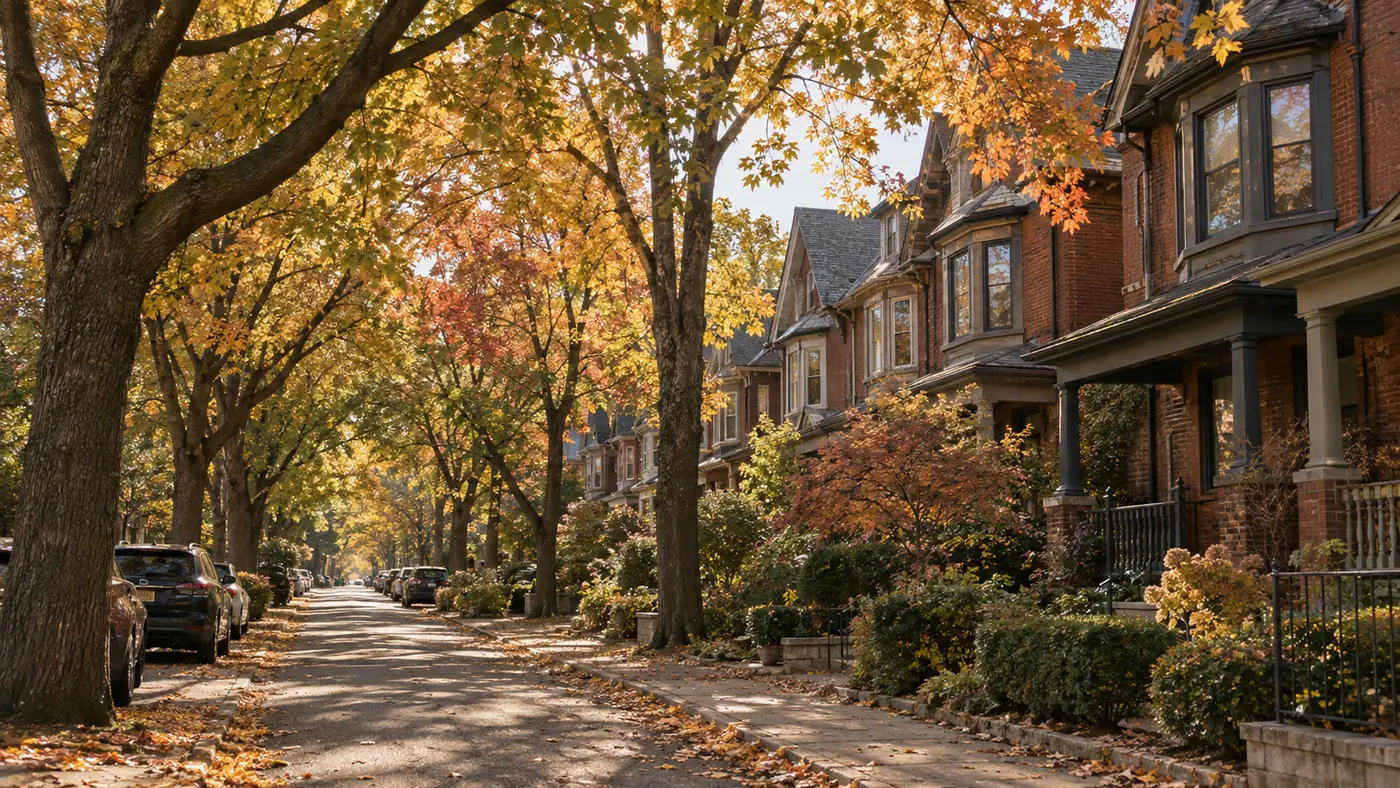
For a first visit, stay downtown. Broadly, that means the area between the waterfront and Bloor Street, bounded roughly by the Don Valley to the east and Bathurst Street to the west. The major sights, Union Station and the most useful subway stations all sit inside it.
Within that area, neighbourhoods differ a great deal in feel. Choose by the kind of trip you want.
| Neighbourhood | Character | Suits |
|---|---|---|
| Financial and Entertainment districts | Towers, hotels, theatres, closest to Union Station and the waterfront | Short trips, business travellers, anyone arriving by UP Express |
| Yorkville | Quieter, upscale, boutiques and galleries, near the Royal Ontario Museum | Travellers wanting a calmer base with easy subway access |
| St. Lawrence and Old Town | Historic streets, the St. Lawrence Market, close to the Distillery District | Food-focused visitors and those who prefer lower-rise streets |
| King West and Queen West | Restaurants, bars, independent shops, livelier in the evenings | Younger travellers and anyone prioritising nightlife |
| Harbourfront | Lakeside, near the island ferry terminal and waterfront paths | Summer visits and travellers wanting water views |
| The Annex | Residential, near the university, relaxed cafés and bookshops | Longer stays and those who want a neighbourhood feel |
Staying near the airport
For a one-night stopover or an early flight, a hotel at or near Pearson is entirely sensible. For anything longer, it leaves you a significant journey from everything you came to see, and the savings rarely justify the travel time.
If your trip combines a few nights downtown with a stay somewhere else, whether a second hotel, a conference venue or a family visit in the suburbs, arranging transfers between hotels avoids hauling luggage across the transit network.
Getting AroundGetting around.
Toronto's core is compact, and a combination of walking, the subway and streetcars will cover almost everything on a first visit. The transit system has changed noticeably in the past year, so older advice may no longer apply.
How to pay
The simplest method for a visitor is to tap a contactless credit or debit card, or a card in a phone or watch wallet, on the reader when you board a bus or streetcar or pass through a subway fare gate. The TTC charges the standard adult fare and applies a two-hour transfer automatically.
Use the same card every time. The two-hour transfer only works if you tap with the same card or device throughout. Paying with your phone and then tapping the physical card, or the other way round, is treated as a new fare. Take the card you intend to use out of your wallet before tapping, so the reader doesn't charge another one.
A few further points worth knowing:
- Children aged 12 and under ride free.
- Discounted fares for youth and seniors are not available by debit or credit card; they require a PRESTO card set up with that fare type.
- Monthly fare capping began on 1 September 2026, replacing most monthly passes. Tap with the same card and the rest of the calendar month's rides become free after 47 paid trips, which matters only for longer stays.
- PRESTO cards must now carry enough balance to cover the full fare before tapping.
Current fares and policies are on the TTC's fares page.
The rapid transit network
Two subway lines do most of the work for visitors. Line 1 Yonge–University runs in a U-shape through downtown and up through Midtown, passing Union Station. Line 2 Bloor–Danforth runs east–west along Bloor Street and the Danforth. They meet at several stations, including St. George and Bloor–Yonge.
Two light rail lines are new. Line 5 Eglinton runs east–west across Midtown along Eglinton Avenue, and Line 6 Finch West serves the northwest of the city. Neither is likely to feature heavily in a first-time visitor's itinerary, but one detail matters if you do use them: there is no onboard payment on Lines 5 and 6. You pay before boarding and carry proof of payment in case of inspection.
Streetcars, walking and the PATH
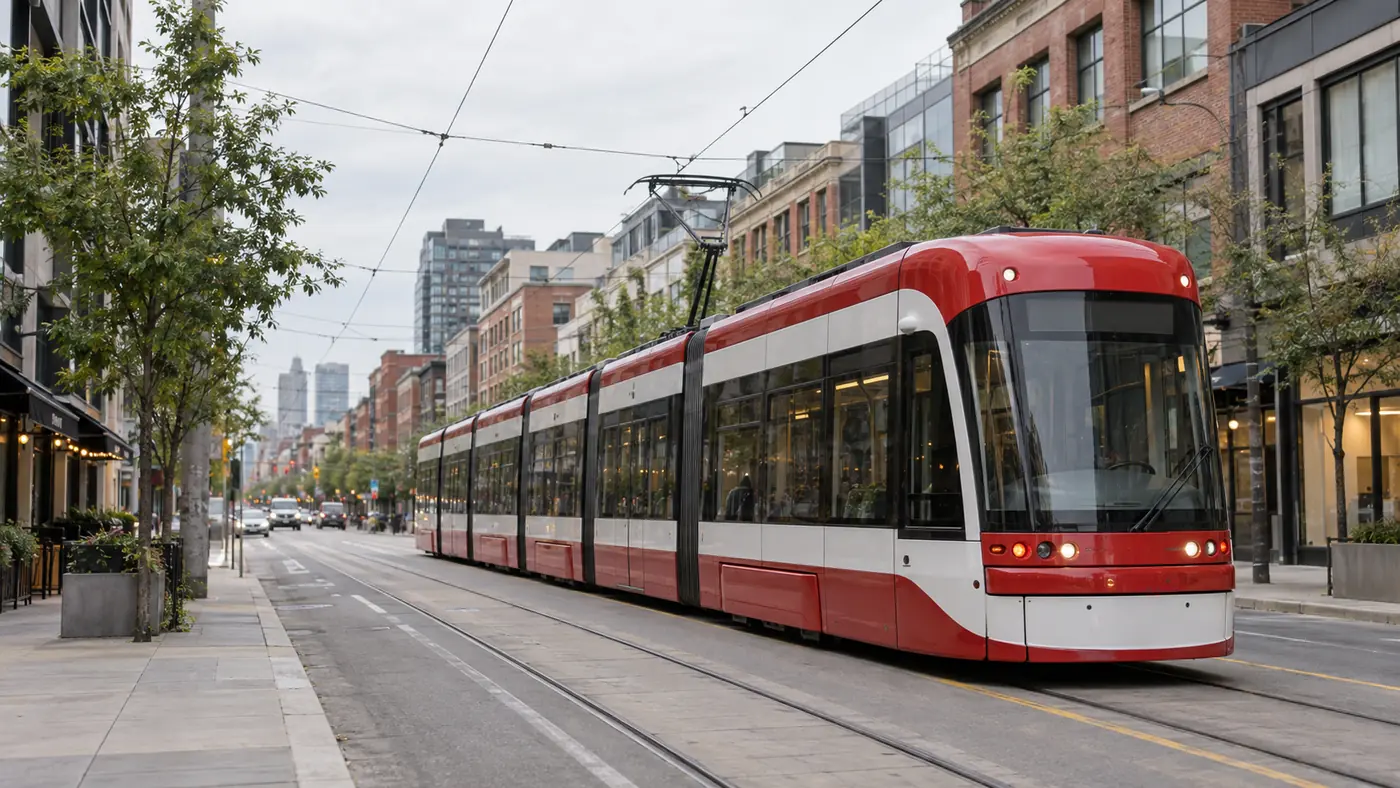
Streetcars are a distinctive and useful part of the network, covering many of the downtown routes the subway does not, including much of the waterfront. They accept the same tap payment, and the two-hour transfer carries across.
Downtown is also very walkable. Beneath the Financial District, the PATH network of underground walkways connects office towers, shopping concourses and Union Station, which is particularly useful in winter or bad weather.
Taxis, ride-share and driving
Taxis and ride-share are widely available and useful for evenings, awkward cross-town journeys and late returns. Driving downtown is another matter: traffic is slow and parking is limited and expensive. For a city stay, a rental car is more likely to be a cost than a convenience.
SightsWhat to see first.
Rather than a ranked list, it is more useful to think about the city in areas, since grouping sights by location saves a great deal of travel time. Check opening hours and ticketing directly with each venue before you go; they change more often than guidebooks do.
The waterfront and downtown core
The CN Tower is the obvious first landmark and a good way to understand the city's layout from above. Ripley's Aquarium of Canada sits at its base, and the Rogers Centre and Scotiabank Arena are close by for anyone catching a game. South of the core, Harbourfront has lakeside paths and the ferry terminal for the islands.
Markets and older neighbourhoods
St. Lawrence Market is the classic food stop, and a short walk east brings you to the Distillery District, a pedestrian area of restored Victorian industrial buildings. West of downtown, Kensington Market and neighbouring Chinatown are informal, eclectic and best explored slowly on foot.

Museums and galleries
The Royal Ontario Museum, on Bloor Street at the edge of Yorkville, covers natural history and world cultures. The Art Gallery of Ontario is a short walk from Kensington Market. Both reward a half day at least, and either makes a good plan for a wet or cold afternoon.
Further out
Casa Loma, a Gothic Revival mansion north of downtown, is the most visited sight outside the core and reachable by subway. Beyond that, the most rewarding trips from Toronto leave the city altogether, which is covered further down.
The Toronto Islands.
Just off the waterfront, the Toronto Islands are a car-free park of beaches, paths and picnic areas with a striking view back to the skyline. On a summer day they are among the most rewarding things to do in the city.
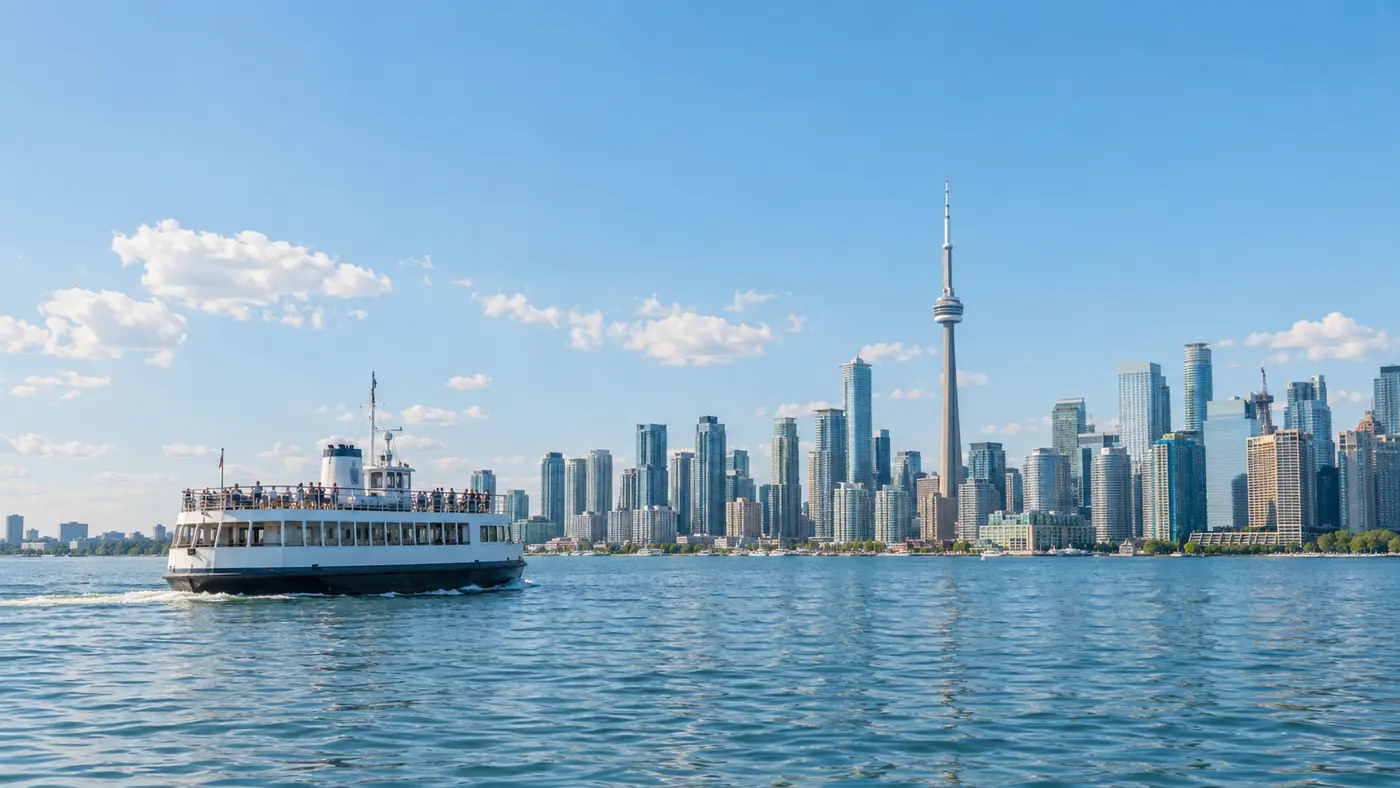
City of Toronto ferries run year-round from the Jack Layton Ferry Terminal at the foot of Bay Street. From mid-April to mid-October, three routes serve Centre Island, Hanlan's Point and Ward's Island, with a fuller summer schedule from mid-May to mid-September. Schedules can change with the weather.
Three details worth knowing, all from the City's passenger information:
- Buy online if you can. Tickets bought online remain valid until the end of the calendar year; tickets bought at the terminal must be used that day.
- Consider Ward's Island. Centre Island is the busiest route. Ward's Island is quieter, and roughly a 35-minute walk from Centre Island.
- Expect a bag check. Large baggage is visually searched under the service's Transport Canada security arrangements.
Your ticket covers the return from any island dock.
When to visit.
Toronto has four distinct seasons, and each changes the character of a trip.
- Late spring and early summer are a comfortable time for a first visit, with patios opening, the islands accessible and the waterfront at its liveliest.
- High summer is warm, busy and full of festivals. It is the best time for the islands and outdoor dining, and the most crowded.
- Autumn brings mild days, changing leaves and noticeably fewer visitors. It is an underrated time to come.
- Winter is cold, with snow likely. The city remains very workable for a trip built around museums, theatre, shopping and restaurants, helped by the underground PATH.
A first three days.
A realistic outline that groups sights by area to minimise travel. Adjust for season and energy.
Day one: the waterfront and core
Start at the CN Tower to get your bearings. Spend the afternoon along Harbourfront, and in summer take the ferry to the islands for the late-afternoon light and the skyline view. Dinner in the Entertainment District or King West.
Day two: markets and old Toronto
Morning at St. Lawrence Market, then walk to the Distillery District. In the afternoon, head west to Kensington Market and Chinatown, finishing at the Art Gallery of Ontario if time allows.
Day three: museums and Midtown
The Royal Ontario Museum in the morning, followed by lunch and a wander through Yorkville. In the afternoon, Casa Loma, or a slower afternoon in the Annex. Keep the evening for theatre or a restaurant you have been meaning to try.
Beyond the city.
With a fourth or fifth day, the natural addition is Niagara Falls, the most popular day trip from Toronto. You can go by regional train or coach, on an organised tour, by rental car, or with a private chauffeur. Give it a full day, since the travel itself takes up a meaningful part of it and the falls area deserves more than a quick look. Niagara-on-the-Lake and the surrounding wine region pair naturally with it.
For travellers who would rather not coordinate trains and connections, we cover a private day trip to Niagara Falls in more detail.
Seven mistakes first-time visitors make.
- Staying near the airport for a city trip. The saving rarely covers the daily travel time.
- Renting a car for a downtown stay. Traffic and parking make it more burden than help.
- Switching payment methods on the TTC. Phone then card, or card then phone, starts a new fare.
- Assuming UP Express serves both terminals. It leaves from Terminal 1 only.
- Buying ferry tickets at the terminal on a summer weekend. Online tickets avoid the queue and stay valid all year.
- Trying to walk between neighbourhoods. The core is walkable; the distances between areas are not.
- Overpacking the itinerary. Grouping sights by area saves far more time than rushing between them.
Where a chauffeur fits.
For most of a Toronto trip, transit and walking are the right tools, and nothing here suggests otherwise. A private chauffeur earns its place in three specific situations.
- The arrival. After a long flight, with luggage, into an unfamiliar city, a pre-arranged transfer removes every decision between the arrivals hall and your hotel door. Obsidian Ride monitors your flight and includes complimentary wait time on airport pickups; details are on the Pearson airport transfers page.
- Multi-stop days. A day combining Casa Loma, Yorkville and the Distillery District, or a business schedule across the city, is much simpler with a vehicle waiting at each stop. That is what booking a chauffeur by the hour is for.
- Day trips. Niagara, wine country and the wider region are where a door-to-door vehicle saves the most coordination.
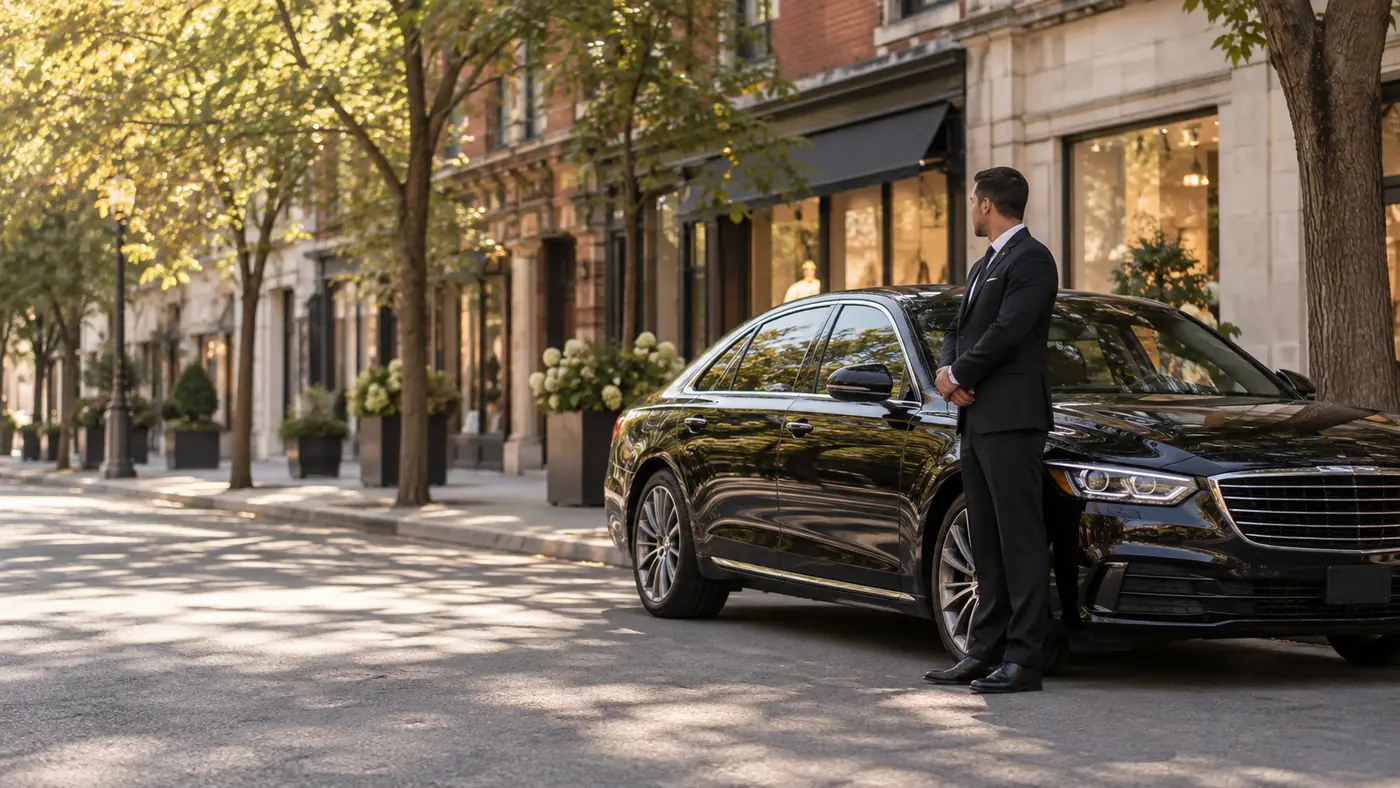
The full range, including corporate and event transport, is on our chauffeur services across Toronto page. Obsidian Ride operates 24/7 dispatch across Toronto and the GTA.
Start the trip at the right door.
Arrange your arrival from Pearson or Billy Bishop, or a chauffeur by the hour for a day of sightseeing across the city.
Toronto travel guide: frequently asked questions.
What is the best area to stay in Toronto for first-time visitors?
Downtown, broadly between the waterfront and Bloor Street, suits most first trips because the major sights, the subway and Union Station are all close. Within that, the Financial and Entertainment districts put you nearest the waterfront and transit, Yorkville is quieter and upscale, and St. Lawrence and King West suit travellers who want restaurants on the doorstep.
How do I get from Pearson Airport to downtown Toronto?
The UP Express train runs from Terminal 1 to Union Station in about 28 minutes, every 15 minutes, and is usually the quickest option for light travellers. Licensed taxis and airport limousines charge posted flat rates from arrivals-level stands. A pre-arranged transfer takes you door to door and suits travellers with heavy luggage or a late arrival.
Can I pay for the TTC with a credit card?
Yes. You can tap a contactless credit or debit card, or a card in a mobile wallet, on any bus, streetcar or subway station fare gate, and a two-hour transfer applies automatically. Use the same card or device for every tap, since switching between a physical card and a phone is treated as a new fare.
Do I need a car in Toronto?
Not for a downtown stay. The core is compact, walkable and well served by the subway and streetcars, and driving downtown is slow with expensive parking. A car becomes useful only for trips outside the city, and even then a chauffeured day or a regional train may suit better than a rental.
How many days do you need in Toronto?
Three full days covers the essentials on a first visit: the waterfront and a harbour view, the downtown core and a market, and a museum or two with a neighbourhood walk. Add a fourth or fifth day for the Toronto Islands in summer, a day trip to Niagara Falls, or a slower pace.
When is the best time to visit Toronto?
Late spring through early autumn is the most comfortable period for a first visit, with the islands, patios and waterfront at their best. Summer is busiest. Autumn brings mild days and fewer crowds. Winter is cold but the city's museums, theatres and underground walkways keep it very workable for an indoor-focused trip.
How do I get to the Toronto Islands?
By City of Toronto ferry from the Jack Layton Ferry Terminal at the foot of Bay Street. Ferries run year-round, with routes to Centre Island, Hanlan's Point and Ward's Island operating from mid-April to mid-October. Tickets bought online stay valid until the end of the calendar year; tickets bought at the terminal must be used that day.
Is Toronto walkable?
The downtown core is very walkable, and much of it is also connected underground by the PATH network, which is useful in winter. Distances grow quickly outside the core, though, so most visitors combine walking with the subway and streetcars rather than trying to walk between neighbourhoods.
Can I do a day trip to Niagara Falls from Toronto?
Yes, it is the most popular day trip from the city. Options include regional train and coach services, organised tours, a rental car, or a private chauffeur. Allow a full day, since the drive itself takes a meaningful part of it and the falls area rewards more than a quick stop.
Do children ride the TTC for free?
Yes. Children aged 12 and under ride the TTC free of charge. Youth, senior and other discounted fares are not available when paying by debit or credit card; those require a PRESTO card set up with the appropriate fare type.
Is it worth hiring a chauffeur in Toronto?
For some trips, yes. A chauffeur makes most sense for airport arrivals with luggage, days with several stops across the city, business travel with fixed appointments, and day trips outside Toronto. For a solo traveller exploring the downtown core, transit and walking will usually serve perfectly well.