
100 ml Liquid Rule Canada: What Actually Gets Through Security.
Everyone knows the number. Far fewer people know the exemptions, and that is where almost every lost bottle and delayed traveller comes from. This guide covers the container limit and the one-litre bag, then goes into the parts most guides skip: medication, infant items, duty-free purchases and medical devices.
The 100 ml liquid rule Canada enforces at every airport is one of the simplest regulations in aviation and one of the most frequently misunderstood. The confusion is rarely about the number. It is about which things count as liquids, which are exempt, and what happens to the bottle you bought after security.
This guide answers all three. If you also need the rules on powders, blades and batteries, those sit in our companion guide to the wider carry-on rules, including powders, blades and batteries.
Every container of liquid, aerosol or gel in your carry-on must hold 100 ml or less, and all of them must fit inside one clear, resealable bag of no more than one litre. One bag per passenger. Medication, infant food and breast milk are exempt and may exceed 100 ml, but must be declared to the screening officer.
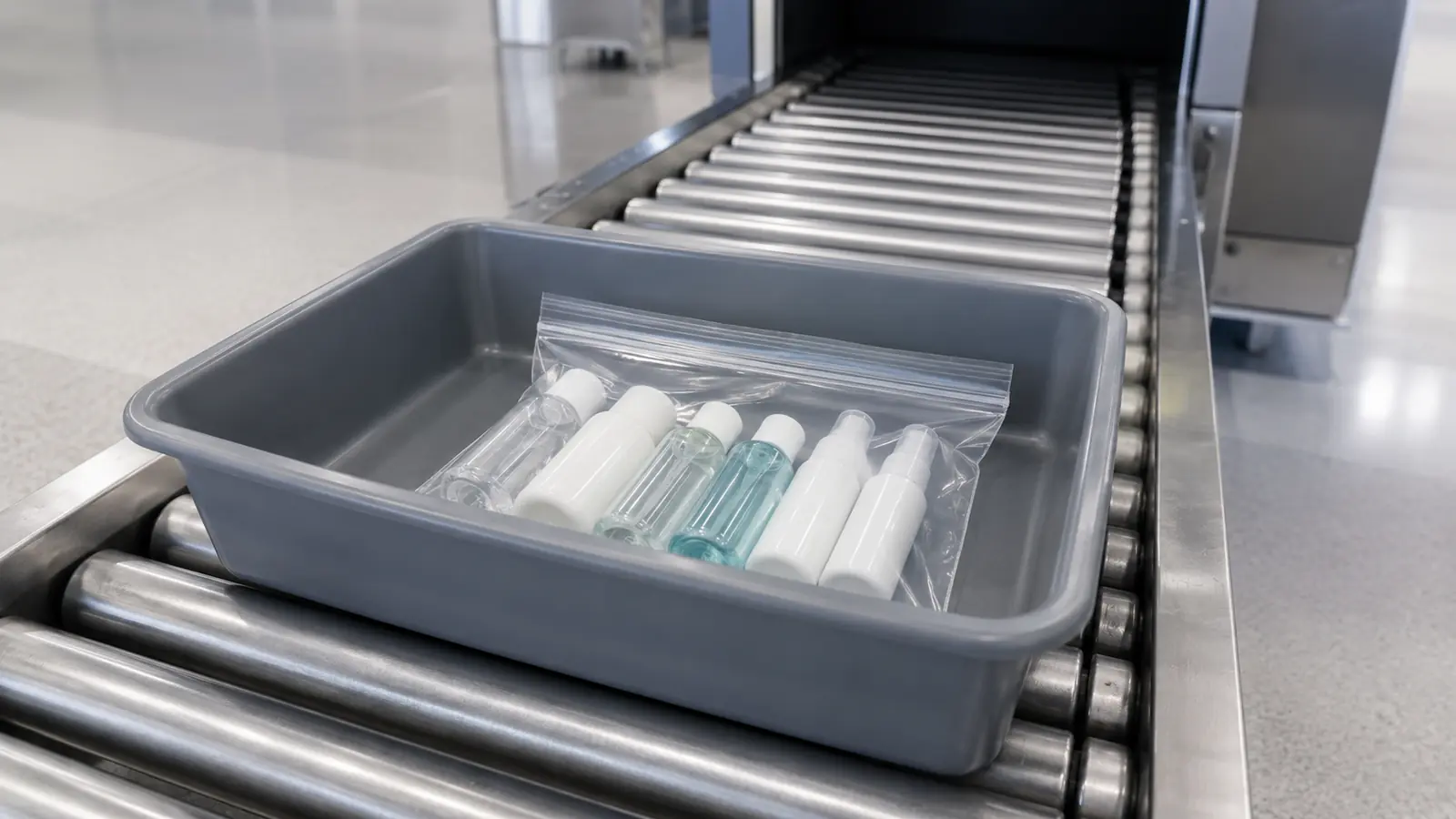
The rule in one paragraph.
Containers of liquids, non-solid food and personal items in carry-on must be 100 ml / 100 g (3.4 oz) or less. All of them must fit into a single clear, closed, resealable plastic bag with a capacity of no more than one litre, and the bag must be transparent so a screening officer can see what is inside. Anything in a larger container goes in checked baggage.
Two clarifications that resolve most arguments at the checkpoint. The rule governs the container, not the contents: a nearly empty 150 ml bottle still fails. And a container of exactly 100 ml passes, because the threshold is 100 ml or less.
What counts as a liquid, aerosol or gel.
The category is far wider than the everyday meaning of the word, and this is where most items are lost. CATSA publishes the full classification, and it is worth reading properly at least once.
- Liquids: coffee, soft drinks, juice, bottled water, maple syrup, alcohol, shampoo, conditioner, mouthwash, toothpaste, perfume, cologne, liquid soap, insect repellent, hand sanitizer, creams and lotions, hairspray, and liquid cosmetics such as mascara, liquid foundation and liquid eyeliner.
- Aerosols: hairspray, body spray, static remover, spray sunscreen, shaving cream, aerosol deodorant, spray cheese.
- Gels: lip gloss, styling gel, jam, jelly, pudding, yogurt, gelatin, mashed potatoes, peanut butter, chocolate spread, cheese spread, maple spread, shaving gel, and gel-based cosmetics.
Toothpaste catches people out constantly, as does mascara. On the food side, the test is simple: if it is mashed, puréed or in a sauce, it is a gel.
Two useful edge cases. Food that is normally liquid or gel but has been frozen solid still fails, because to count as a solid it must be solid at room temperature. And canned or jarred goods that clearly contain under 100 ml of liquid, such as a tin of tuna, are permitted, but they must go inside your one-litre bag with everything else.
The bag itself.
CATSA gives the approximate dimensions of a one-litre bag as 15.24 by 22.86 centimetres (6 by 9 inches), or 20 by 17.5 centimetres (8 by 7 inches). That is smaller than most people picture, and it is the reason a family of four cannot share one.
Three requirements, all of which matter:
- Transparent. An opaque or heavily tinted bag will not do.
- Closed and resealable. If you cannot fully seal it, it is over capacity and something has to come out.
- One per passenger. Not one per bag, and not one per family.
Everything in the liquid, aerosol and gel category goes inside it, including your permitted food items and personal care products. Only the exempt categories below sit outside it.
ExceptionsWhat is exempt from the 100 ml limit.
These items may exceed 100 ml and do not need to go in the plastic bag. In every case you must declare them to the screening officer and present them separately for inspection.
| Category | What it covers | Conditions |
|---|---|---|
| Baby food and drink | Food, milk, liquid formula, water and juice | Travelling with an infant under two years old |
| Breast milk | Any quantity | Permitted whether or not the child is travelling with you |
| Prescription medicines | Liquid, gel and aerosol forms | Original container with pharmacy label recommended |
| Essential non-prescription medicines | Pain relief, cough syrup, decongestant spray, eye drops, contact lens solution, puffers, homeopathic products, gel-based supplements, saline | Declared and presented separately |
| Gel and ice packs | Cooling packs | Needed for an injury, to refrigerate infant food or breast milk, or to preserve medically necessary items |
| Diabetes liquids and gels | Juice or glucose gels | Required for a medical condition |
| CPAP water | Distilled water for the device | Exempt from liquid restrictions |
| COVID-19 test kits | Full kits | Permitted without restriction in carry-on and checked |
Supporting documentation is not required for any of these. CATSA notes that presenting it may help smooth screening if you feel it would, but nobody can insist on a doctor's note.
Medication in practice.
The exemption is generous. The practical handling is what people actually want to know, and CATSA's guidance on medication and medical items is unusually detailed.
What qualifies as essential
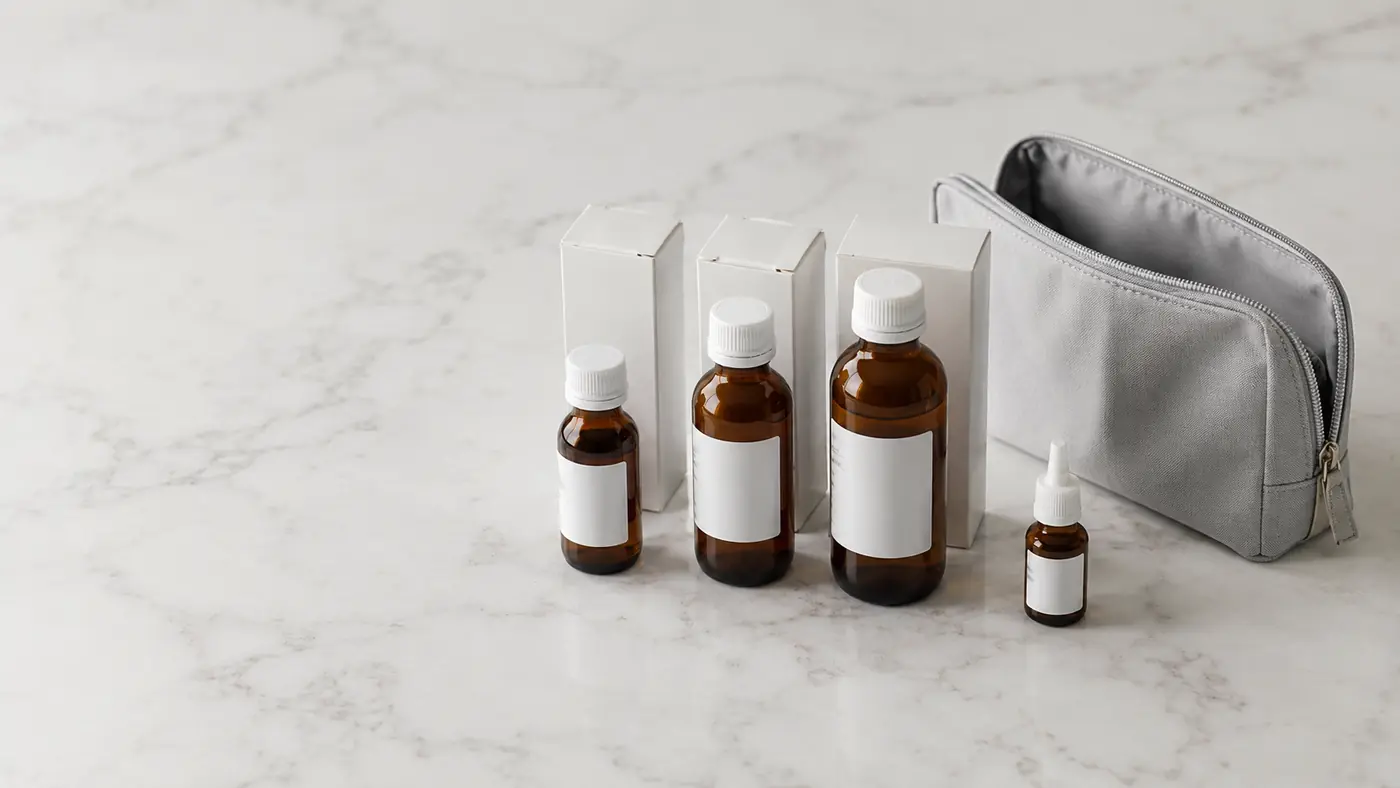
Prescription medication in liquid, gel or aerosol form is exempt without qualification. For non-prescription items, CATSA's stated examples are contact lens solution, cough syrup, eye drops, decongestant spray and puffers. Solid tablets such as acetaminophen, ibuprofen and vitamins are not subject to volume restrictions at all.
One quiet exception worth knowing: mineral-based supplements that are primarily calcium, magnesium or iron fall under the powder limit rather than the liquid one, and are capped at 350 ml or 350 g in total.
How to pack it
- Carry liquid, gel or aerosol prescriptions in their original containers with the pharmacy label identifying the medication.
- Pack all medication in carry-on, in an easy-to-access area, not buried at the bottom.
- Expect to present everything to the screening officer for inspection.
- A day-by-day pill separator is not a problem at Canadian screening, though rules elsewhere may differ.
If you are travelling with young children, seniors, or anyone needing extra time, look for the Family and Accessible Line at the checkpoint. It exists precisely for the situations where a standard line feels rushed.
Temperature-sensitive and sterile medication
For medication needing strict temperature control, use cooling gel packs or non-electric insulated containers and declare them if they are in carry-on. Battery-operated or electric coolers should go in checked luggage, since they may attract additional screening and could be intercepted.
For sterile-packaged medication, tell the screening officer about the sterile packaging before inspection begins, and keep it in clear resealable bags so it stays visible. Sterile items may still undergo a visual and physical inspection plus a trace of the outer packaging.
If your needs are specialised, CATSA invites travellers to make contact at least 48 hours before a flight to discuss requirements at the checkpoint. It is also worth telling your airline about anything needing special handling or in-flight refrigeration when you book or check in.
Insulin pumps and continuous glucose monitors
These do not need to be removed. Tell the screening officer you are wearing one, explain that it is medically necessary, and request alternative screening if the device may be sensitive to X-ray equipment or full-body scanners. Officers will offer options.
A doctor's note or medical device ID card is not mandatory but can help explain the device quickly. Spare batteries, sensors and accessories go in carry-on, kept accessible. Batteries in medical and mobility devices carry no watt-hour limit, and one spare of up to 300 Wh may come through the checkpoint with advance notice to your airline.
Travelling with an infant.
If your child is under two, baby food, milk, liquid formula, water and juice are all permitted in quantities over 100 ml. Breast milk is exempt regardless of whether the child is with you, which matters for parents travelling separately.
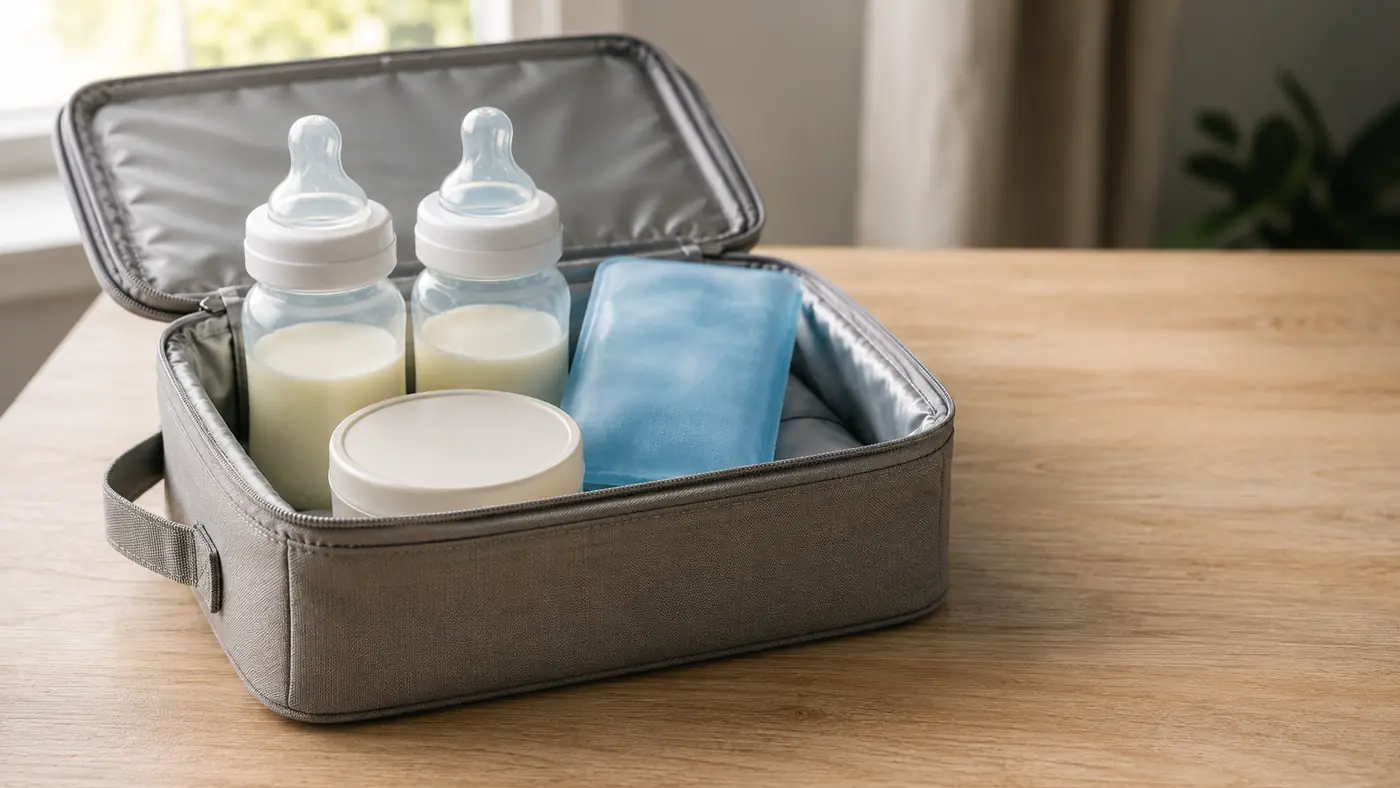
The gel and ice packs keeping those items cold are exempt too. Declare everything together, keep it near the top of your bag, and use the Family and Accessible Line if there is one open. One caution: dry formula is a powder and falls under the separate 350 ml limit, though exemptions may apply for infant formula specifically. If you are carrying a large tub, mention it.
Duty-FreeDuty-free purchases.
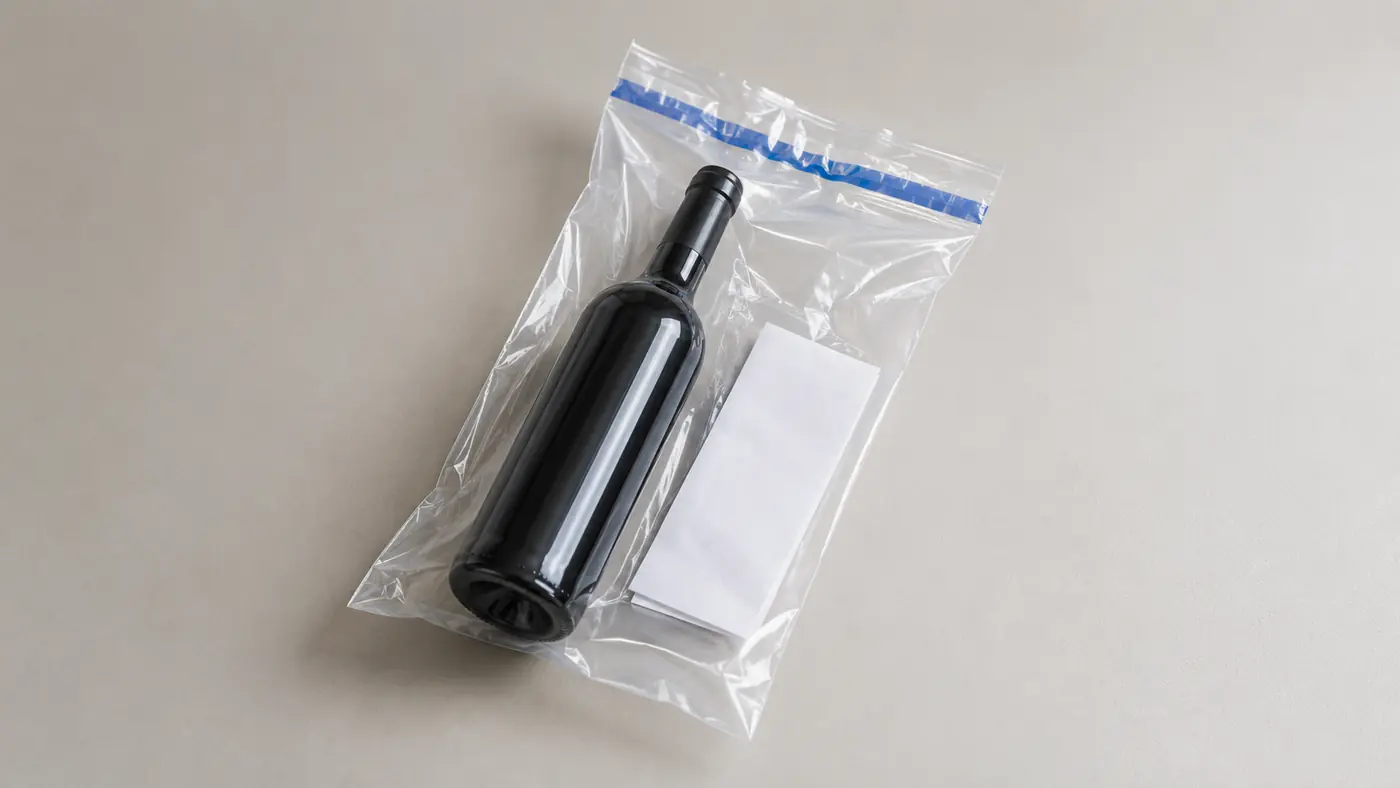
This is the biggest genuine exception to the 100 ml rule, and the one with the most conditions attached. Duty-free liquids, aerosols and gels bought from an airline or airport retailer are accepted through screening if they are properly sealed in an official security bag with an itemized receipt. They do not count toward your carry-on allowance.
What an official security bag looks like
These are sealed clear plastic bags with specific security features. CATSA describes the markings to look for as a checkmark and arrow in a circle, plus a red border. Official security bags are used in several but not all countries, so check the bag has those features at the point of purchase. Without them, it will be rejected.
Five reasons a purchase gets surrendered
CATSA lists these explicitly, and each one is avoidable:
- The bag or the product inside does not pass required screening.
- The retailer did not use an official security bag.
- The clerk packaged the purchase improperly at the point of sale, or left out the itemized receipt.
- You opened the bag yourself after buying and before screening.
- More than 48 hours have passed since purchase. Official security bags are only valid for two calendar days.
Screening officers may open the bag to inspect the contents and then re-seal it. That is normal and is not the same as you opening it.
Connecting flights are the real risk
CATSA warns that duty-free liquids may be intercepted if you pass through pre-board screening at a connecting airport in another country, or at multiple airports over a two-day period. Rules on sealed bags vary internationally, and the bag that satisfied one country's screening may not satisfy the next.
The practical rule. Buy duty-free liquids before your final flight, not before a connection. If your itinerary has a stop where you re-clear security, the safest place for a large bottle is checked baggage.
If a duty-free purchase does not clear, you can surrender it, transfer it to checked baggage if time permits, or ship it by mail, cargo or courier.
Cannabis in liquid form.
Liquid and topical cannabis is treated exactly like any other liquid, aerosol or gel. On domestic flights within Canada it must be in containers of 100 ml or less and go inside your one-litre bag with everything else.
Cannabis oil for medical purposes is handled differently: amounts over 100 ml are permitted in carry-on, but must be presented to the screening officer at the checkpoint. Under 100 ml, it goes in the bag as normal.
None of that applies internationally. The Government of Canada states it is illegal to take cannabis across the Canadian border in either direction unless authorized by Health Canada, including cannabis for medical purposes.
Alcohol that isn’t duty-free.
A bottle bought before you reach the airport, or anywhere outside the sterile area, is simply a liquid. Over 100 ml, it goes in checked baggage.
In checked baggage, CATSA permits alcoholic beverages up to 70 per cent alcohol by volume. Anything between 24 and 70 per cent is capped at five litres per person. Beverages of 24 per cent or less carry no quantity limit for screening purposes, though customs allowances on the return leg are a separate question entirely.
The adjacent limit: powders.
Worth a short mention because travellers routinely confuse the two rules. Certain powders and granular materials in carry-on are capped at a total of 350 ml or 350 g, which CATSA helpfully describes as roughly the size of a soda can.
That covers baby powder, foot powder, some cooking powders and seasonings, baking soda, salt and sand. It is a separate limit from the liquids rule, it applies to the total rather than per container, and exemptions may apply for baby formula, life-sustaining medication and sacred or spiritual items. Full detail sits in our guide to the wider carry-on rules.
At the CheckpointWhat changes on a CT screening line.
CATSA is rolling out computed tomography scanners at pre-board screening checkpoints. These produce rotatable three-dimensional images, which means officers can assess a bag without you emptying it.
On a CT-equipped line, permitted liquids of 100 ml or less may stay inside your carry-on, along with large electronics and medical devices. CATSA lists Toronto Pearson's Terminal 1 International and Level 2 Domestic checkpoints among the locations with CT available, alongside Vancouver, Calgary, Montréal, Ottawa, Edmonton, Winnipeg, Halifax, Québec City and Kelowna.
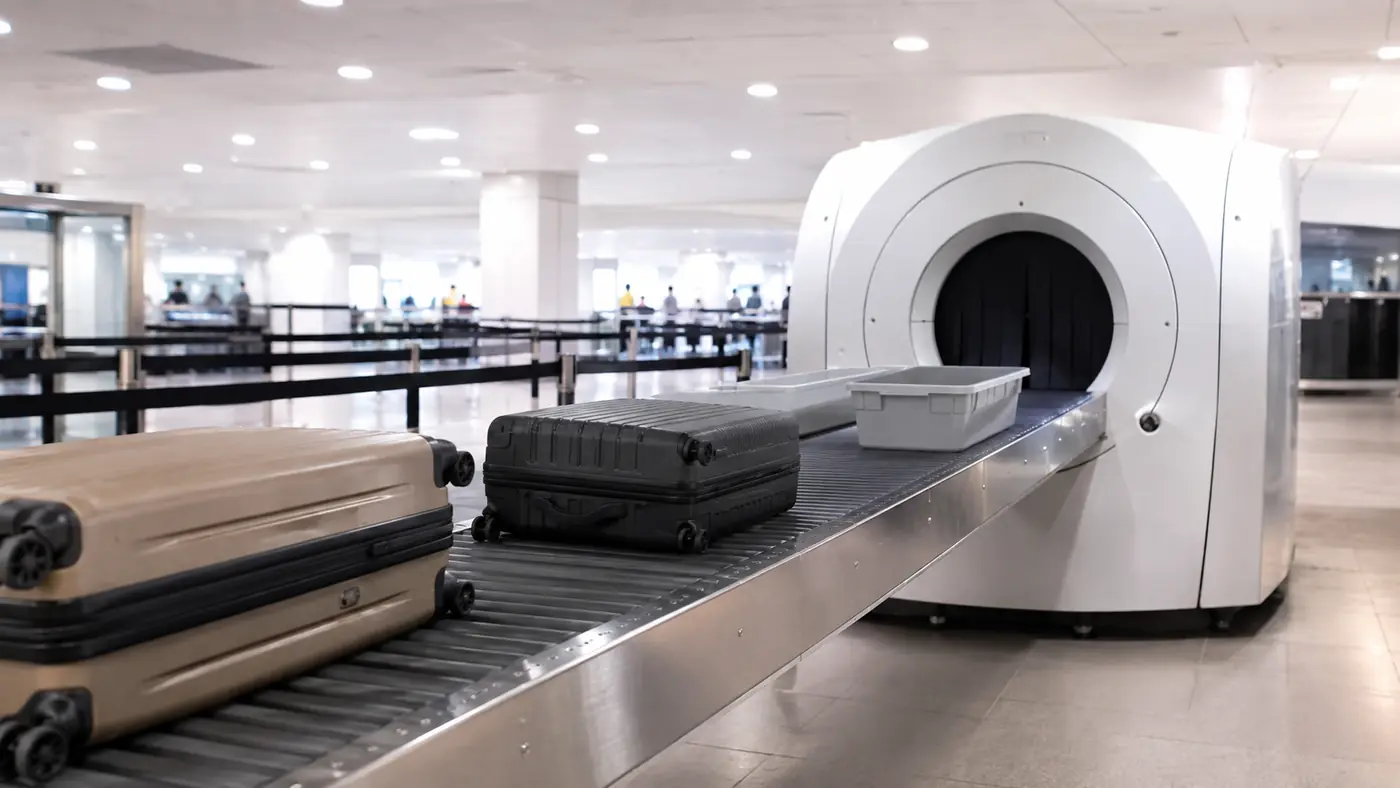
The reversal to remember. On a CT line, permitted liquids of 100 ml or less stay in the bag — but exempt liquids over 100 ml, such as prescription medication, breast milk and infant formula, must still be removed and placed in a bin. The travellers most affected by this rule are the ones most likely to get it the wrong way round.
Coverage is by line rather than by airport, and signage marks every line where CT is available. If there is no CT sign, treat it as a conventional line. Since coverage differs between buildings, our guide to which terminal your flight departs from is worth checking first.
At the checkpoint, step by step.
- Before the belt, drink or empty any container holding more than 100 ml, including your own water bottle. Refill after screening.
- Look for a CT sign on the line you are joining. It determines everything that follows.
- On a conventional line, take your one-litre bag out of your carry-on and put it in a bin.
- Remove exempt liquids — medication, infant items, medically necessary liquids — and place them in a bin regardless of which line you are in.
- Declare them to the screening officer before inspection begins.
- Duty-free purchases go directly into a bin in their sealed bag with the receipt inside.
- Allow extra time if you are carrying anything unusual. Sterile packaging, temperature-controlled items and medical devices all take longer.
One timing note if you are flying from the island rather than Pearson: screening at Billy Bishop, where screening hours are shorter, does not begin as early in the morning, so there is less room to arrive well ahead and sort out a problem.
If something is refused.
You have three options, and all three depend on having time in hand.
- Leave it with someone. A friend or family member who is not travelling and is still at the airport can take it.
- Rebook. Ask your airline to move you to a later flight so you can check the item instead.
- Ship it. Mail, cargo or courier, though options vary considerably by airport.
None of these is available to someone arriving at the last minute, which is the practical case for the timings in our guide to how early to arrive at Pearson.
Seven mistakes travellers make.
- Judging a bottle by how full it is. The rule is container capacity.
- Forgetting toothpaste and mascara. Both are liquids under the classification.
- Not declaring medication. The exemption requires declaration; it is not automatic.
- Sharing one bag across a family. One bag per passenger.
- Buying duty-free before a connection. Sealed bags can be intercepted at a connecting airport abroad.
- Opening the duty-free bag to look at the purchase. That alone can cost you the item.
- Assuming a CT line means nothing comes out. Exempt liquids over 100 ml still do.
Building in time at Pearson.
There is only one honest connection between this subject and a chauffeur service, so it is the only one worth making. Every fix for a refused liquid — checking it, handing it over, shipping it — requires spare minutes. Arriving with none is what turns a small packing error into a real loss.
A pre-arranged departure transfer fixes your pickup to the flight rather than to a guess about traffic. Obsidian Ride operates 24/7 dispatch across Toronto and the GTA, with details on the Pearson Airport chauffeur service page. Before leaving, it is worth taking a moment to check your flight status before you leave, since a schedule change alters how much margin you actually need.
Arrive with room to sort things out.
Book a departure transfer against your flight time, so a bottle at the checkpoint is a two-minute decision rather than a problem.
The 100 ml liquid rule Canada applies: frequently asked questions.
What is the 100 ml liquid rule in Canada?
Every container of liquid, aerosol or gel in your carry-on must hold 100 ml or 100 g (3.4 oz) or less, and all of them together must fit inside one clear, closed, resealable plastic bag of no more than one litre. Each passenger is allowed a single bag. Larger containers go in checked baggage.
How big is the one-litre liquid bag, exactly?
CATSA gives the approximate dimensions as 15.24 by 22.86 centimetres (6 by 9 inches), or 20 by 17.5 centimetres (8 by 7 inches). The bag must be transparent so officers can see the contents, and it must close fully. If you cannot seal it, it is over capacity and something has to come out.
Is medication exempt from the 100 ml rule in Canada?
Yes. Prescription and essential non-prescription liquid, gel and aerosol medications may exceed 100 ml and do not need to go in the plastic bag. CATSA's examples include contact lens solution, cough syrup, eye drops, decongestant spray and puffers. Declare them to the screening officer and present them separately for inspection.
Can you bring baby formula or breast milk through security?
Yes, in quantities over 100 ml. Baby food, milk, liquid formula, water and juice are exempt when you are travelling with an infant under two years old. Breast milk is exempt whether or not the child is travelling with you. Gel and ice packs needed to keep these items cool are also permitted.
Can you bring duty-free alcohol in your carry-on in Canada?
Yes, if it is properly sealed in an official security bag with an itemized receipt inside. These purchases do not count toward your carry-on allowance. The bag is valid for two calendar days, must not have been opened by you, and can still be intercepted if you pass through screening at a connecting airport in another country.
Do you still have to take the liquids bag out at Pearson?
It depends on the line. On CT-equipped screening lines, permitted liquids of 100 ml or less can stay in your carry-on. CATSA lists Toronto Pearson's Terminal 1 International and Level 2 Domestic checkpoints among those with CT available. If there is no CT sign, take the bag out as usual.
Is peanut butter a liquid at airport security?
Yes. CATSA classifies peanut butter as a gel, along with jam, jelly, pudding, yogurt, mashed potatoes, chocolate spread, cheese spread and maple spread. Any of these in your carry-on must be in containers of 100 ml or less and must fit inside your one-litre bag with everything else.
Can you bring an empty water bottle through security?
Yes. An empty reusable bottle passes without issue and can be refilled after the checkpoint. What is not permitted is a bottle containing more than 100 ml of anything, including plain water, so drink or empty it before you reach screening rather than at the front of the queue.
Can you bring cannabis oil in your carry-on?
Liquid and topical cannabis is treated like any other liquid and must go in your one-litre bag if it is 100 ml or less. Cannabis oil for medical purposes in amounts over 100 ml is permitted in carry-on but must be presented to the screening officer. Flying outside Canada with cannabis is illegal.
What if my bottle is exactly 100 ml?
A container of exactly 100 ml or 100 g is permitted, since the rule is 100 ml or less. What matters is the container's marked capacity, not how much is left inside it. A half-empty 150 ml bottle still fails, because the limit applies to the size of the container rather than its contents.
What happens if a liquid is refused at security?
You have three practical options. Leave the item with someone who is not travelling and is still at the airport, ask your airline to rebook you on a later flight so you can move it into checked baggage, or ship it by mail, cargo or courier. Shipping options vary considerably by airport.