
Canada Carry-On Rules: What You Can Actually Bring on a Plane.
Canada carry-on rules are set by CATSA and Transport Canada, and they are not identical to the American rules most packing advice describes. Four limits decide almost every question: liquids, powders, batteries and blade length. This guide covers all four, plus food, prohibited items, and what changes on the newer screening lines at Toronto Pearson.
Most of what people believe about carry-on packing comes from American sources, because American sources dominate search results. The headline number happens to match: 100 ml either side of the border. Almost everything around it does not.
Canada has its own powder limit. Its own blade rules, which change again the moment you fly to the United States. Its own list of what is exempt from the liquids rule. And a screening technology rollout that means two travellers at the same airport on the same day can face different instructions depending on which line they join.
Under Canada carry-on rules, liquids, aerosols and gels must be in containers of 100 ml or less, all fitting in one clear one-litre bag. Certain powders are capped at 350 ml in total. Spare batteries must travel in carry-on. Blades of 6 cm or less are permitted domestically, but no knives at all are allowed on flights to the United States.
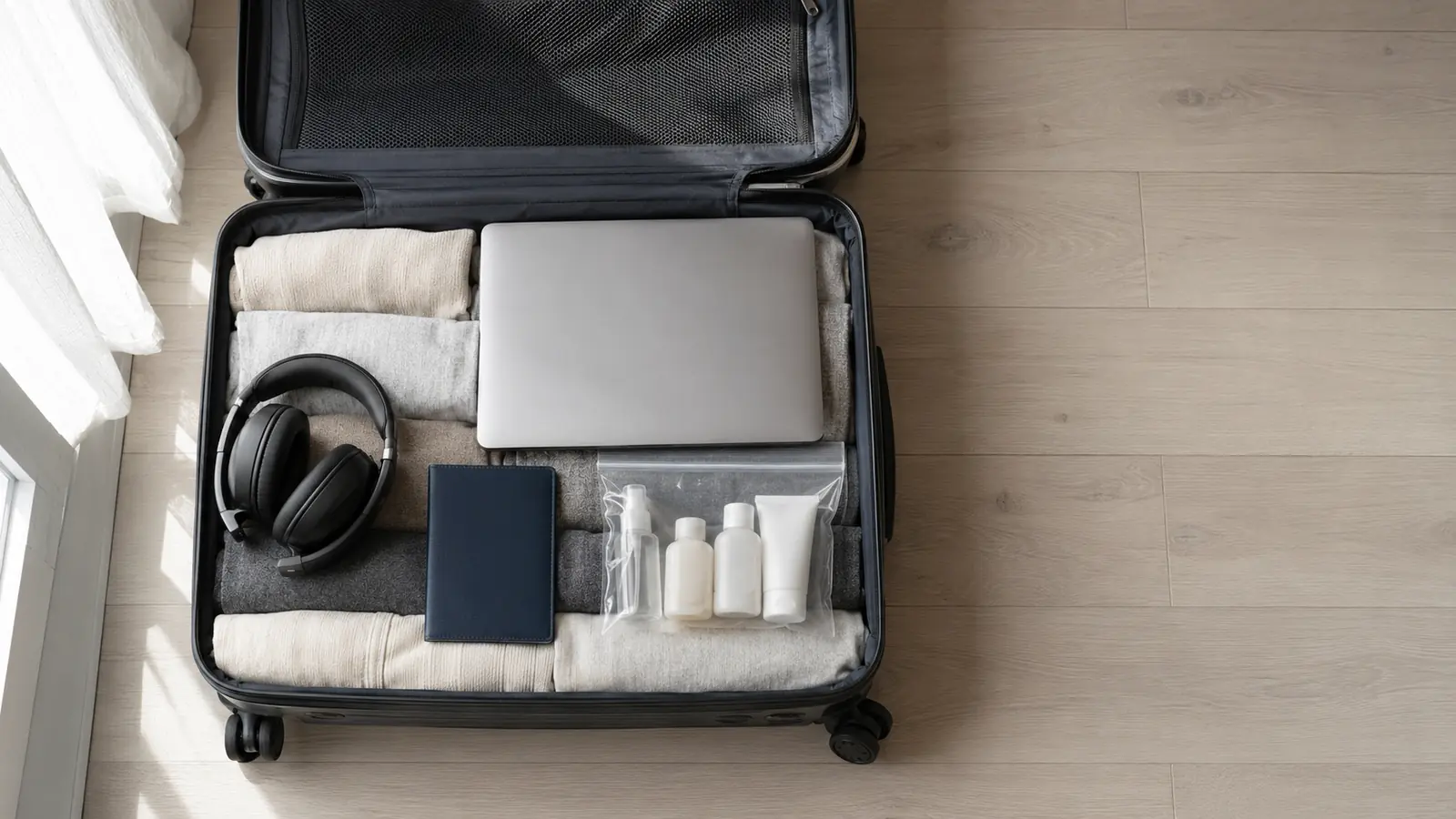
The four limits that decide almost everything.
Nearly every packing question resolves against one of these four numbers. Learn them and you will rarely need to look anything up again.
| Limit | The rule | Applies to | If you exceed it |
|---|---|---|---|
| 100 ml | Each container of liquid, aerosol or gel must be 100 ml / 100 g or less, and all of them must fit in one clear, closed, resealable 1 L bag | Anything pourable, sprayable or spreadable | Checked baggage, or leave it behind |
| 350 ml | Certain powders and granular materials are capped at a total of 350 ml / 350 g in carry-on | Baby powder, foot powder, cooking powders, salt, sand | Checked baggage |
| 6 cm | Blades of 6 cm or less are permitted in carry-on within Canada and to non-U.S. destinations | Scissors, knives, small tools, kitchen gadgets | Checked baggage — and no knives at all on U.S. flights |
| 100 Wh | Lithium batteries up to 100 watt-hours travel freely in carry-on; 101–160 Wh needs airline approval | Power banks, laptop batteries, camera batteries | Above 160 Wh is not permitted in carry-on at all |
One habit worth forming. CATSA runs a searchable What Can I Bring? tool that answers item-by-item questions in seconds. When something is genuinely borderline, check there rather than guessing.
How many bags can you actually bring?
Transport Canada allows a maximum of two carry-on bags per person. Size is set by your airline, not by the regulator, so a bag that is legal on one carrier may not fit another's sizer. If an item is too large to pass through the X-ray equipment, it has to be checked regardless of what your airline permits.
What most travellers do not realise is how much does not count toward the two-bag maximum:
- Small purses
- Cases containing only a camera, still or video
- Medication or medical equipment, including an oxygen tank, doctor's bag or CPAP machine
- Coats and outer garments
- Crutches, canes or walkers
- Strollers and child restraint systems
- Duty-free items purchased after the security check
- Snacks that are not liquids or gels
That list is generous, and it is the reason a parent travelling with an infant is not penalised for the stroller, or a traveller with a CPAP machine for the device. Your airline may impose its own limits on top, so check its policy for the specific flight.
LiquidsLiquids, aerosols and gels.
This is the rule that costs travellers the most and confuses them the most. Every container of liquid, aerosol or gel in your carry-on must be 100 ml / 100 g (3.4 oz) or less, and every one of them must fit inside a single clear, closed, resealable plastic bag of no more than one litre.
The limit is about container size, not contents. A 200 ml bottle with 30 ml left in it is still a 200 ml container and still fails. One bag per passenger, and CATSA gives its approximate dimensions as roughly 15 by 23 centimetres, or 20 by 17.5 centimetres. That is smaller than most people picture.
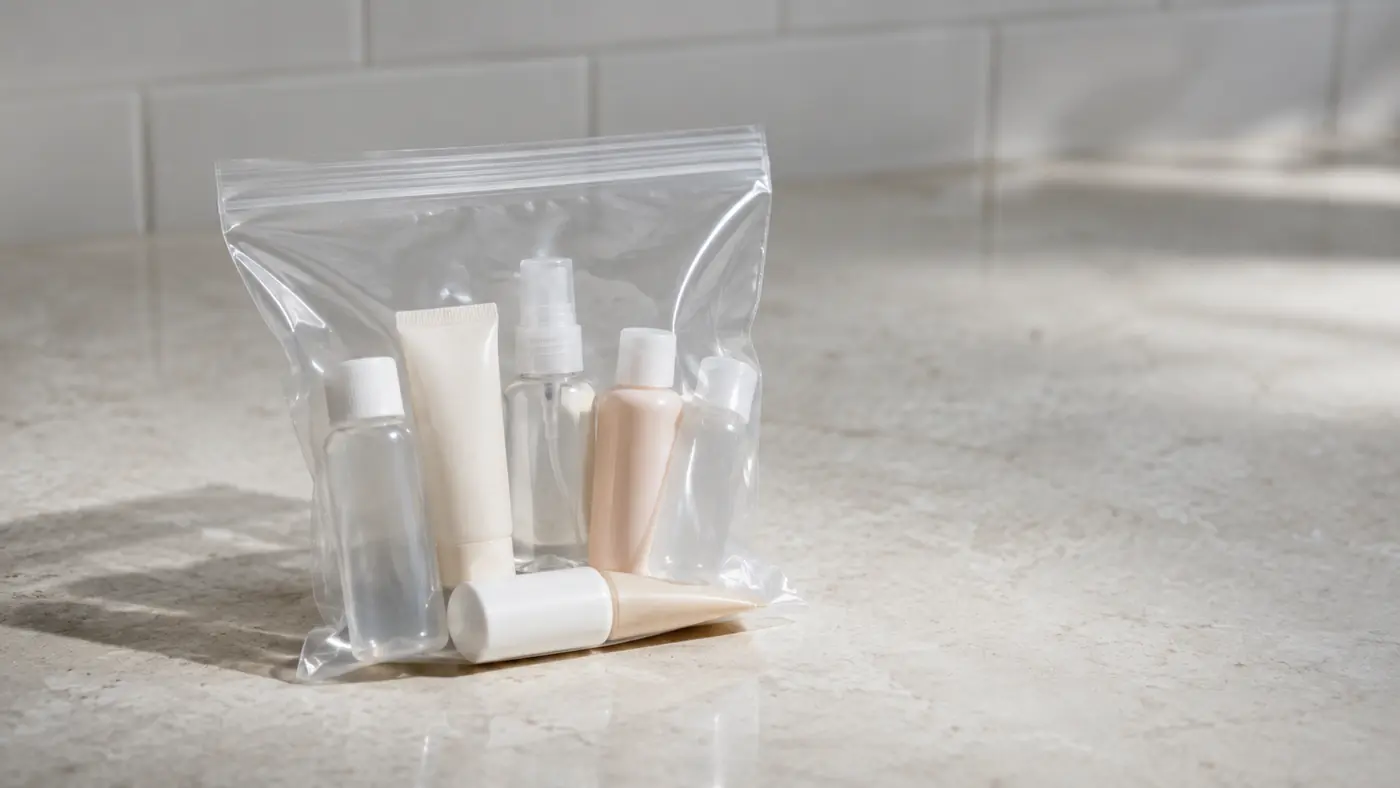
What counts as a liquid, and the surprises
The category is broader than the word suggests. Alongside the obvious entries such as shampoo, water, juice and perfume, CATSA classifies as liquids, aerosols or gels: toothpaste, mouthwash, insect repellent, hand sanitizer, creams and lotions, hairspray, and liquid cosmetics including mascara, liquid foundation and liquid eyeliner.
The gels list is where people come unstuck. It includes jam, jelly, pudding, yogurt, mashed potatoes, peanut butter, chocolate spread, cheese spread and maple spread. Spray cheese counts as an aerosol.
Two further rules are worth committing to memory. Anything normally liquid or gel that has been frozen solid still fails, because to count as a solid, a food must be solid at room temperature. And canned or jarred goods that clearly contain less than 100 ml of liquid, such as a tin of tuna, are allowed, but they must go inside the same one-litre bag as everything else.
What is exempt from the 100 ml limit
Several categories are exempt entirely and do not need to go in the plastic bag. You must declare them to the screening officer and present them separately for inspection.
- Baby food and drink for an infant under two years old: food, milk, liquid formula, water and juice, in quantities over 100 ml
- Breast milk, whether or not the child is travelling with you
- Prescription medicines
- Essential non-prescription medicines including pain relief, cough syrup, decongestant spray, homeopathic products, gel-based nutritional supplements, saline solution and eye care products
- Gel and ice packs needed to treat an injury, refrigerate infant food, or preserve medically necessary items
- Liquids or gels for diabetes or other medical conditions
- Distilled water for a CPAP device
Documentation is not required for any of these, though CATSA notes that presenting it may make screening smoother if you feel it would help.
The souvenir problem
Anyone flying out of Toronto with gifts should read this paragraph twice. CATSA specifically warns against packing liquid souvenirs in carry-on, and its examples read like a list of things people buy at the airport: liquor, wine, beer, snowglobes, cans of condensed soup, perfume, lotion and maple syrup.
Maple syrup is the classic Canadian casualty. A gift bottle is almost never under 100 ml. Put it in checked baggage, buy it after security, or ship it.
Before you reach the checkpoint, drink or discard any beverage in a container over 100 ml, including the water in your own reusable bottle. An empty bottle passes without issue and can be refilled on the other side.
Powders: the rule most people have never heard of.
Certain powders and granular materials in carry-on are limited to a total quantity of 350 ml or 350 g. Not per container. In total.
CATSA's examples include baby powder, foot powder, inorganic baby formula, some cooking powders and seasonings, baking powder, baking soda, salt and sand. Protein powder, which many travellers carry in large tubs, sits squarely in this territory.
This limit is genuinely obscure, it is not the same as the American powder rule, and it is enforced. If you are carrying a large container of anything powdered, it belongs in checked baggage.
FoodFood in your carry-on.
Solid food is permitted in both carry-on and checked baggage for travel within Canada. CATSA's own examples include granola bars, crackers, bread, hard candies, chips, cookies, chocolate bars, nuts, fresh fruit, meat, cheese slices, vegetables, muffins, sandwiches and supplements.
The dividing line is texture, not category. Anything mashed, puréed or mixed in a sauce is treated as a liquid or gel, so a sandwich passes but a bowl of chilli does not.
Two useful footnotes. Small kitchen appliances with blades of 6 cm or less, such as hand-held blenders or coffee grinders, are permitted in carry-on. And the X-ray equipment does not harm food or medication, so anything scanned is perfectly safe to eat.
Flying internationally? CATSA's rules govern what leaves a Canadian checkpoint. Whatever food you have not eaten on arrival, including food in checked baggage, becomes subject to the regulations of your destination country. Agricultural rules in particular can be strict about fresh produce, meat and dairy.
Electronics and batteries.
The guiding principle is simple and worth stating plainly: batteries and battery-powered devices belong in your carry-on, on you, not in checked baggage. That is the opposite instinct to most people's, and it is a safety rule rather than a security one.
CATSA also cautions against carrying damaged or recalled batteries at all, and notes that airlines vary on whether they permit lithium batteries in devices, or even ordinary alkaline batteries, in checked bags.
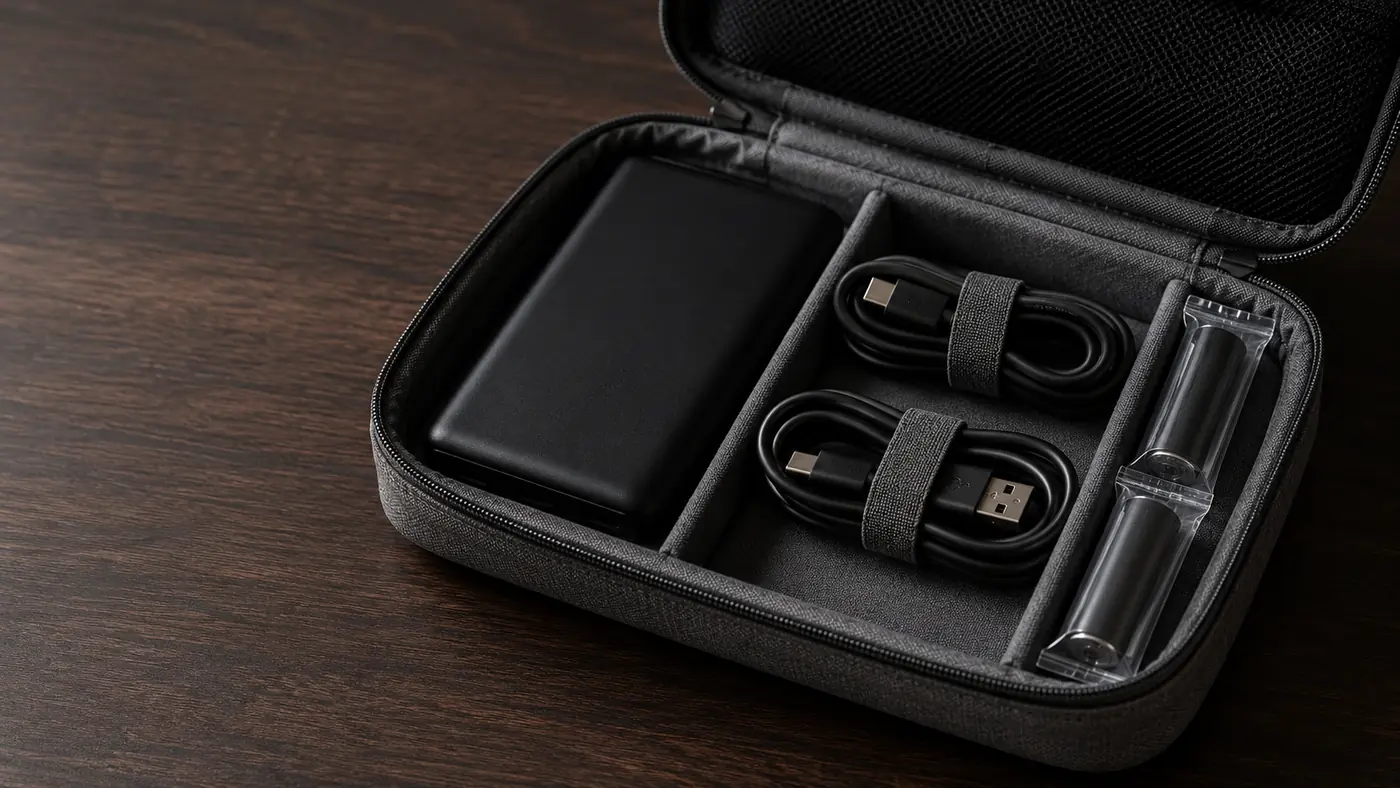
Power banks and watt-hours
Lithium battery limits are expressed in watt-hours. If your device does not state its Wh rating, you can calculate it: watt-hours equal volts multiplied by amp-hours, or volts multiplied by milliamp-hours divided by 1,000. A 12-volt battery rated at 8 amp-hours is 96 Wh.
| Battery | Rating | Carry-on | Checked |
|---|---|---|---|
| In device | 100 Wh or less | Yes | Yes |
| Spare | 100 Wh or less | Yes | Only with airline approval |
| In device | 101–160 Wh | Yes | Only with airline approval |
| Spare | 101–160 Wh | Maximum two protected spares per person, with airline approval | Only with airline approval |
| In device or spare | Over 160 Wh | No | Only with airline approval |
Most airlines follow IATA guidance permitting power banks up to 100 Wh without special approval, and 100 to 160 Wh with it. Several carriers have introduced tighter rules recently on power banks and e-cigarettes, including restrictions on stowing them in overhead bins and prohibitions on charging devices in flight. CATSA advises checking your airline's current policy before you fly, because these have been changing.
Batteries in mobility devices such as wheelchairs are allowed without any watt-hour limit, and you may bring one spare of up to 300 Wh through the checkpoint. Tell your airline in advance and notify the screening officer on arrival.
How to pack spare batteries
The risk with a loose spare battery is a short circuit caused by contact with metal. Three acceptable methods, any one of which is enough:
- Leave it in its original retail packaging
- Tape over the terminals to isolate the contacts
- Place each battery in its own plastic bag or protective pouch
Keep loose batteries away from coins, keys and jewellery, and avoid crushing or puncturing them.
Sharp objects and tools.
The threshold is blade length, not the size of the object. Blades of 6 cm (2.4 inches) or less are permitted in carry-on when flying within Canada or to an international destination other than the United States.
Permitted without fuss: disposable razors with the blade encased in plastic, small scissors with blades of 6 cm or less, tweezers, and nail clippers. Knitting needles and crochet hooks of any size or material are allowed. Small tools with blades of 6 cm or less are fine, though heavier tools such as drills and saws must be checked, with their batteries kept in carry-on.
Open, loose or straight razor blades, and any personal item with a blade over 6 cm, go in checked baggage.
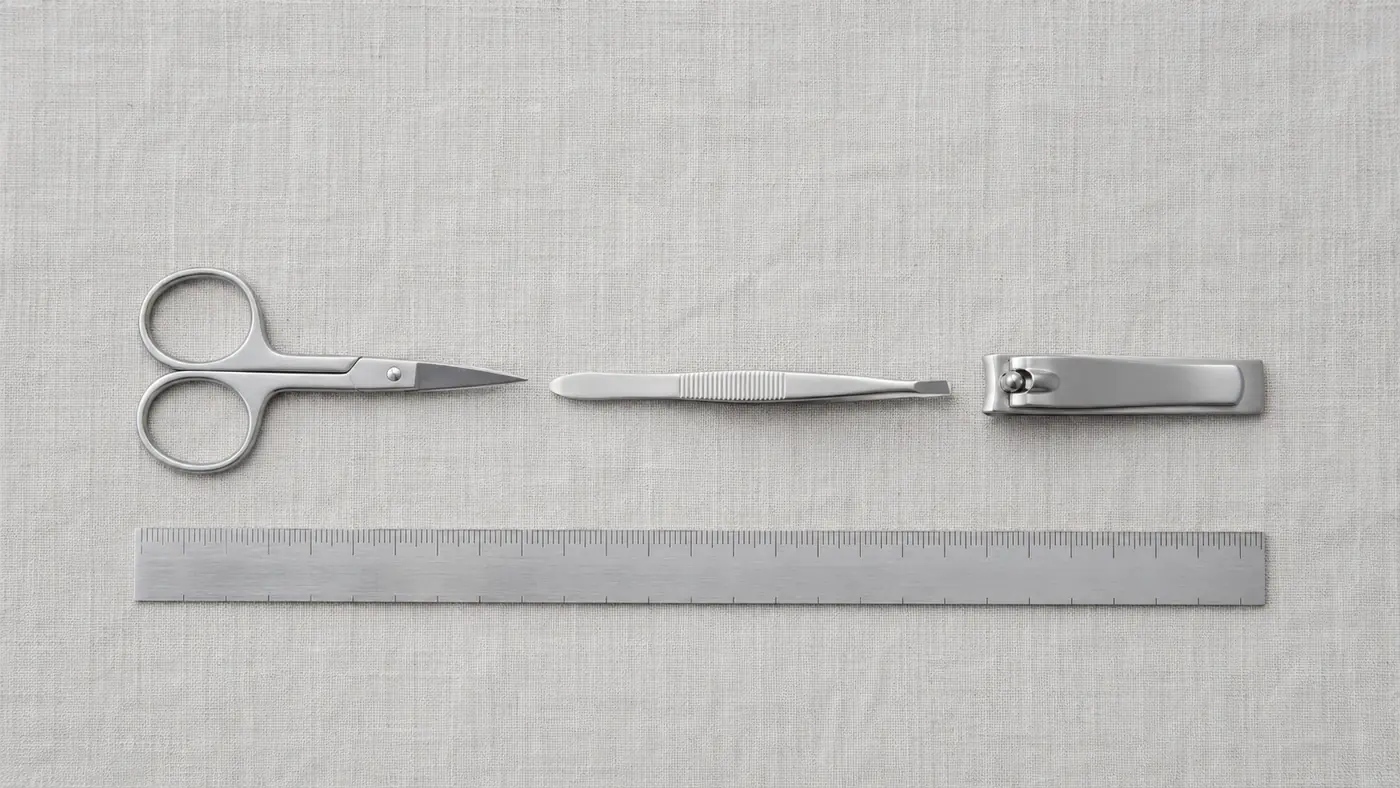
Flying to the United States is different
This catches Canadians constantly. CATSA states that knives of any type or length are not permitted in carry-on on flights to the United States. The 6 cm allowance does not apply. A small pocket knife that travels with you to Vancouver without comment will be surrendered on a flight to Chicago.
Blades over 6 cm are permitted in checked baggage on any route, including transborder.
Prohibited items, and the ones that involve police.
Some items are not merely refused. Presenting them at a checkpoint triggers a police notification, because they are illegal to possess under Canadian law.
Knives that open automatically by gravity, centrifugal force, or pressure on a button or spring — butterfly knives and switchblades among them — fall into this category, as do concealed knives such as those hidden in an umbrella or cane, pen knives and kubotans. Pepper spray, which is legal in some countries and not in Canada, is another. CATSA is required to notify police in each case, and charges are possible.
One general principle applies throughout: the final decision on whether an item passes rests with the screening officer, even for items that appear to meet the published criteria.
Cannabis and alcohol.
Cannabis may be carried on domestic flights within Canada, subject to federal possession limits, the legal age in the province you are travelling to, and your airline's own policy. Products that are liquids or oils are treated as liquids at the checkpoint like anything else.
Crossing the border is an entirely different matter. The Government of Canada states that it is illegal to take cannabis, including products containing cannabis, across the Canadian border in either direction unless authorized by Health Canada. That holds even if your destination has legalised it, and even for medical cannabis. If you are entering Canada with cannabis in any form, you must declare it to the Canada Border Services Agency.
On alcohol: bottles over 100 ml belong in checked baggage, where CATSA permits beverages up to 70 per cent alcohol by volume, capped at five litres per person for anything between 24 and 70 per cent. Beverages of 24 per cent or less are not subject to a quantity limit. Duty-free alcohol bought after security follows separate rules and must stay in its sealed security bag with the receipt. Personal exemption amounts on the way back in are a customs question rather than a security one, and worth reading alongside what happens on the way back in.
At the CheckpointWhat changes on a CT screening line.
Here is the part that is genuinely new, and the reason two people at the same airport can be told different things on the same morning.
CATSA is deploying computed tomography scanners at pre-board screening checkpoints across Canada. These produce rotatable three-dimensional images rather than the flat two-dimensional ones older equipment generates, which lets officers assess a bag without you unpacking it.
On a line equipped with CT, you may keep large electronics such as laptops, medical devices, and permitted liquids of 100 ml or less inside your carry-on bag.
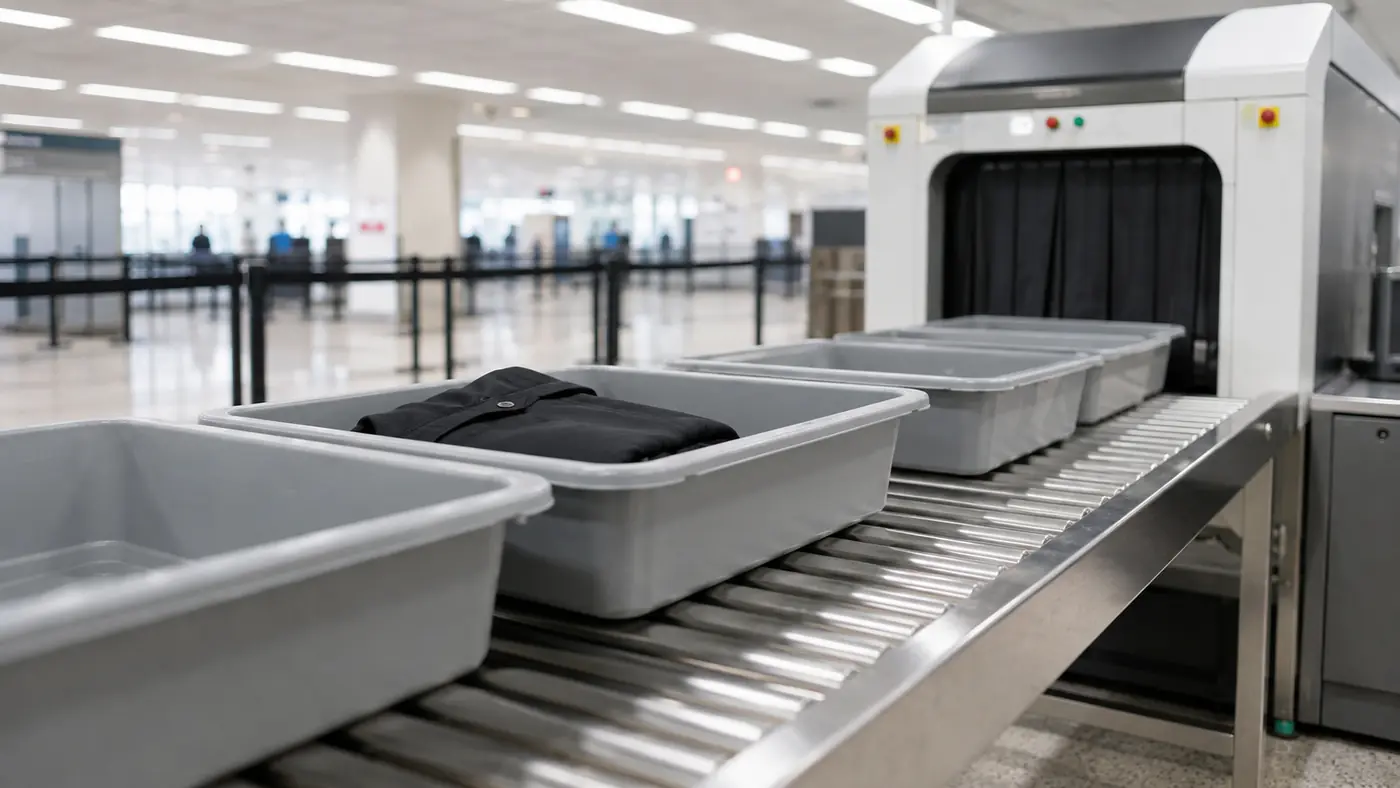
CATSA lists CT technology as available on one or more screening lines at Toronto Pearson's Terminal 1 International and Level 2 Domestic checkpoints, along with Vancouver, Calgary, Montréal, Ottawa, Edmonton, Winnipeg, Halifax, Québec City and Kelowna. Coverage is by line, not by airport, so a CT-equipped terminal does not mean every lane has it.
If you are unsure which building you are departing from, our guide to which terminal your flight departs from sorts that out first.
The reversal that catches people out. On a CT line, permitted liquids of 100 ml or less stay in your bag — but liquids over 100 ml that are exempt from the rule, such as prescription medication, breast milk and infant formula, must still be removed and placed in a bin. The traveller with medication is the one most likely to get this backwards.
Signage is displayed in front of every line that has CT available. If there is no CT sign, treat it as a conventional line and remove your electronics and liquids as usual.
What goes in the bin.
On a conventional line, this is the sequence. Doing it in this order keeps you moving and keeps your valuables together.
- Before you reach the belt, put loose change, keys and small metal items inside your carry-on rather than in a bin. They are far easier to lose loose.
- Liquids bag out of the carry-on and into a bin.
- Laptop out of its case, laid flat in a bin with nothing on top of or underneath it.
- CPAP machine, main unit removed from its carrying case, into a bin.
- Exempted liquids and medication out of the bag and into a bin, declared to the officer.
- Outerwear — jacket, coat or bulky sweater worn over your clothes — removed and placed neatly in a bin.
- Duty-free purchases in their sealed official security bag with an itemized receipt, placed directly in a bin.
- Carry-on and personal bag directly in a bin.
If an item is refused.
Most travellers assume the only option is to abandon the item. There are three, and knowing them in advance is what turns a loss into an inconvenience.
- Leave it with someone. If a friend or family member is not travelling and is still at the airport, they can take it.
- Rebook. Ask your airline representative to move you to a later flight, giving you time to make other arrangements.
- Ship it. Send the item by mail, cargo or courier, though shipping options vary considerably from airport to airport.
All three depend on the same thing: having time. That is the practical argument for the timings set out in our guide to how early to arrive at Pearson.
Seven mistakes travellers make.
- Following American advice. The powder limit, the blade rules and the exemption list all differ from the U.S. version.
- Judging a bottle by how full it is. The rule is container size, not contents.
- Assuming spreadable food is food. Peanut butter, yogurt and jam are gels.
- Packing spare batteries in checked baggage. They belong in carry-on.
- Carrying a pocket knife on a U.S. flight. No knives at all, whatever the blade length.
- Buying maple syrup before security. Buy it after, or check it.
- Leaving no time. Every fix for a refused item requires spare minutes you do not have if you arrive at the last moment.
Leaving enough margin at Pearson.
Almost every packing problem is solvable at the airport. You can move an item into a checked bag, hand it to whoever dropped you off, or ship it. What none of those fixes survives is arriving with twenty minutes to spare.
That is the only part of this subject a transfer service genuinely influences, so it is the only claim worth making here. A pre-arranged departure transfer fixes your pickup time to your flight rather than to traffic guesswork, and a booked vehicle gives you room to repack without an audience if something needs to move between bags at the curb.
Obsidian Ride operates 24/7 dispatch across Toronto and the GTA, with details on the Pearson Airport chauffeur service page. Before any departure it is also worth a look at check your flight status before you leave, since a delayed departure changes how much margin you actually need.
Give yourself time to fix things.
Book a departure transfer against your flight time and arrive with enough margin to repack, recheck or reroute anything that does not clear the checkpoint.
Canada carry-on rules: frequently asked questions.
What is the 100 ml rule in Canada?
Containers of liquids, aerosols and gels in your carry-on must be 100 ml or 100 g (3.4 oz) or less, and they must all fit inside one clear, closed, resealable plastic bag of no more than one litre. Each passenger is allowed a single bag. Containers larger than 100 ml go in checked baggage.
How many carry-on bags can you bring in Canada?
Transport Canada allows a maximum of two carry-on bags per person, though your airline sets the acceptable size. Several items do not count toward that maximum, including small purses, coats, medication and medical equipment, crutches and walkers, strollers and child restraints, and duty-free items bought after security.
Can you bring food in your carry-on in Canada?
Solid food is permitted in carry-on and checked baggage for travel within Canada, including sandwiches, fruit, cheese, nuts and baked goods. Anything mashed, puréed or in a sauce counts as a liquid or gel and falls under the 100 ml limit. To count as solid, a food must be solid at room temperature.
Are powders allowed in carry-on in Canada?
Yes, but with a limit most travellers do not know about. Certain powders and granular materials — baby powder, foot powder, inorganic baby formula, some cooking powders and seasonings, baking soda, salt and sand — are limited to a total of 350 ml or 350 g in your carry-on. Larger quantities belong in checked baggage.
Can you bring a power bank in your carry-on in Canada?
Yes, and in fact power banks belong in carry-on rather than checked baggage. Most airlines follow IATA guidance allowing power banks up to 100 Wh without special approval, and 100 to 160 Wh with airline approval. Many airlines now restrict charging devices onboard, so check your carrier's current policy before flying.
Do you still have to take your laptop out at Pearson?
It depends which line you are in. CATSA lists Toronto Pearson's Terminal 1 International and Level 2 Domestic checkpoints as CT-equipped, and on those lines large electronics and permitted liquids can stay in your bag. Signage marks CT lines. If there is no CT sign, remove your laptop as usual.
Can you bring scissors or a small knife in your carry-on in Canada?
Small scissors, tweezers, nail clippers and disposable razors are permitted, and blades of 6 cm or less are allowed in carry-on when flying within Canada or to a non-U.S. international destination. Flying to the United States is different: knives of any type or length are not permitted in carry-on.
Is medication exempt from the liquid rule in Canada?
Yes. Prescription medicines and essential non-prescription medicines such as pain relief, cough syrup, decongestant spray, saline solution and eye care products are exempt from the 100 ml limit and do not need to go in the plastic bag. Declare them to the screening officer and place them separately in a bin for inspection.
Can you bring maple syrup in your carry-on?
Only in containers of 100 ml or less that fit in your one-litre bag, which rules out most bottles sold as gifts. CATSA lists maple syrup among the liquids travellers most often lose at the checkpoint, along with snowglobes, condensed soup and bottled alcohol. Pack it in checked baggage or ship it.
Can you fly with cannabis in Canada?
Cannabis may be carried on domestic flights within Canada, subject to federal possession limits and airline policy. Taking it across the Canadian border is a different matter entirely: the Government of Canada states it is illegal to carry cannabis, including cannabis products, into or out of the country unless authorized by Health Canada.
What happens if security will not let an item through?
CATSA gives you three options. You can leave the item with someone who is not travelling and is still at the airport, ask your airline to rebook you on a later flight so you can make other arrangements, or ship it by mail, cargo or courier, though shipping options vary by airport.