
Toronto Pearson Terminal 1 vs Terminal 3: The Complete Traveller's Guide.
Toronto Pearson has two passenger terminals, and they are not interchangeable. This guide explains the Pearson Terminal 1 vs Terminal 3 differences that actually affect your trip — which airlines use each terminal, how arrivals and departures are laid out, how to transfer between them, and where every mode of ground transportation picks up.
Nearly every traveller flying through Canada's busiest airport eventually asks the same question: Pearson Terminal 1 vs Terminal 3 — which one am I actually going to? It sounds like a small detail. It isn't. Choosing the wrong terminal on the way to a departure can cost you thirty to forty-five minutes you almost certainly don't have, and sending someone to meet you at the wrong arrivals hall turns a simple pickup into a logistics problem.
Toronto Pearson International Airport (YYZ) operates two passenger terminals: Terminal 1 and Terminal 3. They sit roughly two kilometres apart on opposite sides of the airfield, they serve different airlines, they have different layouts, and — critically — they don't offer identical ground transportation. Terminal 1 has a train station. Terminal 3 doesn't. Terminal 3 has hotels attached by covered walkway. Terminal 1 doesn't.
This guide covers the practical differences, in the order you'll actually encounter them.
The short answer: how the two terminals divide up.
Terminal 1 is home to Air Canada and its Star Alliance partners, plus several major Middle Eastern and Asian carriers. It is the larger and newer of the two.
Terminal 3 handles most other airlines — including WestJet, Porter, Air Transat, Flair, and the majority of oneworld and SkyTeam carriers such as American Airlines, Delta, British Airways, Air France and KLM.
Both terminals handle domestic, US transborder and international flights, and both have US Customs preclearance. The two are connected by a free automated Terminal Link train. Your boarding pass is the single source of truth for which one you need.
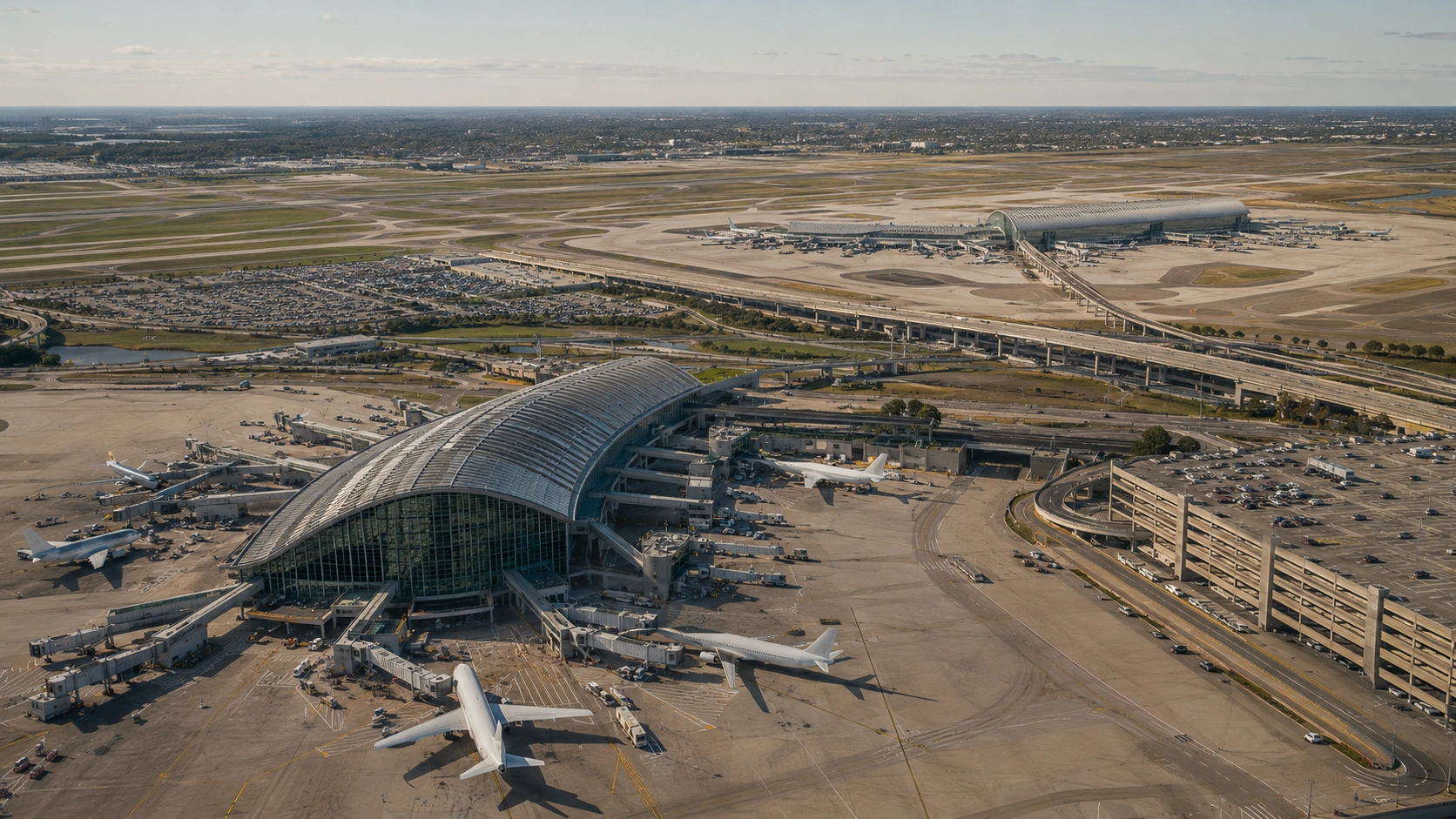
Pearson Terminal 1 vs Terminal 3 at a glance.
If you only read one section, read this table. It covers the differences that change how you plan your trip rather than trivia about square footage.
| Feature | Terminal 1 | Terminal 3 |
|---|---|---|
| Opened | 2004 (phased through 2007) | 1991 |
| Main airlines | Air Canada, Air Canada Rouge & Express, Star Alliance | WestJet, Porter, Air Transat, Flair, oneworld & SkyTeam carriers |
| Concourses | Piers D, E and F | Concourses A, B and C |
| Check-in level | Upper level (Departures) | Upper level (Departures) |
| Arrivals level | Ground level | Ground level |
| US preclearance | Yes | Yes |
| UP Express train | Yes — station attached | No — connect via Terminal Link |
| Terminal Link train | Yes | Yes |
| Attached hotels | None directly connected | Sheraton Gateway and Alt Hotel by walkway |
| Parking garage | Terminal 1 Garage, connected | Terminal 3 Garage, connected |
| General feel | Larger, newer, longer walks between gates | More compact, quicker to move through |
Inside Terminal 1: the bigger, newer half of Pearson.
Terminal 1 opened in 2004 to replace Pearson's original terminal, and it was built for scale. It's the larger of the two facilities by a wide margin, handling the majority of Pearson's passenger traffic, and it functions as Air Canada's principal global hub.
Layout and concourses
Terminal 1 is organised into three piers, and knowing which one you're departing from tells you a lot about how much walking is ahead of you:
- Pier D — the closest gates to the central check-in hall, used for domestic and international departures.
- Pier E — international gates, and the pier where most long-haul international arrivals are processed.
- Pier F — US transborder gates, reached after clearing US Customs and Border Protection preclearance.
Pier F in particular is a long walk from the main hall. If your boarding pass shows an F gate, don't treat the posted boarding time as a suggestion — budget an extra ten to fifteen minutes of walking on top of security and preclearance.
Check-in and security
Check-in and bag drop are on the upper Departures level, arranged in long rows of counters by airline. Air Canada's zones dominate the hall. Security screening for domestic and international departures is straightforward; US-bound passengers proceed to a separate preclearance area where they complete American immigration and customs formalities on Canadian soil, then land in the United States as a domestic arrival.
Arrivals
Terminal 1 arrivals are on the ground level. International passengers clear Canada Border Services Agency inspection, collect checked bags, then exit into the public arrivals area. Domestic and precleared US arrivals bypass customs entirely and go straight to baggage claim.
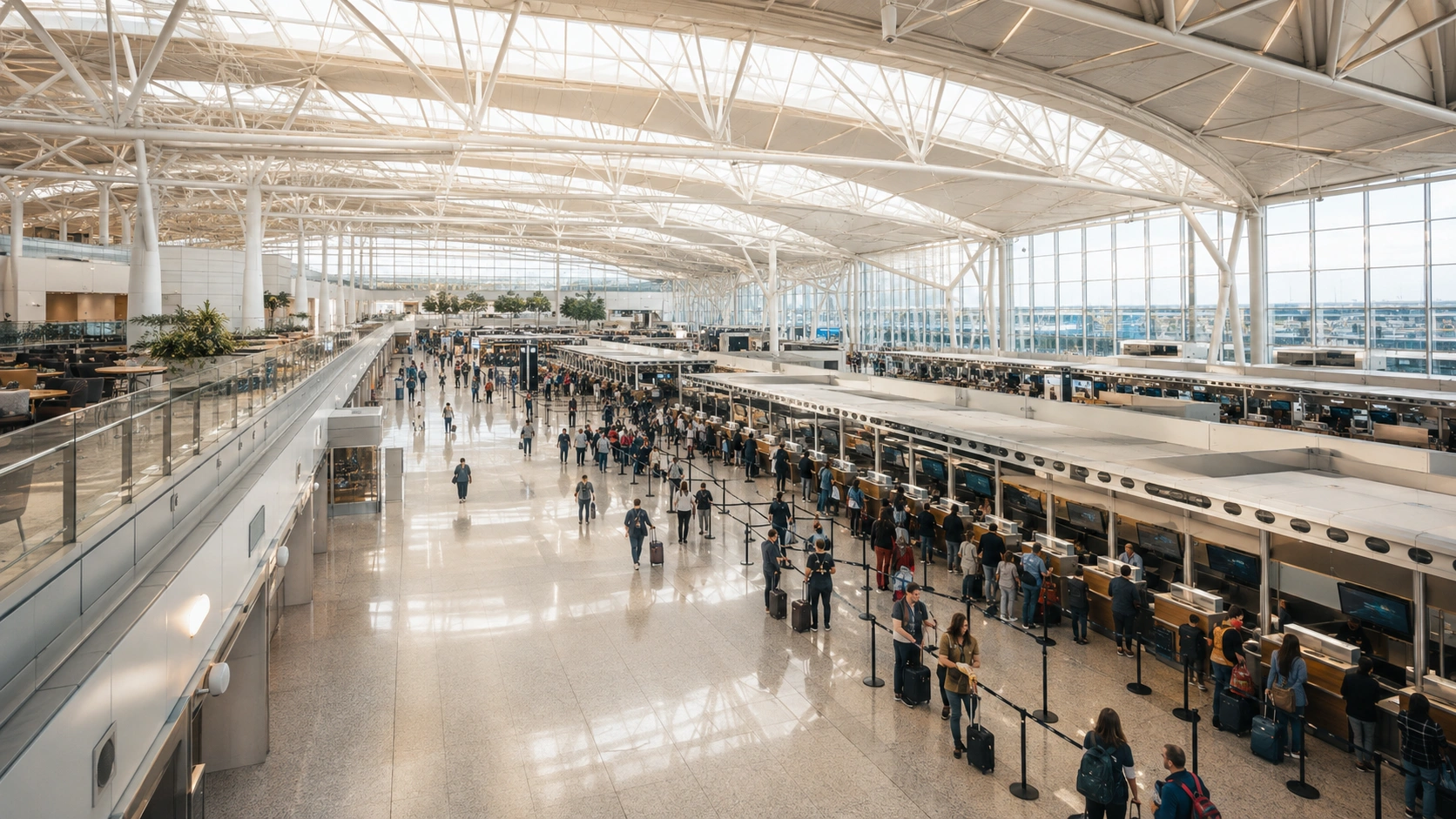
Inside Terminal 3: compact, and easier to move through.
Terminal 3 opened in 1991, originally built and operated privately before the Greater Toronto Airports Authority took it over. It's smaller and older than Terminal 1, but many frequent flyers quietly prefer it: the walking distances are shorter, the layout is easier to read, and getting from the curb to your gate generally takes less time.
Layout and concourses
- Concourse A — primarily international departures and arrivals.
- Concourse B — domestic and international gates, and the busiest area for WestJet and Porter.
- Concourse C — US transborder gates, accessed through Terminal 3's US preclearance facility.
What makes Terminal 3 different
Two things stand out. First, Terminal 3 is directly connected by covered walkway to two hotels — the Sheraton Gateway and the Alt Hotel — which makes it the obvious choice if you're overnighting before an early departure. Second, Terminal 3 has no direct rail connection to downtown Toronto. If you want the UP Express train, you'll ride the Terminal Link over to Terminal 1 first.
Terminal 3 has also been the focus of ongoing modernisation work as part of Pearson's long-term capital program, so departure hall configurations and construction hoarding may look different from one trip to the next. Give yourself a little extra margin here.
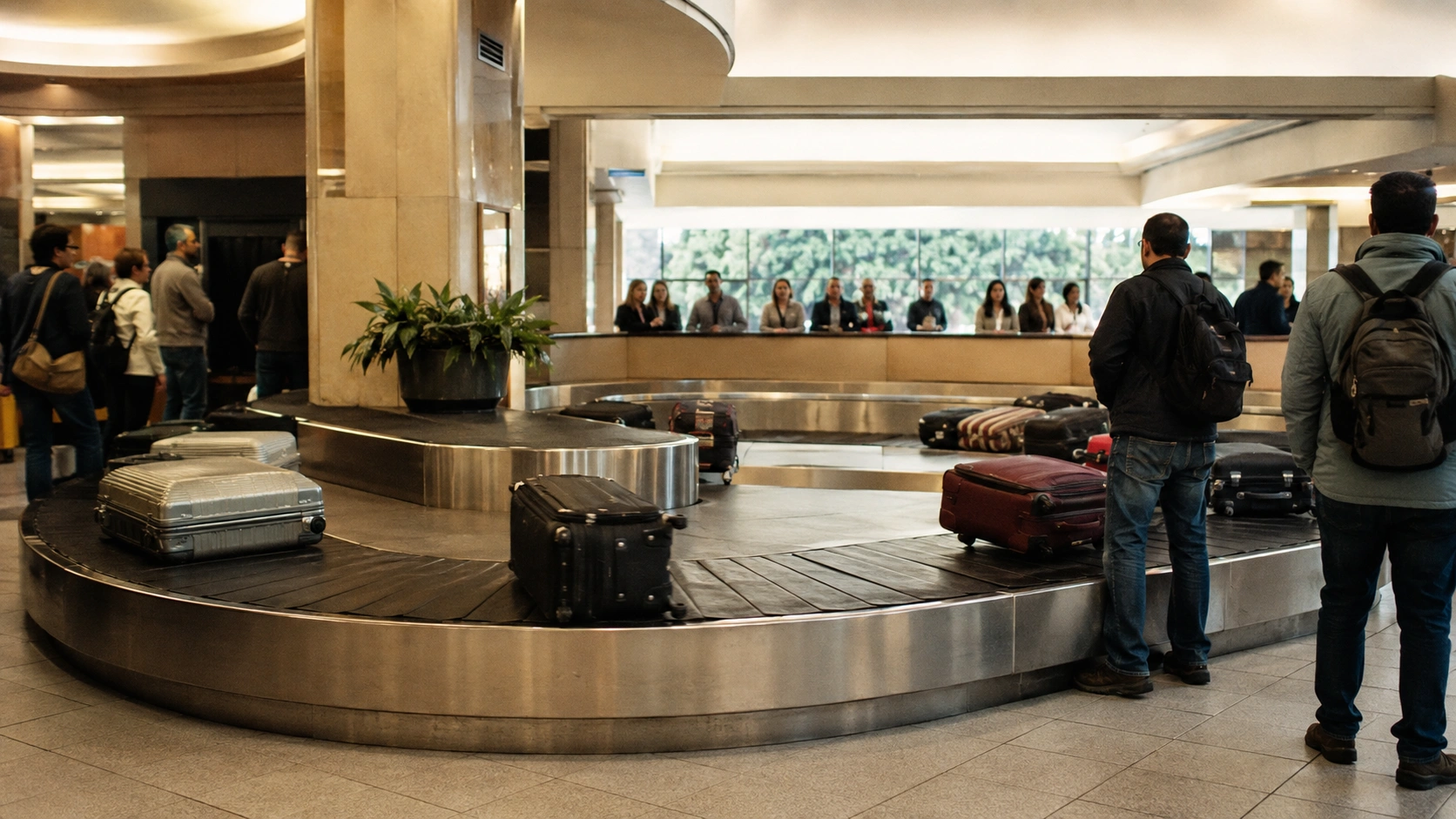
Which airlines fly from Terminal 1 and Terminal 3?
The simplest way to remember the split is by alliance. Star Alliance carriers cluster in Terminal 1. Most oneworld and SkyTeam carriers, plus Canada's leisure and low-cost airlines, operate from Terminal 3.
Typically departs from T1
- Air Canada, Air Canada Rouge, Air Canada Express
- United Airlines
- Lufthansa, Swiss, Austrian Airlines, Brussels Airlines
- Turkish Airlines, TAP Air Portugal, LOT Polish, SAS
- Singapore Airlines, ANA, Asiana, EVA Air, Air China
- Ethiopian Airlines, EgyptAir, South African Airways
- Copa Airlines, Avianca
- Emirates, Etihad Airways, Qatar Airways
- Korean Air
Typically departs from T3
- WestJet and WestJet Encore
- Porter Airlines (Pearson-based flights)
- Air Transat
- Flair Airlines
- American Airlines
- Delta Air Lines
- British Airways, Virgin Atlantic
- Air France, KLM, ITA Airways
- Cathay Pacific, Japan Airlines
- Aeroméxico, LATAM, Icelandair
- Most Caribbean and charter operators
How to confirm your terminal in under a minute.
Don't guess, and don't rely on what your terminal was last year. Check it the day before you travel and again the morning of. Here's the order of reliability:
- Your boarding passOnce checked in, the terminal is printed directly on the pass, usually next to the gate number. This is the most authoritative source.
- Your airline's appLive flight status screens show the terminal and update if it changes. Turn on push notifications for your booking.
- The Toronto Pearson websiteSearch your flight number on the official arrivals or departures board to see the assigned terminal in real time.
- Your booking confirmation emailReliable at the time of booking, but the least current of the four — terminals can be reassigned months later.
- Airport signage on approachThe airport road network splits for Terminal 1 and Terminal 3 well before the terminals. Know your answer before you reach that split.
One nuance worth knowing: on codeshare bookings, the terminal follows the airline actually operating the aircraft, not the one on your ticket. A flight sold by Air Canada but operated by a partner may leave from Terminal 3, and vice versa. Look for the "operated by" line on your itinerary.
DeparturesDepartures: what's actually different between T1 and T3.
Both terminals follow the same fundamental pattern — you're dropped at the upper level, check in, clear security, and walk to your gate. The differences are in scale and timing.
Distances and timing
Terminal 1 is simply bigger. The distance from the curb to a far Pier F gate can exceed a kilometre of walking, and the transborder preclearance queue is a genuine variable. Terminal 3's compact footprint means less walking, but its check-in hall can feel more congested during peak leisure banks — early mornings and the Friday evening rush in particular.
US-bound flights
Both terminals have US Customs and Border Protection preclearance, which is a real advantage: you complete US immigration in Toronto and arrive in the States as a domestic passenger, skipping the arrival queue entirely. The trade-off is that preclearance adds a step in Toronto, so US departures need more lead time than domestic ones from either terminal.
How early should you get there?
This is where terminal choice, flight type and time of day all interact. We've broken the timing down flight-by-flight in a dedicated guide: how early to arrive at Pearson Airport. As a working baseline, plan on two hours for domestic, two and a half to three for US transborder, and three for international — and add buffer if you're departing from a far Terminal 1 pier or travelling during a peak wave.
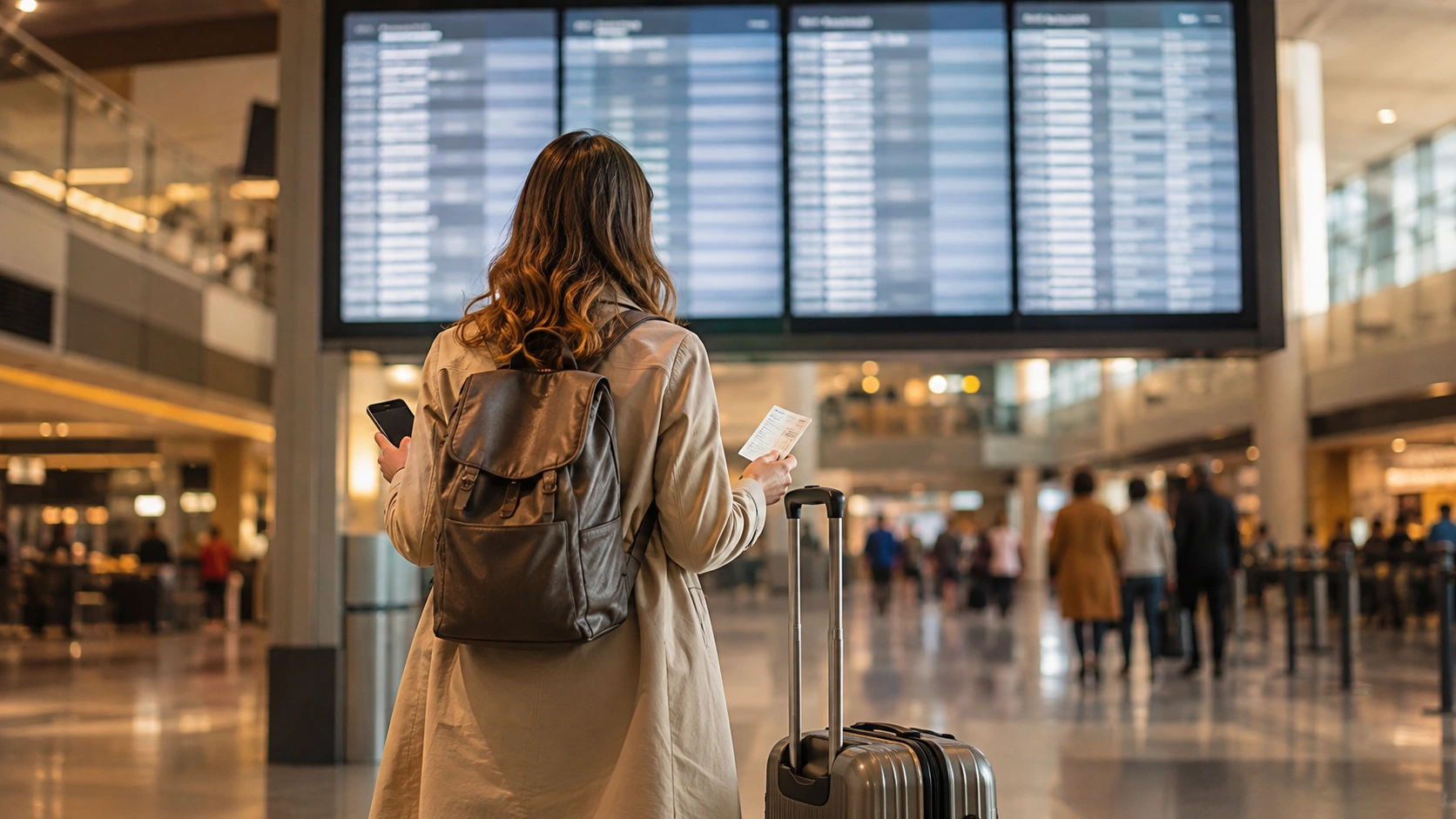
Arrivals: where you'll actually walk out.
Arrivals halls are on the ground level in both terminals, and the sequence is the same: deplane, clear customs if arriving internationally, collect bags, then exit into the public meeting area. What differs is where that exit puts you.
Terminal 1 arrivals
Terminal 1's international arrivals area is large, with multiple exit points into the public hall. This matters when arranging a meeting point — "I'll meet you at arrivals" is not specific enough at T1. Domestic arrivals exit into a different part of the building than international arrivals, so confirm which one applies to your flight.
Terminal 3 arrivals
Terminal 3's arrivals hall is more concentrated, and finding someone is generally simpler. Exits funnel into a smaller public area, which reduces the odds of two people standing fifty metres apart looking for each other.
Speeding up customs
International arrivals into either terminal can use the CBSA Advance Declaration feature to submit customs and immigration details up to 72 hours before landing, which typically routes you into a faster processing lane. It's free, takes a couple of minutes, and reliably saves time on busy arrival banks.
Transferring between Terminal 1 and Terminal 3 at Pearson.
This is the part of the Pearson Terminal 1 vs Terminal 3 question that catches people out. The two terminals are connected by the Terminal Link train — a free, automated people mover that runs on an elevated guideway between Terminal 1, Viscount Station and Terminal 3.
How the Terminal Link works
- Cost: free, with no ticket or tap required.
- Frequency: trains arrive every few minutes throughout the day.
- Journey time: roughly five to ten minutes end to end, including the Viscount Station stop.
- Access: stations are located on the upper levels of both terminals, signposted as "Terminal Link" or "LINK Train".
- Hours: operates around the clock, with a shuttle bus substituting during scheduled maintenance windows.
The important catch for connecting passengers
The Terminal Link runs landside — outside the secure area. If your connecting flight departs from the other terminal, you must exit security, ride the train, and clear screening again at the second terminal. That's why airlines deliberately cluster alliance partners in the same terminal.
Practically, this means you should treat a T1-to-T3 connection as needing a minimum of 90 minutes, and closer to two hours if you're connecting onto a US-bound flight that requires preclearance. If your bags were checked through to the final destination, they'll be transferred for you — only you need to make the trip.
Should you just walk or drive between terminals?
No. There's no pedestrian route between Terminal 1 and Terminal 3, and the airfield roadway system isn't designed for it. Driving between them is possible but involves circling the airport ring road and paying to re-enter a terminal roadway. The train is faster and free.
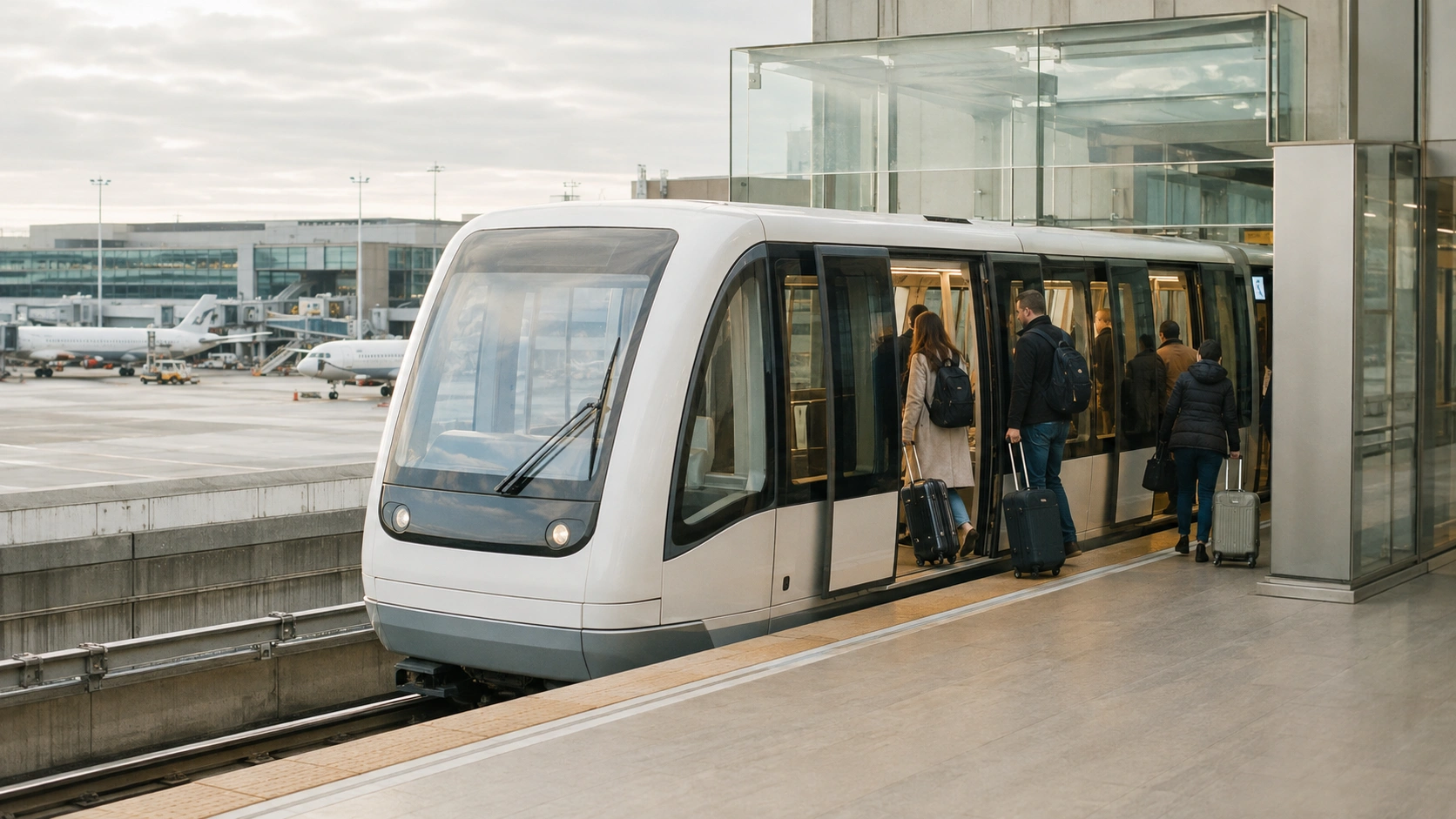
Transportation areas: how each terminal connects to the city.
Ground transportation is where the Pearson Terminal 1 vs Terminal 3 comparison genuinely diverges, and it's the difference most travellers don't discover until they're standing at the curb with luggage.
UP Express — Terminal 1 only
The Union Pearson Express runs between the airport and Union Station downtown in about 25 minutes, with departures roughly every 15 minutes. Its airport station is attached to Terminal 1 only. Arriving into Terminal 3 and want the train? Take the Terminal Link to Terminal 1 first and add 15 to 20 minutes to your plan. It's a fast, reliable option if your destination is near Union Station and you're travelling light — less so with three suitcases and a connection to make on the other end.
TTC, GO Transit and regional buses
Toronto's TTC serves the airport with several routes, including the 900 Airport Express to Kipling Station and overnight service on the Blue Night network. GO Transit, MiWay and Brampton Transit also serve Pearson. Not every route stops at both terminals, and some terminate at Terminal 1 only — check your specific route rather than assuming symmetry. Bus stops are on the ground level at both terminals.
Taxis and airport limousines
Licensed taxis and airport limousines queue at designated stands on the arrivals level of both terminals. Fares to downtown are typically zone-based or metered depending on the operator, and wait times fluctuate sharply with arrival banks — a wide-body wave landing at the same time as three other flights will produce a queue.
Rideshare
Uber and Lyft operate at both terminals from designated app-based pickup zones, which are signposted and separate from the taxi stands. Pickup locations at Pearson have moved more than once, so follow the in-app instructions and terminal signage rather than memory. Surge pricing during peak arrival waves and bad weather is a real cost consideration.
Pre-arranged private chauffeur
A pre-booked chauffeur is the one option where the Terminal 1 vs Terminal 3 distinction is handled before you land rather than after. Your flight number is attached to the reservation, arrival times are monitored, and pickup instructions are matched to your specific terminal. There's no queue to join and no app to negotiate with after a long-haul flight — which is the entire point of arranging it in advance.
| Option | Terminal 1 | Terminal 3 | Best for |
|---|---|---|---|
| UP Express | Station attached | Via Terminal Link | Solo travellers heading to Union Station |
| TTC / GO buses | Ground level | Ground level (route dependent) | Budget travel, light luggage |
| Taxi / airport limo | Arrivals level stand | Arrivals level stand | Walk-up convenience |
| Rideshare | Designated app pickup zone | Designated app pickup zone | Short trips, off-peak |
| Private chauffeur | Pre-arranged, terminal-specific | Pre-arranged, terminal-specific | Groups, executives, late arrivals, heavy luggage |
| Terminal Link | Upper level station | Upper level station | Moving between terminals and Viscount parking |
Parking and hotels: another real difference.
Parking
Each terminal has its own multi-storey garage connected directly to the building, suitable for short stays and quick drop-offs. For longer trips, the Value Park Garage and Value Park Lot at Viscount Station cost less and connect to both terminals via the Terminal Link — so your parking choice doesn't lock you into a terminal. Booking parking online in advance is almost always cheaper than driving up.
There's also a free cell phone waiting area for anyone collecting an arriving passenger, which lets you wait off the terminal roadway until your traveller texts that they have their bags. It's the difference between a calm pickup and circling the arrivals loop three times.
Hotels
Terminal 3 is the clear winner here. The Sheraton Gateway and Alt Hotel are connected directly to Terminal 3 by covered walkway — no shuttle, no weather, no waiting. Terminal 1 has no directly connected hotel, though numerous properties along Dixon Road and Airport Road run shuttle services to both terminals. If you have a 6:00 a.m. departure from Terminal 3, staying in a connected hotel is genuinely worth the premium. For downtown properties and pre-flight transfers, see our luxury hotel transfer service.
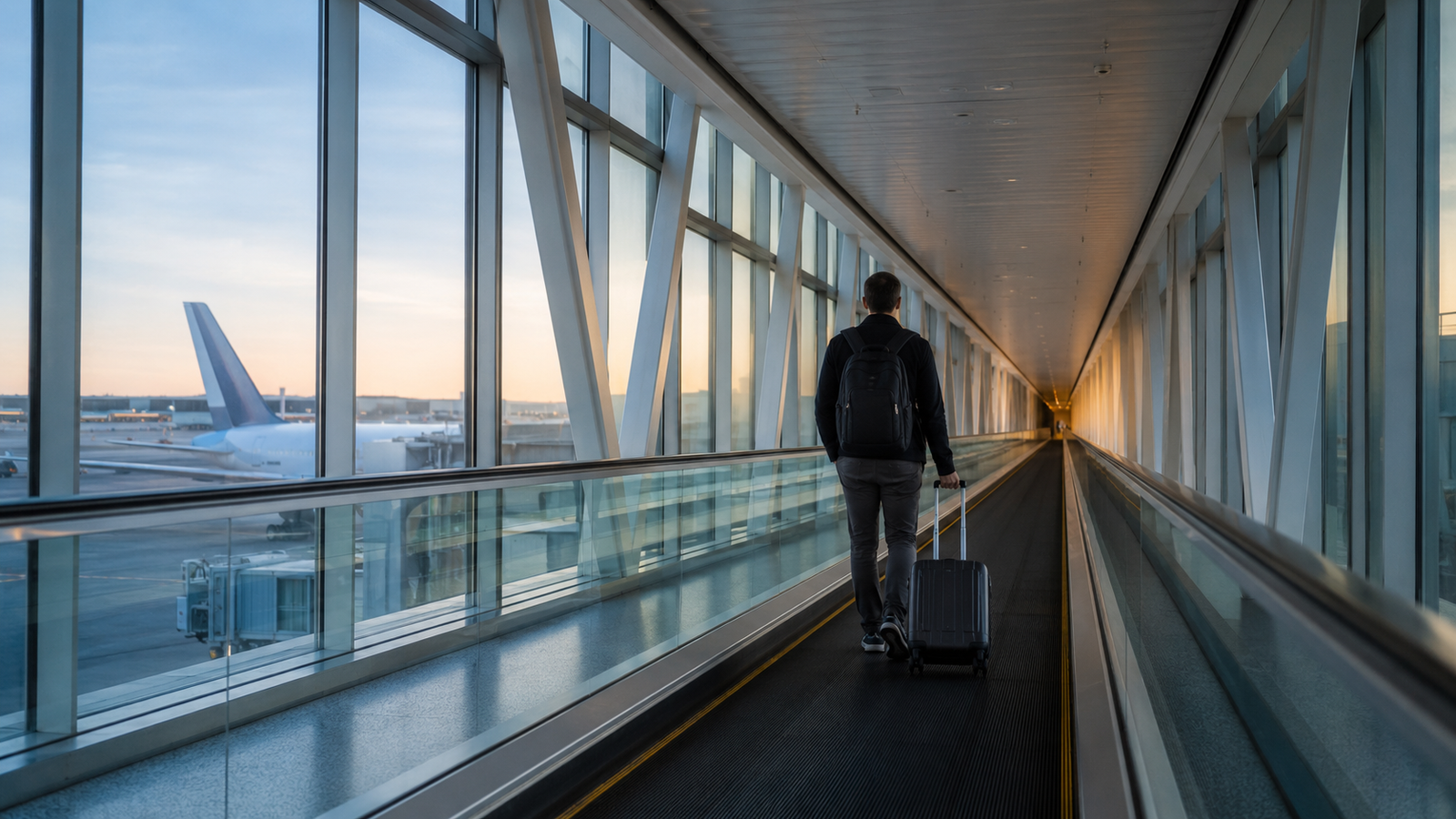
What to do if you end up at the wrong terminal.
It happens, and it's recoverable — as long as you catch it early. Here's the sequence:
- Confirm before you panicCheck your boarding pass or airline app. Terminal signage inside the building will also tell you where you are.
- Head to the Terminal LinkFollow signs to the LINK train on the upper level. Don't try to walk or hail a taxi between terminals.
- Budget 20 to 30 minutesThat's walking to the station, waiting for a train, riding across, and reaching the correct check-in hall.
- Re-check the clock against your cut-offBag drop closes well before departure — typically 45 to 60 minutes for domestic and longer for international. If you're inside that window, go directly to an airline agent rather than a kiosk.
- Call your airline if it's tightAgents can sometimes rebook you onto a later flight before you're marked a no-show, which is a much better outcome than after.
The best defence is the boring one: confirm your terminal the night before and tell your driver the terminal, not just "Pearson."
Obsidian RideBooking a chauffeur when you're travelling to either terminal.
Once you've settled the Pearson Terminal 1 vs Terminal 3 question, the reservation process is identical for both — and the terminal detail is captured before travel day, not negotiated at the curb.
- Add your flight number. Your airline and flight number let us monitor your arrival, so a delayed inbound doesn't turn into a missed pickup.
- Specify the terminal. Terminal 1 and Terminal 3 have separate roadways and separate meeting arrangements. Naming the terminal in your booking removes the guesswork.
- Flag domestic vs international. Arrival halls differ, and so does how long customs takes.
- Match the vehicle to your luggage. A sedan is fine for two travellers with carry-ons. Four people returning from a two-week trip need an SUV. Browse the fleet before booking.
- Book the return leg too. Departures from Pearson are easier to plan than arrivals — you know the time, so lock the pickup in.
Obsidian Ride provides pre-arranged private transfers to and from both Pearson terminals across Toronto, Mississauga and the wider Greater Toronto Area, including corporate travel accounts and long-distance routes such as Pearson to Niagara Falls.
QuestionsPearson Terminal 1 vs Terminal 3: frequently asked questions.
Pearson Terminal 1 vs Terminal 3 — what is the main difference?
Terminal 1 is the larger, newer terminal and serves Air Canada and its Star Alliance partners along with several major Middle Eastern and Asian carriers. Terminal 3 is more compact and serves WestJet, Porter, Air Transat, Flair and most oneworld and SkyTeam airlines. Terminal 1 also has the UP Express train station, while Terminal 3 has hotels connected by covered walkway.
How do I know whether I'm flying from Terminal 1 or Terminal 3?
Your boarding pass is the definitive source — the terminal is printed next to your gate. You can also check your airline's app or search your flight number on the official Toronto Pearson departures board. Confirm it again on the morning of travel, since terminal assignments can change.
How do you get from Terminal 1 to Terminal 3 at Pearson?
Use the free Terminal Link train, an automated people mover connecting Terminal 1, Viscount Station and Terminal 3. It runs frequently, takes roughly five to ten minutes, and stations are on the upper level of both terminals. There is no pedestrian walkway between the terminals.
How long should I allow to connect between Terminal 1 and Terminal 3?
Allow at least 90 minutes, and closer to two hours for a US-bound connection requiring preclearance. The Terminal Link runs outside the secure area, so you must exit security at one terminal and clear screening again at the other. Through-checked baggage is transferred for you.
Which terminal does Air Canada use at Toronto Pearson?
Air Canada, Air Canada Rouge and Air Canada Express operate from Terminal 1, which serves as the airline's principal hub. Star Alliance partners including United, Lufthansa, Swiss, Turkish Airlines and Singapore Airlines also use Terminal 1.
Which terminal does WestJet use at Pearson?
WestJet and WestJet Encore operate from Terminal 3, along with Porter's Pearson-based jet flights, Air Transat and Flair Airlines. Always confirm on your boarding pass, since assignments can change.
Does the UP Express train stop at both Pearson terminals?
No. The UP Express station is attached to Terminal 1 only. If you're arriving into or departing from Terminal 3, take the free Terminal Link train to Terminal 1 to reach the UP Express platform, and allow an extra 15 to 20 minutes.
Do both Pearson terminals have US Customs preclearance?
Yes. Both Terminal 1 and Terminal 3 have US Customs and Border Protection preclearance facilities, so passengers flying to the United States complete American immigration and customs in Toronto and arrive as domestic passengers. Preclearance adds time in Toronto, so allow extra margin for US-bound departures.
Which Pearson terminal is better for an early morning flight?
Terminal 3 has a practical advantage because the Sheraton Gateway and Alt Hotel connect to it by covered walkway, so you can walk to check-in without a shuttle. Terminal 1 has no directly connected hotel, though nearby properties run shuttles to both terminals.
Where do chauffeurs and airport limos pick up at Terminal 1 and Terminal 3?
Licensed limousines and pre-arranged chauffeurs use designated areas on the arrivals level of each terminal. Because Terminal 1 and Terminal 3 have separate roadways and meeting areas, your reservation should specify the terminal. With a pre-booked transfer, terminal-specific pickup instructions are confirmed before you travel.
How early should I arrive at Pearson Terminal 1 or Terminal 3?
As a baseline, allow two hours for domestic flights, two and a half to three hours for US transborder flights, and three hours for international departures. Add extra time if you're departing from a far Terminal 1 pier or travelling during a peak wave. Our guide to how early to arrive at Pearson Airport breaks this down by flight type and time of day.
Can I park at one terminal and fly from the other?
Yes, but it's easier to use the Value Park Garage or Value Park Lot at Viscount Station, which connect to both terminals via the free Terminal Link train. They're generally cheaper than the terminal garages and remove the need to match your parking to your terminal.
Terminal 1 or Terminal 3 — arranged before you travel.
Add your flight number and terminal to your reservation, and your pickup is planned around your actual arrival. Flight monitoring, luggage assistance and a clear rate confirmed before travel day.