
Pearson vs Billy Bishop: Which Toronto Airport Should You Fly From?
Toronto has two commercial airports, and choosing between them is not simply a question of which is closer to downtown. This guide compares Pearson vs Billy Bishop on the things that actually decide a booking: where each one flies, what aircraft it can handle, how U.S. travel works at both, when each is open, and how long it takes to get through the door.
Two fares, two airports, one trip. It is a common enough situation in Toronto, and the usual shorthand — Billy Bishop is downtown, so Billy Bishop is easier — is right often enough to be misleading. It ignores where you are starting from, what aircraft can physically operate at each field, and a set of rules at the island airport that have changed significantly in 2026.
The two airports are not competitors so much as different tools. One is a global hub with roughly two hundred destinations. The other is a compact short-haul airport on the harbour with a hard closing time. Knowing which constraints apply to your trip settles the question quickly.
Choose Billy Bishop for short-haul flights to eastern Canada or a handful of U.S. cities when your trip genuinely starts downtown. Choose Pearson for long-haul, international, or anything needing a wider schedule and connections. Pearson serves about 200 destinations; Billy Bishop serves more than 20 using turboprop aircraft only.

The short answer: they solve different problems.
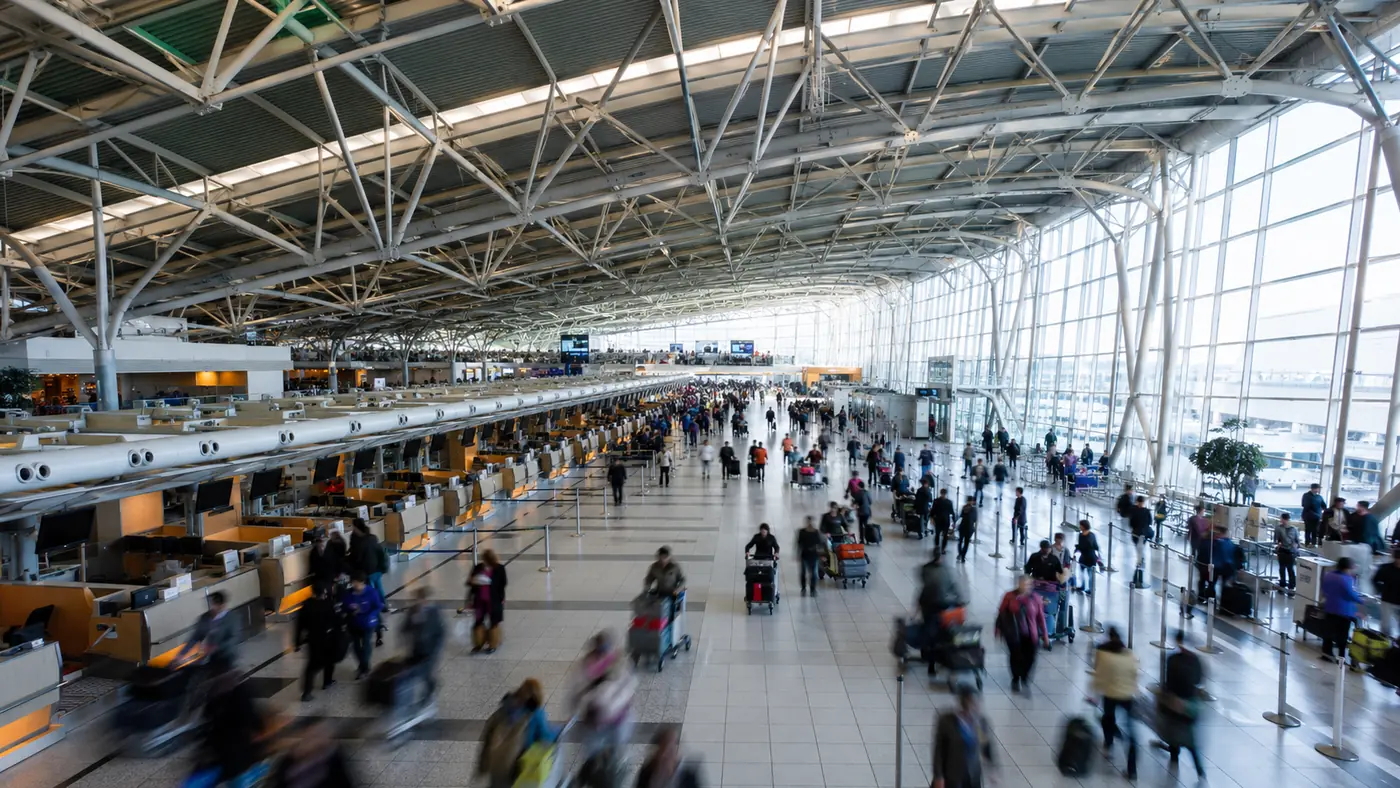
Toronto Pearson (YYZ) is Canada’s largest airport. In 2025 it handled 47.3 million passengers across 53 passenger airlines and reached 201 direct destinations. It has two passenger terminals, five runways, long-haul and cargo operations, and a rail link to downtown. If your flight goes anywhere beyond North America, it leaves from here.
Billy Bishop Toronto City Airport (YTZ) is a compact airport on Toronto Island at the foot of Bathurst Street, serving more than 20 cities in Canada and the United States. It handled roughly 1.9 million passengers in 2024 and ranks as Canada’s tenth busiest airport. Two airlines operate there: Porter and Air Canada.
The Pearson vs Billy Bishop question is therefore rarely about which airport is better. It is about whether your specific route exists at the smaller one, and whether its convenience actually applies to where you live or are staying.
At a GlancePearson vs Billy Bishop Airport side by side.
If you read one section, read this table. It covers the differences that change a booking decision rather than trivia about terminal architecture.
| Factor | Toronto Pearson (YYZ) | Billy Bishop (YTZ) |
|---|---|---|
| Location | Northwest GTA, on the Toronto–Mississauga boundary | Toronto Island, 2 Eireann Quay, foot of Bathurst Street |
| Operator | Greater Toronto Airports Authority | Toronto Port Authority (PortsToronto), terminal by Nieuport Aviation |
| Terminals | Terminal 1 and Terminal 3 | One terminal |
| Destinations | 201 direct destinations in 2025 | More than 20 cities in Canada and the U.S. |
| Airlines | 53 passenger airlines in 2025 | Porter Airlines and Air Canada |
| Aircraft | Everything up to wide-body long-haul | Turboprops only — jets prohibited under the Tripartite Agreement |
| Long-haul / overseas | Yes | No |
| U.S. preclearance | Yes, both terminals | Yes, since 10 March 2026 |
| Operating hours | Around the clock | 5:00 a.m. to 11:00 p.m. daily |
| Rail link | UP Express from Terminal 1 to Union Station | None — complimentary shuttle to Union Station instead |
| Access to terminal | Drive or transit directly to the curb | Pedestrian tunnel or ferry across the Western Channel |
| 2024–25 passengers | 47.3 million (2025) | About 1.9 million (2024) |
Where each airport actually is.
This is the part travellers get wrong most often, because "closer to downtown" is only useful information if downtown is where you are.
Billy Bishop occupies the western tip of the Toronto Islands, directly across a narrow channel from the Bathurst Street waterfront. For someone staying in the Financial District, King West or the Entertainment District, it is genuinely within walking distance of a streetcar ride. Its whole proposition rests on that.
Pearson sits at the opposite end of the city, on the Toronto–Mississauga boundary, spread across roughly 4,600 acres with direct access from Highways 401, 409 and 427. For a traveller in Mississauga, Brampton, Vaughan, Etobicoke, Markham or Oakville, Pearson is not the inconvenient airport. It is the close one, and getting to Billy Bishop would mean crossing the entire city to reach a smaller schedule.
Pearson also splits across two buildings, which adds a decision Billy Bishop does not have. Pearson has two passenger terminals with different airlines and different ground transportation, and going to the wrong one costs real time.
A useful test. Draw a line from where your trip starts. If that line reaches the downtown core without crossing the city, Billy Bishop’s advantage is real. If it does not, Pearson is almost certainly the more sensible airport regardless of which one sounds more convenient.
Destinations and airlines: the widest gap between them.
This is the least ambiguous difference. Toronto Pearson connects passengers to roughly 200 domestic and international destinations and handles close to 30 per cent of Canada’s air passengers and 45 per cent of its air cargo. In 2025 the airport reported 201 direct destinations served by 53 passenger airlines.
Billy Bishop serves more than 20 cities in Canada and the United States, with two carriers. Porter Airlines is based there and operates the majority of flights. Air Canada operates the rest, and expanded significantly in 2026 by adding U.S. routes from the island alongside increased Montreal and Ottawa frequencies.
Practically, that means Billy Bishop covers the eastern Canadian triangle and a set of nearby American business centres well, and covers nothing else at all. There is no scenario in which you fly to Europe, Asia, the Caribbean or western Canada from the island airport.
The Porter trap. Porter operates from both Toronto airports. Its turboprop network flies from Billy Bishop; its Embraer jet network flies from Pearson Terminal 3. A Porter booking tells you nothing about which airport you need. Check the airport code on your specific itinerary, not the airline name.
The aircraft question, and why it decides everything else.
Billy Bishop’s limited network is not a commercial choice. It is a legal one, and understanding it explains most of what the airport can and cannot do.
The airport is governed by a Tripartite Agreement signed in 1983 between the federal government, the City of Toronto and PortsToronto. Transport Canada describes that agreement as imposing restrictions on airport operations including noise limits, hours of operation, and prohibitions on runway extensions, landmass expansions and jet aircraft. Amending it requires the consent of all three parties.
Turboprops have a shorter practical range than jets, which is why the route map stops where it does. The agreement was amended in January 2025 to permit a minimum landmass expansion so the airport can build Runway End Safety Areas required by Transport Canada regulations, with compliance due by July 2027. That amendment was about safety infrastructure. It did not lift the jet prohibition.
Whether the restriction should change is an active and genuinely contested public debate in Toronto, involving noise, waterfront land use and the airport’s long-term governance. For a traveller booking a flight this year, the practical position is simply that Billy Bishop remains a turboprop airport.
Cross-BorderFlying to the United States from either airport.
This is the section most comparison articles have not caught up on, and it materially changes the calculation for cross-border travellers.
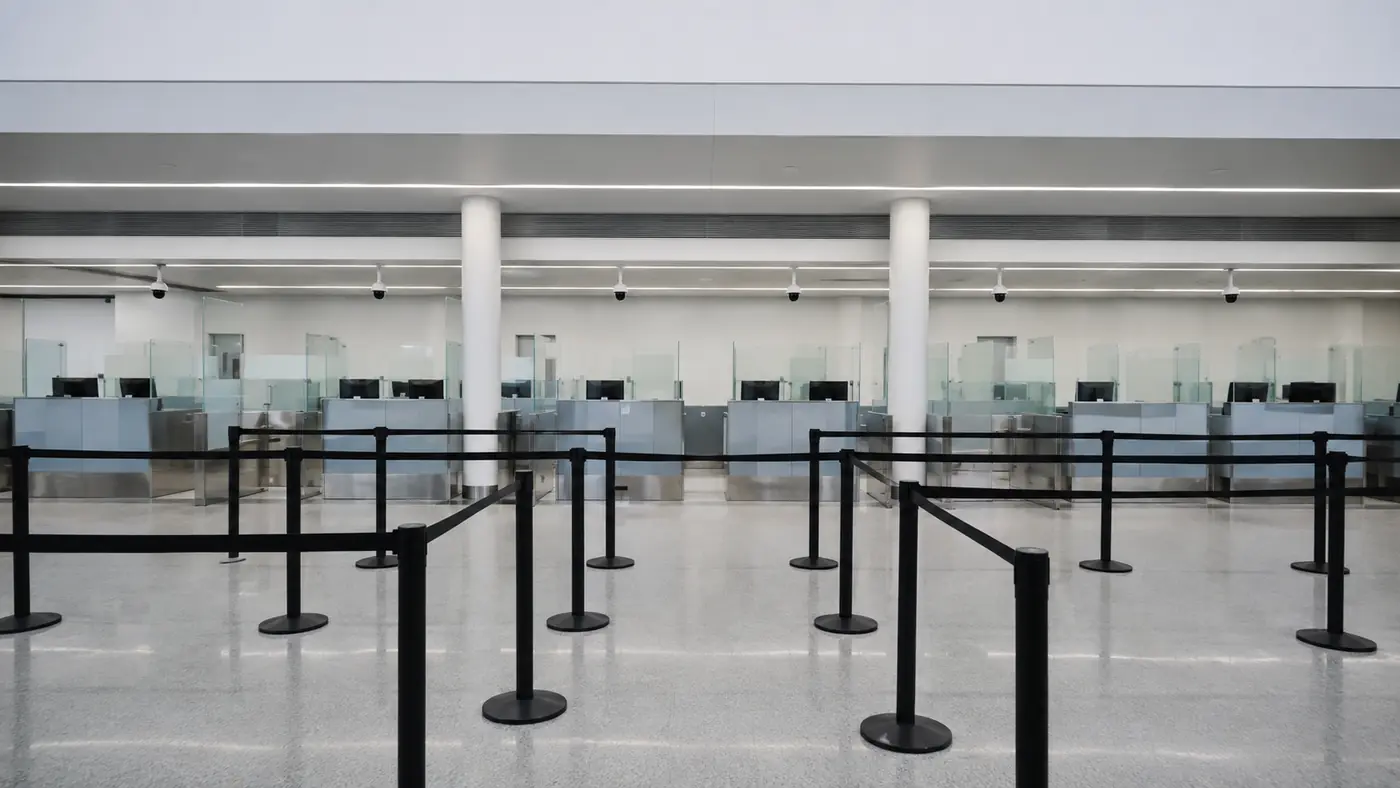
Both airports now offer U.S. Customs and Border Protection preclearance. Pearson has had it in both terminals for many years. Billy Bishop opened its preclearance facility on 10 March 2026, and all passengers flying to the United States now clear it before departure.
The benefit is the same at both: you complete U.S. immigration, customs and agriculture inspection in Toronto, then land in the United States as a domestic passenger and walk straight out or onto a connecting flight. The cost is that it adds a step in Toronto, so U.S. departures need more lead time than domestic ones from either airport.
The Billy Bishop preclearance fee
Here is the detail worth knowing before you compare two fares. The preclearance facility at Billy Bishop is self-funded rather than supported through the federal infrastructure programs used at larger Canadian preclearance airports. To recover those costs, the airport applies a CBP User Fee to passengers departing for the United States, set at $22.50 CAD per passenger for Year One. Airlines collect it at the time of ticket purchase and display it on your ticket or receipt.
It is not a large sum, but it is a real line item that does not exist on a Pearson ticket, and on a tight fare comparison between two U.S. options it is worth accounting for.
Operating hours: the constraint nobody mentions.
Pearson operates around the clock. Flights arrive and depart through the night, ground transportation runs in some form at every hour, and there is no time at which the terminals are closed to travellers.
Billy Bishop does not work that way. The airport’s published hours are 5:00 a.m. to 11:00 p.m. daily, and it is closed to the public outside them. Check-in opens at 5:30 a.m., and CATSA security screening operates from 6:00 a.m. until the last flight of the day has departed. The airport specifically advises passengers with morning flights not to arrive before 5 a.m., because no airline or security staff are on site to help.
Three consequences follow. There are no red-eye arrivals into Billy Bishop, so a delayed evening flight has a firmer ceiling than at Pearson. There is no point arriving very early for a first-wave departure. And if your inbound leg is likely to slip late, the island airport carries a schedule risk that Pearson does not.
Getting ThereGetting there, and getting out again.
Ground access is where the two airports feel most different. We cover the full range of Toronto airport transfer options in more depth elsewhere; what follows is the comparison that matters for choosing between the two.
Reaching Billy Bishop
The terminal is on an island, so every route involves a crossing. There are two.
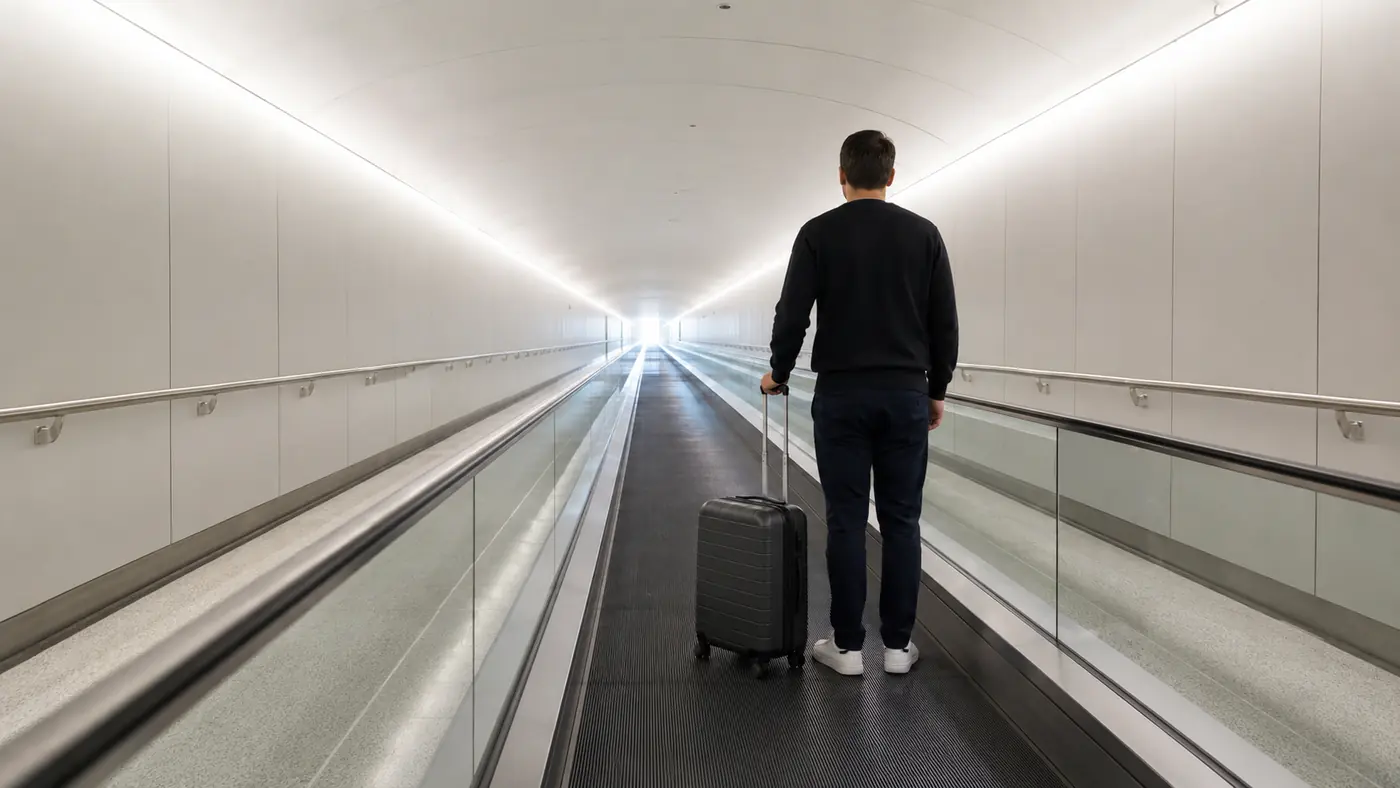
The pedestrian tunnel runs 853 feet beneath the Western Channel, 100 feet below the lake surface. Six elevators take you down from the mainland pavilion, four moving walkways carry you across, and one of the longest escalator systems in Canada brings you up into the island atrium. The airport puts it at under six minutes curb to check-in. A ferry also crosses the channel, and vehicles can use it, subject to the ferry fee and any parking charges.
On the mainland side, a complimentary shuttle bus connects the airport to 44 York Street, on the west side of the Fairmont Royal York across from Union Station. It runs roughly every 15 minutes on a bump-and-go basis, takes about 15 minutes depending on traffic, and drops to every 25 minutes during early-morning and late-evening windows. Taxis use a corral to the right of the mainland pavilion at the foot of Eireann Quay. Ride-share vehicles use a separate curb adjacent to Little Norway Park.
Reaching Pearson
Pearson has more options and more of them run late. UP Express links Terminal 1 to Union Station in 28 minutes, with the first weekday train at 5:27 a.m. and the last at 12:54 a.m. TTC and GO Transit buses serve both terminals, including overnight routes. Licensed taxis and airport limousines queue at designated arrivals-level stands, ride-share vehicles use marked zones, and the free Terminal Link train connects Terminal 1, Terminal 3 and Viscount Station around the clock.
| Access | Pearson | Billy Bishop |
|---|---|---|
| Rail to downtown | UP Express, Terminal 1 to Union in 28 minutes | None |
| Free airport shuttle | Hotel and parking shuttles only | Complimentary shuttle to Union Station area, roughly every 15 minutes |
| City transit | TTC, GO, MiWay and Brampton Transit at both terminals | Nearby streetcar and bus routes on the mainland |
| Overnight service | Yes, on TTC Blue Night and GO routes | Not applicable — airport closed overnight |
| Taxi and limo | Designated stands, arrivals level, both terminals | Taxi corral at the foot of Eireann Quay |
| Ride-share | Marked zones at both terminals | Curb adjacent to Little Norway Park |
| Drive and drop | Terminal curbs plus free cell phone waiting area | Momentary curbside stop; turning-circle spots limited to five minutes |
| Best for | Anyone outside the core, groups, heavy luggage, late arrivals | Downtown travellers with carry-on luggage |
Time in the terminal.
The honest advantage of a small airport is not the flight. It is everything either side of it.
Billy Bishop is a single compact building. Check-in, security and gates sit close together, walking distances are short, and the whole process is measured in a handful of minutes rather than tens of them. That is the source of its reputation among frequent flyers on the Montreal and Ottawa runs.
Pearson requires more margin. Terminal 1 in particular involves substantial walking, and the standard baseline most travellers use is around two hours for domestic, two and a half to three for U.S. transborder, and three for international departures. Our guide to how early to arrive at Pearson breaks that down by flight type and time of day.
One qualification on the Billy Bishop side. Now that all U.S.-bound passengers complete preclearance before boarding, U.S. departures from the island need more lead time than they did before March 2026. The airport’s own guidance is that preclearance is similar to any international customs process, can take time, and that you should arrive early and follow your airline’s advice. Treat old rules of thumb about breezing through YTZ as applying to domestic flights only.
Connections and checked bags.
If your journey has more than one flight, this often decides the matter on its own.
Pearson is built for connecting traffic. Terminal 1 functions as Air Canada’s principal global hub, alliance partners are clustered deliberately, and bags check through to final destinations across a very wide network.
Billy Bishop is an origin-and-destination airport. Its short-haul network can feed a connection elsewhere, but you are not going to build a complex multi-leg itinerary around it. If your trip involves a connection onto a long-haul flight, starting at Pearson usually removes an airport transfer, a second check-in and a meaningful amount of risk.
Luggage volume points the same way. Two people with carry-on bags move through the tunnel and the compact island terminal easily. A family with four checked suitcases will find Pearson’s kerbside-to-counter arrangement considerably less work than a tunnel crossing.
Which airport for a business trip?
For the specific pattern of a same-day return from downtown Toronto to Montreal, Ottawa, New York, Boston, Chicago or Washington, Billy Bishop is usually the faster round trip. The airport is close to the core, the terminal is quick to move through, and the schedule on those routes is frequent enough to absorb a meeting that runs long. Air Canada’s 2026 expansion added capacity on exactly those city pairs.
Beyond that pattern, the reasoning shifts. Long-haul travel, international clients, a team arriving from several origins, or an itinerary with checked bags and connections all point to Pearson. So does an early start from anywhere outside the core, and so does a late inbound leg that might land after the island airport has closed for the night.

Organisations moving people through both airports regularly tend to stop treating it as a per-trip decision and set a standing policy instead, which is one of the things corporate travel accounts exist to coordinate.
DecidingHow to decide in about a minute.
Work down this list and stop at the first line that applies to you.
| If this is true | Fly from | Why |
|---|---|---|
| Your destination is outside Canada and the U.S. | Pearson | Billy Bishop does not serve it |
| Your route is not on the Billy Bishop map | Pearson | More than 20 cities versus roughly 200 |
| You are connecting onto a long-haul flight | Pearson | Built for connecting traffic and through-checked bags |
| You are starting from Mississauga, Brampton, Vaughan or Markham | Pearson | Closer, with direct highway access |
| Your flight lands or departs outside 5 a.m. to 11 p.m. | Pearson | Billy Bishop is closed to the public overnight |
| You have several checked bags or a group | Pearson | Simpler kerbside-to-counter handling |
| You are downtown, travelling light, going to eastern Canada or a nearby U.S. city | Billy Bishop | Shortest total door-to-gate time |
| Same-day business return on a frequent short-haul route | Billy Bishop | Frequency plus a compact terminal |

Five mistakes travellers make.
- Assuming a Porter booking means Billy Bishop. Porter flies from both airports. The itinerary, not the airline, tells you which.
- Treating "closer to downtown" as universally better. It is only better if downtown is where you start.
- Forgetting that Billy Bishop closes. Nothing operates there between 11 p.m. and 5 a.m., and security screening does not begin until 6 a.m.
- Comparing two U.S. fares without the CBP User Fee. The $22.50 charge applies to U.S.-bound departures from Billy Bishop and not to Pearson tickets.
- Booking a tight connection through the island airport. It is an origin-and-destination airport, not a hub.
Chauffeur transfers to both Toronto airports.
Once the airport is settled, the ground leg is a different problem at each one, and a pre-arranged transfer handles the differences before travel day rather than at the curb.
Obsidian Ride operates 24/7 dispatch with real-time flight monitoring, so your flight number is attached to the reservation and the pickup time follows the actual arrival rather than the scheduled one. Complimentary wait time is included on airport transfers. A few details make the booking accurate:
- Name the airport and, at Pearson, the terminal. Terminal 1 and Terminal 3 have separate roadways and separate meeting arrangements.
- At Billy Bishop, say mainland or island. The mainland pavilion at Eireann Quay is the usual meeting point, and curbside waiting there is tightly limited.
- Flag domestic or U.S. Preclearance now applies at both airports and changes the realistic timing.
- Match the vehicle to your bags. A sedan suits two travellers with carry-ons; four people returning from a long trip need an SUV. It is worth a look at choose a vehicle that fits your luggage first.
- Book the early departures. A 6 a.m. flight from either airport starts before most transit does.
Full service details are on the Pearson Airport chauffeur service and Billy Bishop airport transfers pages, with coverage across Toronto and the wider GTA.
Pick the airport. We’ll handle the ground leg.
Add your flight number and airport to the reservation and the pickup is planned around your actual arrival, at either terminal at Pearson or the mainland pavilion at Billy Bishop.
Pearson vs Billy Bishop: frequently asked questions.
Which is better, Pearson or Billy Bishop?
Neither is better in general; they suit different trips. Billy Bishop wins for short-haul flights to eastern Canada and a handful of U.S. cities when you are starting from downtown Toronto. Pearson wins on everything else — roughly 200 destinations, long-haul and international service, checked-bag connections, and better access from the wider GTA.
Can you fly internationally from Billy Bishop Airport?
You can fly to the United States, but not beyond North America. Billy Bishop serves more than 20 cities in Canada and the U.S. using turboprop aircraft. Overseas and long-haul flights operate exclusively from Toronto Pearson, which reached 201 direct destinations in 2025 across 53 passenger airlines.
Does Billy Bishop have U.S. customs preclearance?
Yes. As of March 10, 2026, Billy Bishop operates a U.S. Customs and Border Protection preclearance facility, and all passengers flying to the United States clear it before departure. You arrive in the U.S. as a domestic passenger. Toronto Pearson has had preclearance in both terminals for far longer.
Is there an extra fee for flying to the U.S. from Billy Bishop?
Yes. Because the preclearance facility at Billy Bishop is self-funded, a CBP User Fee applies to passengers departing to the United States. The airport has set the Year One charge at $22.50 CAD per passenger, collected by the airline at the time of ticket purchase and shown on your receipt.
What time does Billy Bishop Airport open and close?
Billy Bishop operates from 5:00 a.m. to 11:00 p.m. daily and is closed to the public outside those hours. Check-in opens at 5:30 a.m. and CATSA security screening runs from 6:00 a.m. until the last flight departs. Do not arrive before 5 a.m. for an early flight.
Why are there no jets at Billy Bishop?
The airport is governed by a Tripartite Agreement signed in 1983 between the federal government, the City of Toronto and PortsToronto. Transport Canada notes it imposes restrictions including noise limits, hours of operation and a prohibition on jet aircraft. Changing it requires the consent of all three parties.
Does Porter fly from Pearson or Billy Bishop?
Both. Porter’s turboprop network is based at Billy Bishop, while its Embraer jet network operates from Toronto Pearson Terminal 3. Confusing the two is one of the most common mistakes Toronto travellers make, so check which airport your specific flight number departs from before you travel.
How do you get to Billy Bishop Airport?
The terminal sits on Toronto Island at 2 Eireann Quay, reached by a pedestrian tunnel that takes under six minutes from curb to check-in, or by a short ferry across the Western Channel. A complimentary shuttle runs roughly every 15 minutes between the airport and 44 York Street beside Union Station.
How much earlier do you need to arrive at Pearson than Billy Bishop?
Billy Bishop is compact, so passengers generally need less lead time than at Pearson, where two hours for domestic and three for international is a common baseline. Build in extra time at Billy Bishop for U.S. departures, since all U.S.-bound passengers now complete preclearance before boarding.
Which Toronto airport is better for a business trip?
For a same-day trip from the Financial District to Montreal, Ottawa, New York, Boston, Chicago or Washington, Billy Bishop is usually the faster round trip. For anything requiring long-haul, a wider schedule, checked-bag connections or a start point outside the core, Pearson is the practical choice.
Which airport should I choose if I live outside downtown Toronto?
Usually Pearson. Its main advantage over Billy Bishop is a location on the Toronto–Mississauga boundary with direct highway access, which suits travellers starting from Mississauga, Brampton, Vaughan, Markham or Oakville. Billy Bishop’s downtown position only helps if downtown is where your journey actually begins.