
Toronto Pearson · Arrivals
How Long Does Customs Take at Toronto Pearson Airport?
Most international travellers clear Toronto Pearson in roughly 30 to 60 minutes from the moment the aircraft parks at the gate, though a busy arrival bank, checked bags or a referral to secondary inspection can stretch that well past an hour. This guide walks through each stage of the arrival process, explains what actually drives the Pearson customs wait time, and gives the person waiting at the curb a realistic pickup window.
The short answer
Plan on 30 to 60 minutes between the aircraft reaching the gate and walking out into the arrivals hall at Toronto Pearson. A traveller with carry-on only, arriving off-peak, using a declaration submitted in advance, can be outside in under 25 minutes. A family of four arriving at 4:00 p.m. with four checked bags, at the same time as five other widebody aircraft, can easily need 75 to 90 minutes. A referral to secondary inspection adds anywhere from 20 minutes to a couple of hours.
Two points cause most of the confusion. The first is that the Pearson customs wait time people picture — standing in a queue for a border officer — is usually the shortest part of the process. The second is that the Canada Border Services Agency does not publish live wait times for Canadian airports the way US Customs and Border Protection does for American ones. There is no dashboard to check from the cell phone lot. Anyone meeting an arriving flight is planning against averages, so the sensible approach is to build in a buffer rather than chase a number.
Planning at a glance
- Carry-on only, quiet period: roughly 20–35 minutes gate to curb
- Typical international arrival with checked bags: roughly 45–70 minutes
- Peak arrival bank, large aircraft, checked bags: 75–100 minutes is realistic
- Referred to secondary inspection: add 20 minutes to 2 hours
- Meeting someone? Aim to be at the terminal about 45 minutes after the flight’s actual landing time, not its scheduled one
These are planning ranges based on how the arrival process is structured, not figures published by CBSA or the airport. Conditions on any given day vary.
What “customs” actually means at Pearson
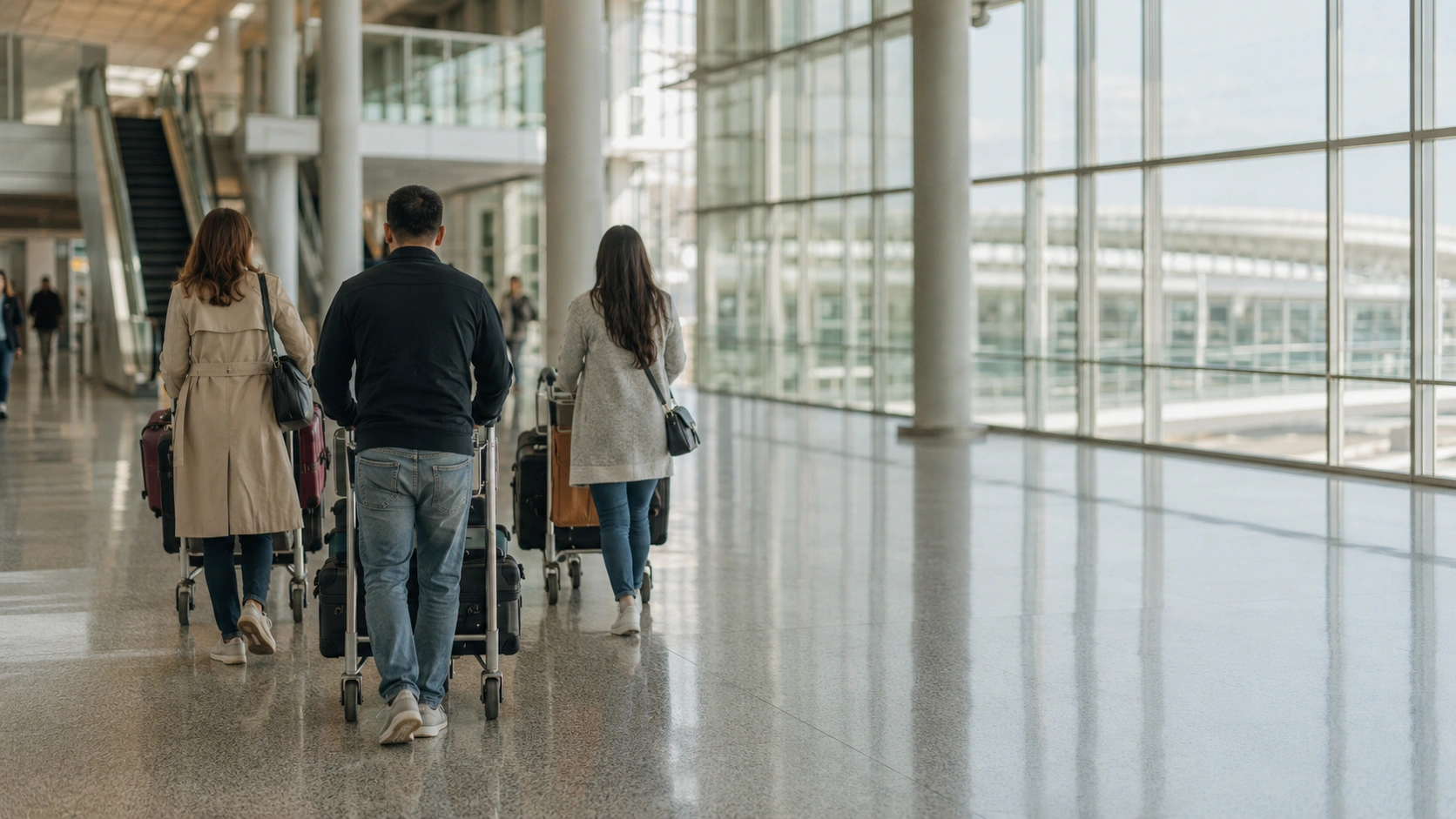
In everyday conversation, “customs” is shorthand for the whole arrival process. In practice it covers two related but distinct functions, both handled at Pearson by the Canada Border Services Agency: immigration, which determines whether a person may enter Canada, and customs, which deals with the goods they are bringing in. A single CBSA officer normally handles both in one interaction, which is why travellers experience it as one checkpoint rather than two.
The sequence at Pearson runs in a fixed order, and understanding it explains why the total time is so much longer than the queue itself:
- Deplane and walk to the customs hall. International arrivals are routed along sterile corridors that keep them separate from departing passengers.
- Complete the declaration. Depending on the traveller and the technology in use at the time, this happens at a self-service kiosk, an electronic gate, or with an officer.
- Speak with a border services officer. Most conversations last well under a minute.
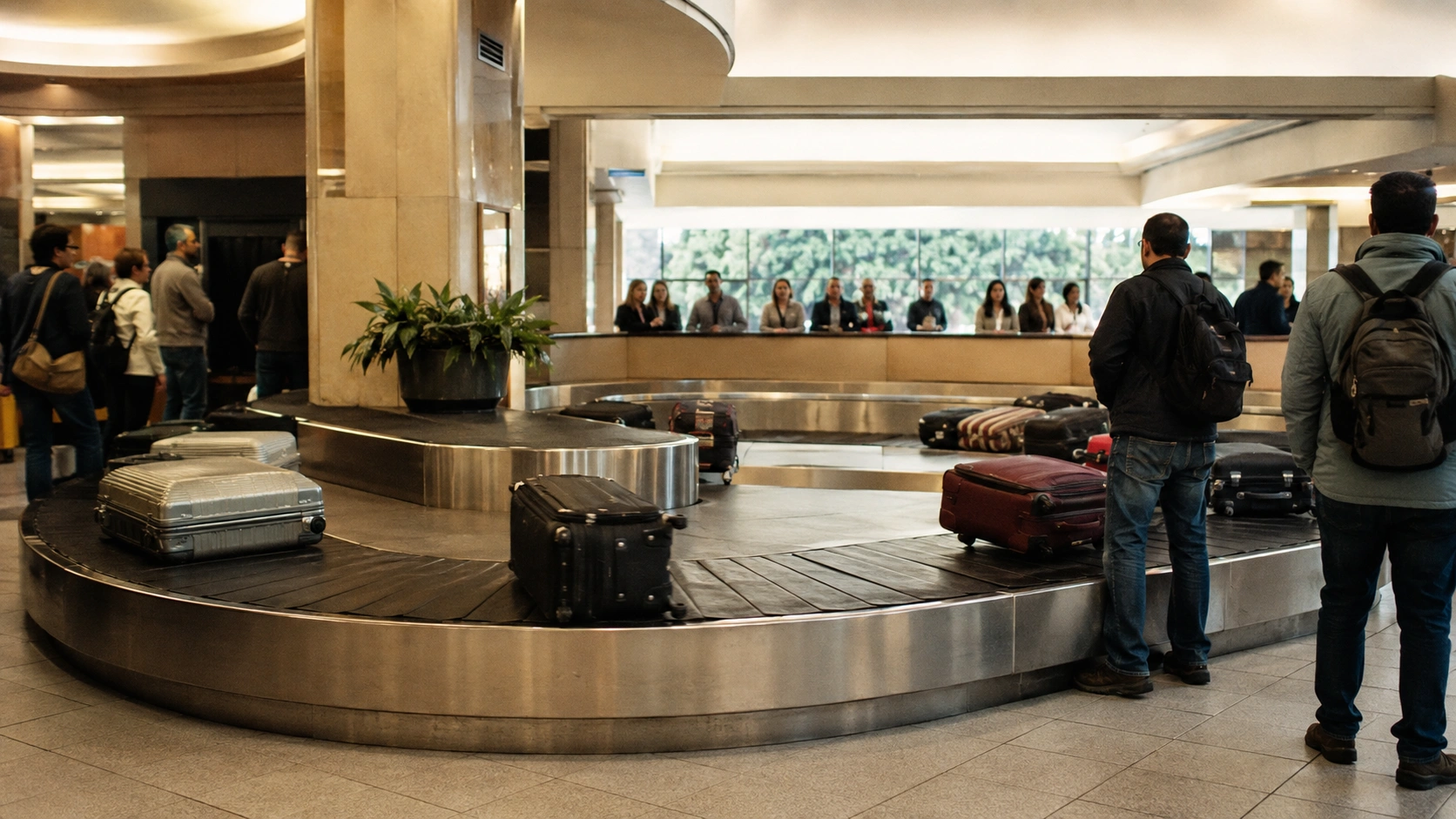
- Collect checked baggage. This step sits after the border interaction, not before it.
- Clear the exit point. An officer checks the declaration receipt and either releases the traveller or refers them to secondary.
That fourth step is where the time actually goes. A traveller who clears the officer in eight minutes may still stand at the carousel for another thirty-five waiting for a widebody aircraft to be unloaded. Anyone timing a pickup should treat baggage delivery, not the border queue, as the variable most likely to blow up the estimate.
US preclearance at Pearson works in the opposite direction. Passengers departing for the United States clear American border formalities in Toronto before boarding. It has no bearing on how long arriving international passengers take to get out.
Stage-by-stage: where the minutes go
The table below breaks the arrival into the five stages above with realistic planning ranges for each. Read the ranges as guidance for building a buffer rather than as a schedule.
| Stage | Typical range | What pushes it longer |
|---|---|---|
| Taxi in and deplane | 5–20 min | Widebody aircraft, a gate hold, a remote stand requiring a bus, or a seat near the back |
| Walk to the customs hall | 3–15 min | Arrival at a far international pier; travelling with young children or reduced mobility |
| Declaration and officer | 5–30 min | Several aircraft landing together; a large share of first-time visitors; fewer lanes open late at night |
| Baggage claim | 10–40 min | Full widebody, multiple flights sharing a belt, oversized items, ground-handling delays |
| Exit check | 2–10 min | Everyone from one flight reaching the exit at the same moment |
| Secondary inspection (if referred) | 20–120+ min | Goods over personal exemption limits, agricultural items, documentation questions, random selection |
Scroll the table sideways on a phone to see all columns.
Add the middle of each range and a typical arrival lands near 50 minutes. That is the number worth planning around for a first estimate, adjusted up or down using the factors in the next section.
VariablesWhat actually makes the Pearson customs wait time longer
Arrival banks, not the clock
Pearson does not receive international flights evenly through the day. Transatlantic services from Europe cluster in the early afternoon; long-haul flights from Asia and the Middle East tend to land in the afternoon and evening; overnight arrivals from Europe land in the morning. When six widebody aircraft park within twenty minutes of one another, roughly two thousand people reach the customs hall at once. The same hall processes a single narrowbody arrival at 11:00 a.m. with almost no queue at all.
If a traveller wants a rough read before departure, checking how many other international flights are scheduled to land within thirty minutes of theirs is more informative than any published average. Flight status information is available on the Toronto Pearson flight status page.
Aircraft size and where it parks
Deplaning a full widebody takes noticeably longer than a narrowbody, and unloading its hold takes longer still. A flight assigned a remote stand adds a bus transfer before the walk even begins. Neither is visible on a booking confirmation, which is one reason arrival timing resists precision.
Checked bags versus carry-on
This is the single biggest lever a traveller controls. Clearing the border and walking straight out, rather than waiting at a carousel, routinely saves twenty to forty minutes. For a short trip, packing to carry-on is the most reliable way to shorten the total arrival time.
Traveller category
Canadian citizens and permanent residents generally have the most straightforward interaction. Visitors, first-time entrants, work and study permit holders, and anyone whose documents require review may spend longer, sometimes in a separate immigration area rather than at the main hall.
Secondary inspection
A referral to secondary is not an accusation of anything. Referrals happen for goods that exceed personal exemption limits, food or plant products, agricultural declarations, documentation questions, and routine random selection. The examination itself may take fifteen minutes; the queue to be seen can take considerably longer during a busy period.
Undeclared food, plant, animal or currency amounts are among the more common reasons a straightforward arrival turns into a long one. Declaring an item usually costs a question or two; failing to declare it can cost hours and a penalty. Current rules on what must be declared and applicable personal exemptions are on the CBSA travellers information pages.
Terminal 1 and Terminal 3: does it change the wait?
Both terminals at Pearson handle international arrivals and both have their own CBSA facilities, so neither is categorically faster. The differences that matter are practical rather than procedural.
Terminal 1 is the larger building and handles Air Canada along with its Star Alliance partners. Its international piers mean the walk from an arrival gate to the customs hall can be a genuine ten or fifteen minutes. Terminal 3 handles a mix of carriers including WestJet and a range of international and leisure airlines; the walk from gate to hall is often shorter, but the building is more compact and can feel congested when several flights land together.
For the person doing the pickup, the terminal matters far more than the queue. The two terminals are separate buildings with separate arrivals curbs, and driving between them takes time. Confirming the terminal from the airline’s own flight information before setting out avoids the most common and most frustrating pickup error. Our companion guide on the practical differences between Pearson Terminal 1 and Terminal 3 covers layout, curbside access and transfers in more detail.
Before you travelWays to move through the border faster
Border technology at Canadian airports has changed several times in recent years, moving from paper declaration cards to self-service kiosks and, more recently, toward electronic gates and declarations submitted before landing. Because the specific systems in use at Pearson change as CBSA modernises its facilities, it is worth checking the current arrangement close to the travel date rather than relying on how it worked on a previous trip.
The approaches below are durable regardless of which system is in place:
- Submit the declaration in advance. CBSA has offered an advance declaration option allowing travellers to complete customs and immigration information before arriving, which reduces the time spent at the kiosk or gate. Check current availability and instructions on the CBSA website before flying.
- Travel with carry-on where the trip allows it. Nothing else removes as much time from the arrival.
- Consider NEXUS for frequent cross-border travel. Members use dedicated processing at participating airports, including Pearson. Application processing takes time, so it is a decision for the next trip rather than this one.
- Have documents accessible before leaving the aircraft. Passports, permits and any supporting documentation in hand rather than in an overhead bin.
- Know your exemption limits. Understanding what may be brought in duty-free reduces the chance of a referral over something avoidable.
- Sit forward if it matters. On a full widebody, seat row genuinely affects when a passenger joins the queue.
Travelling as a family unit generally means processing together at a single interaction, which is faster overall than each adult queuing separately. Families arriving with several checked bags should assume the upper end of the baggage range and plan the pickup accordingly.
If Toronto is a connection rather than a destination
Passengers connecting through Pearson to another Canadian city, or onward internationally, still clear Canadian border formalities in Toronto if this is their first point of arrival in Canada. That usually means collecting checked bags, clearing CBSA, re-depositing bags at a connections desk, and passing back through security screening before reaching the onward gate.
Passengers connecting to a United States destination face an additional layer: after clearing Canadian formalities they proceed to US preclearance, which is a separate screening and interview process with its own queue. A connection that includes preclearance needs materially more time than a domestic one.
Airlines publish minimum connection times for each combination of arrival and onward flight, and those are minimums rather than comfortable targets. A connection at or near the minimum during a busy arrival bank leaves very little margin. Where an itinerary is being built from scratch, adding an hour beyond the published minimum for an international-to-international connection is a reasonable precaution.
PlanningTiming the pickup: what the person at the curb needs to know
The most common pickup mistake is planning against the scheduled arrival time. Aircraft land early, land late, and sit on taxiways. The number that matters is the actual landing time, which airline apps and airport flight status pages update in real time, and even that is only the starting gun for a 30 to 90 minute process.
The table below offers a starting point for deciding when to be at the terminal.
| Arriving traveller | Be at the terminal | Notes |
|---|---|---|
| Carry-on only, off-peak | 25–30 min after landing | They may well be waiting for you |
| Checked bags, typical arrival | 45–55 min after landing | The default assumption for most pickups |
| Family or group, several bags | 60–75 min after landing | Group movement through the hall is slower |
| Peak afternoon arrival bank | 65–80 min after landing | Several widebody aircraft may land together |
| First-time visitor to Canada | 60–90 min after landing | Documentation review can add time |
Waiting at the curb is not a viable strategy at Pearson. Arrivals curbs are for active loading only, and vehicles are moved along. Drivers meeting a flight generally use short-term parking or a designated waiting area and go inside, or wait in a cell phone lot until the arriving passenger confirms they have cleared. Because curbside and waiting-area arrangements at Pearson are periodically adjusted, confirm the current setup on the airport’s website before driving out.
Getting from Pearson into the city once you’re through
Clearing the border is only half the arrival. The right onward option depends on luggage, group size, destination and how much the traveller values a fixed arrangement after a long flight.
| Option | Best for | Trade-offs |
|---|---|---|
| UP Express train | Solo travellers and couples heading to downtown Toronto with light luggage | Fixed route to Union Station; onward transfer usually needed; limited late-night service |
| TTC and regional buses | Budget-conscious travellers going to points across the GTA | Slowest option; transfers with luggage; less practical late at night |
| GO Transit | Travellers heading to Mississauga, Hamilton, Oakville and beyond | Schedule-dependent; often requires a connection |
| Taxi and licensed airport limousine | Immediate departure without pre-arrangement | Queue length varies with arrival banks; vehicle type not chosen in advance |
| Rideshare | Travellers comfortable with app pickup and variable pricing | Designated pickup zones require a walk; pricing rises at peak times |
| Rental car | Travellers with onward driving plans | Counter and shuttle time after an already long arrival; parking at destination |
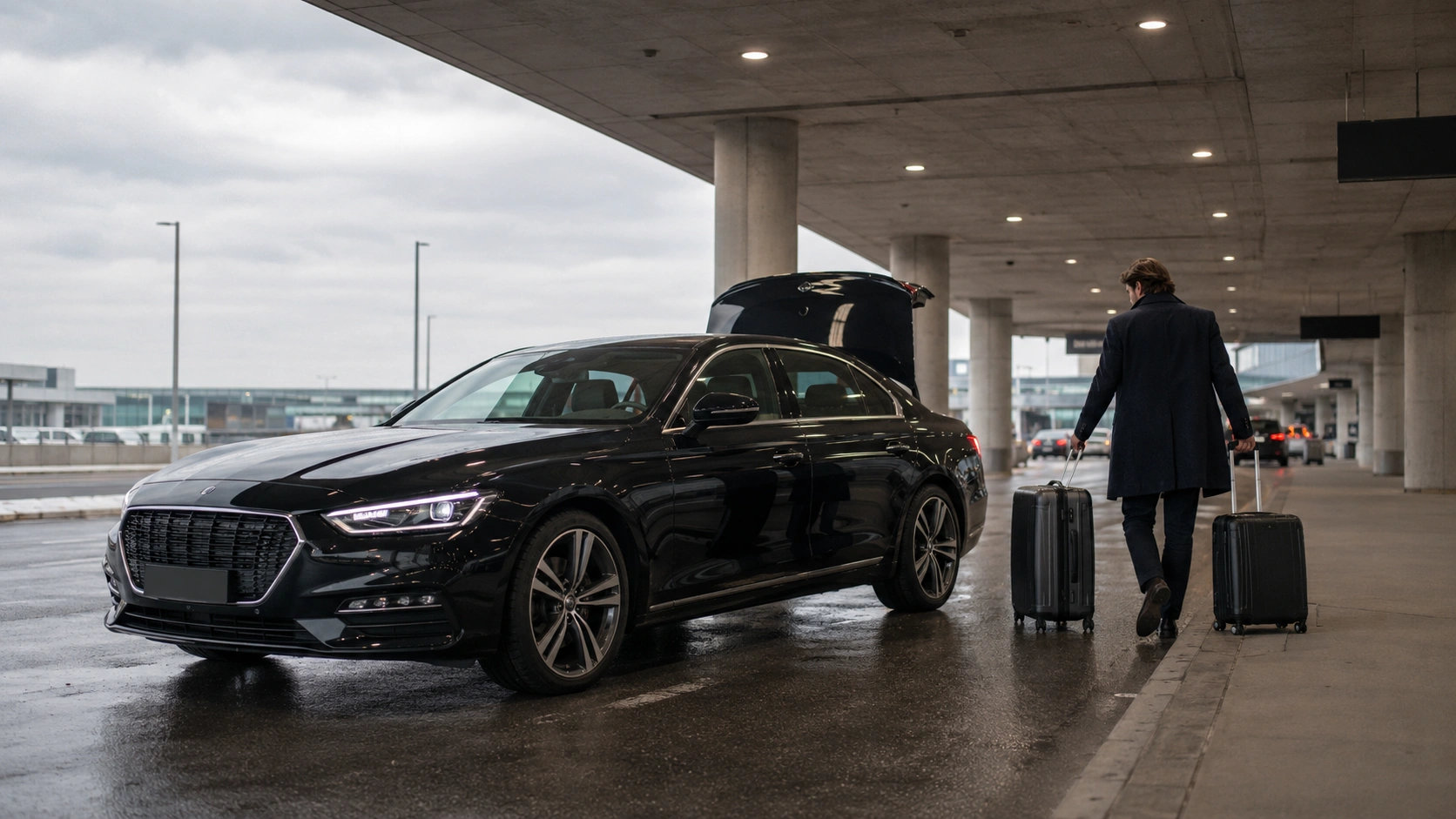
| Pre-arranged private chauffeur | Families, groups, heavy luggage, corporate arrivals, late-night landings, unfamiliar visitors | Requires booking ahead; costs more than shared or public options |
There is no single correct answer. A solo business traveller with a cabin bag heading to a King Street hotel is well served by the UP Express. A family of five arriving at 11:30 p.m. with six suitcases and a car seat requirement is not. The honest test is whether the option can absorb the specific combination of people, luggage and hour.
Private transfersFlight-tracked private pickup with Obsidian Ride
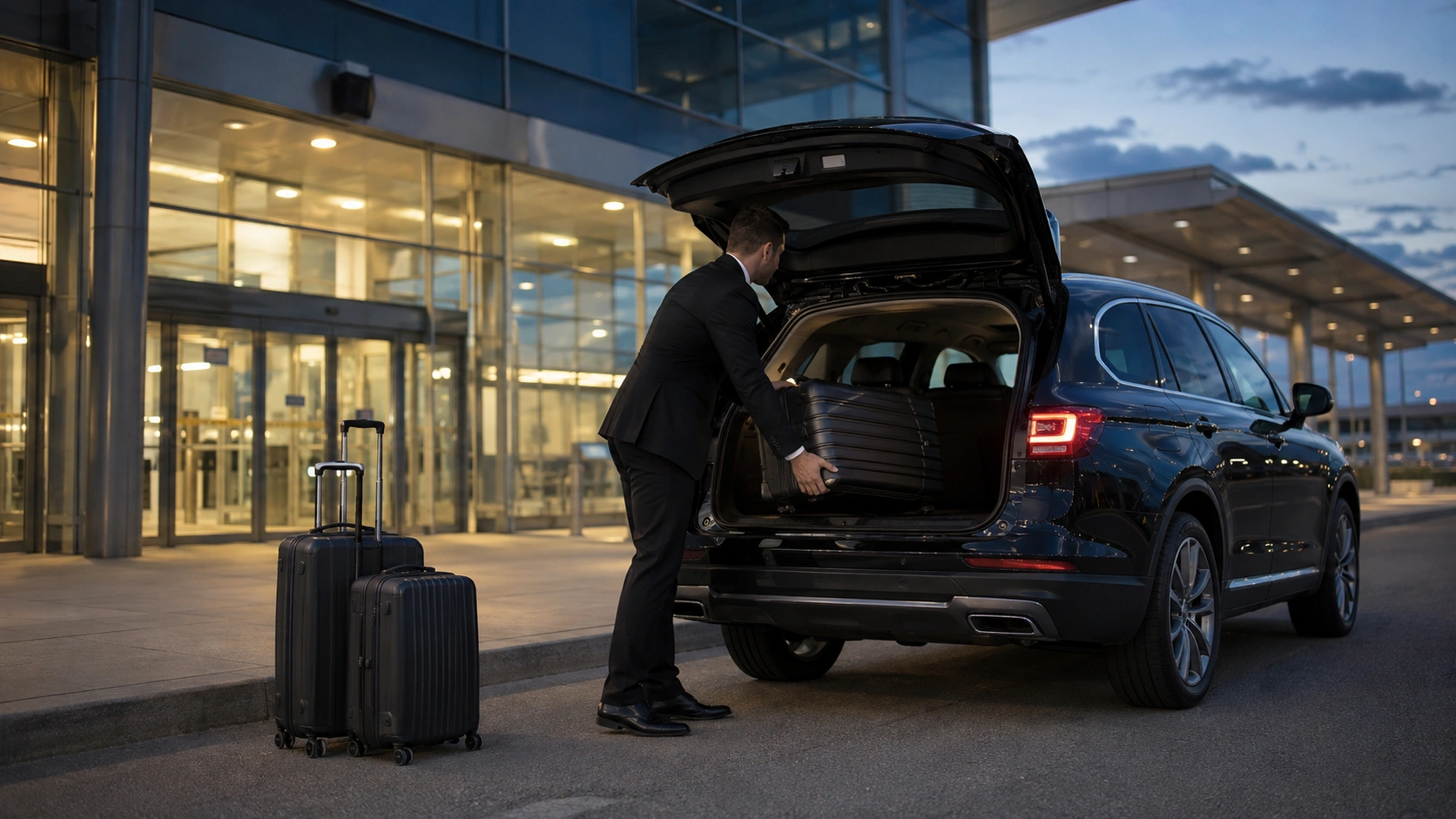
The uncertainty described throughout this guide is exactly the problem a pre-arranged transfer is meant to solve. Obsidian Ride monitors arriving flights and adjusts pickup timing to the actual landing time rather than the scheduled one, so an aircraft that lands forty minutes late does not leave a chauffeur waiting or a traveller stranded.
A private transfer tends to make the most sense when the arrival is complicated in some way:
- Families and groups whose luggage will not fit a standard sedan
- Late-night and early-morning arrivals when transit options thin out
- Corporate arrivals moving directly to a meeting or a signed schedule
- First-time visitors to Toronto who would rather not navigate transfers after a long flight
- Multi-stop itineraries, such as an airport pickup followed by a hotel and an office
- Longer transfers beyond the immediate GTA
Matching the vehicle to the actual passenger and luggage count is worth doing at the booking stage rather than at the curb; the Obsidian Ride fleet page sets out capacities. Travellers arriving for business can review corporate chauffeur arrangements in Toronto, while details specific to the airport are on the Toronto Pearson airport transfer page. Destinations outside the city are listed under areas we serve.
Mistakes that turn a normal arrival into a long one
- Planning against the scheduled arrival time. Use the actual landing time and add the buffer.
- Assuming the wrong terminal. Terminal assignments can change; confirm with the airline on the day.
- Booking a tight onward connection. Published minimums assume everything goes right.
- Not declaring food or agricultural items. The most avoidable reason for a long secondary inspection.
- Scheduling a meeting immediately after landing. An arrival needs a two-hour buffer at minimum before any commitment in the city.
- Expecting a curbside wait. Arrivals curbs do not permit vehicles to stand and wait.
- Assuming last trip’s process still applies. Border technology at Pearson has changed repeatedly in recent years.
If the return leg is the next concern, the companion guide on how early to arrive at Pearson for a departure covers check-in, screening and preclearance timing.
QuestionsQuestions travellers ask
How long does customs take at Toronto Pearson on average?
Most international travellers need 30 to 60 minutes from the aircraft parking at the gate to reaching the arrivals hall. Carry-on travellers arriving off-peak can be out in under half an hour. Arrivals with checked bags during a busy afternoon bank commonly take 75 minutes or more. CBSA does not publish live wait times for Canadian airports, so building a buffer is more reliable than checking a figure.
Can I check the current Pearson customs wait time before I leave home?
No. Unlike US Customs and Border Protection, the Canada Border Services Agency does not publish live airport wait times, so there is no dashboard for Pearson. The best available proxy is the airport’s flight status page: if several international widebody flights are landing within half an hour of each other, expect the longer end of the range.
Do I collect my bags before or after customs at Pearson?
After. At Toronto Pearson, arriving international passengers complete their declaration and speak with a border services officer first, then collect checked baggage, then pass a final exit check before entering the public arrivals hall. Because baggage delivery happens between the two border steps, it is usually the stage that determines the total arrival time.
How long should someone wait before picking me up at Pearson?
Ask them to aim for the terminal about 45 minutes after the flight’s actual landing time, not its scheduled time. Carry-on travellers may be out in 25 to 30 minutes; families with several checked bags or a peak arrival should assume 60 to 80 minutes. Arrivals curbs do not permit waiting, so drivers normally park or use a designated waiting area.
Is customs faster at Terminal 1 or Terminal 3?
Neither terminal is consistently faster. Both have their own CBSA facilities and both can be busy when several flights land together. Terminal 1 is larger, so the walk from an international pier to the customs hall can take longer. Terminal 3 has shorter walks but more compact spaces. Flight timing matters far more than terminal choice.
What happens if I’m sent to secondary inspection?
Secondary inspection is a further review of documents or goods and is often routine rather than a sign of a problem. Referrals happen for goods above personal exemption limits, food or agricultural items, documentation questions, or random selection. Plan for an extra 20 minutes to two hours, with most of that time spent queuing rather than in the examination itself.
Does NEXUS reduce the wait when arriving at Pearson?
Yes, for members. NEXUS provides expedited processing for pre-approved, low-risk travellers at participating airports including Toronto Pearson. It shortens the border portion of the arrival but does not speed up deplaning or baggage delivery, so a NEXUS member with checked bags still waits at the carousel like everyone else.
How much time do I need for a connection through Pearson?
If Toronto is your first point of arrival in Canada, you clear CBSA here, collect and re-check bags, and pass through security again before your onward flight. Airlines publish minimum connection times, but those are minimums. Adding roughly an hour beyond the published minimum is prudent, and more again if the onward flight is to the United States and requires preclearance.
Can I speed things up by declaring in advance?
Submitting a customs and immigration declaration before landing generally reduces the time spent at the kiosk or electronic gate, and CBSA has offered this option to travellers arriving at major Canadian airports. Because the systems in use are periodically updated, check the current process and availability on the CBSA website close to your travel date rather than relying on a previous trip.
Arrange a flight-tracked pickup at Pearson
Give us your flight number and we will time the pickup to the actual landing, so the arrival works whether you clear in twenty minutes or eighty.
Confirm current details directly
Arrival procedures, border technology and curbside arrangements change. Before travelling, check:
- Toronto Pearson International Airport — terminals, arrivals and ground transportation
- Canada Border Services Agency — declarations, exemptions and entry requirements
- UP Express — airport to Union Station rail service
- GO Transit — regional bus and rail across the GTA